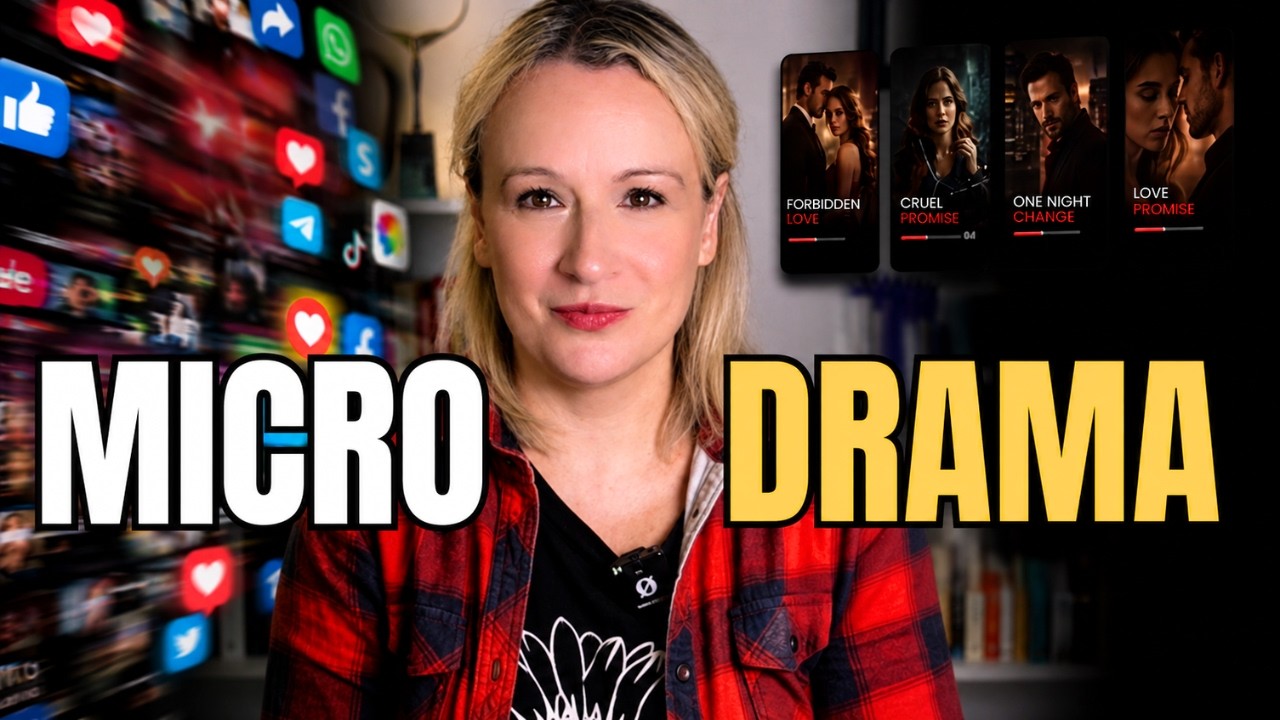
While every platform is racing to make content longer, the fastest-growing format on the internet runs 90 seconds per episode and ends before anything gets resolved. Micro dramas, vertical serialized shows built on cliffhanger loops, are on track to generate $14 billion in revenue this year. For coaches, entrepreneurs, and independent creators still making standalone videos that start from zero every single time, that number is not a curiosity. It is a structural argument.
Daryn Strauss, who advises clients on platform strategy and typically makes long-form content himself, noticed something worth investigating: TikTok, Instagram, and YouTube have all quietly added series functionality directly into their platform architecture. The platforms did it because serialized binge behavior keeps people watching longer than dopamine scrolling. The format that proved it first was not a prestige TV show. It was a mobile-first soap opera built for a vertical screen.
The architecture behind the addiction
Micro dramas look like short-form scroll content because they are vertical and brief. Structurally, they are something else entirely: serialized, cliffhanger-driven, episodic stories consumed in sequence. A typical series runs 50 to 60 episodes, roughly the length of a feature film but paced in compressed loops of three to seven episodes each. Every loop tells a self-contained arc, resolves just enough to feel satisfying, and then drops a new question that pulls the viewer into the next loop.
The current commercial model leans on a coin-based paywall borrowed from mobile gaming, where the average viewer spends 30 to 50 dollars to finish a single series. Strauss is direct about that part: ‘That model is pretty much a slot machine mentality. That is not sustainable.’ What is sustainable, he argues, is the narrative architecture underneath it. Character-driven tension. Hooks that drop viewers into conflict within the first three to five seconds. Episodes that end with a lingering question instead of a clean resolution.
Major brands have already moved. Procter and Gamble produced a 50-episode micro soap called The Golden Pair Affair to promote its body care line. Crocs partnered with a micro drama platform for a five-episode series called Charm to Meet You. Maybelline New York released a five-episode romantic series called Maybe This Christmas, starring Lacey Chabert, built around its Instant Eraser Concealer.
What standalone videos actually cost you
The harder argument Strauss makes is aimed at creators who have been optimizing for the wrong unit. Every standalone video that solves a problem completely and ends cleanly resets the relationship. The viewer has no reason to return except to find another solved problem. There is no unresolved question carrying them forward, no investment in what happens next. ‘Every video starts from zero,’ he puts it plainly. ‘Every video has to win its own audience.’
The alternative is to borrow the loop structure without making a soap opera. Define a repeatable series engine with a specific problem and a specific transformation. Build playlists that function as narrative arcs, where a viewer can enter mid-loop, understand the stakes, and still feel the pull to start from the beginning. Let the last video in a loop deliver a payoff that opens the next one, or surfaces an offer naturally from the story already in motion.
A creator whose loop never fully closed
Strauss mentions a creator named Chloe Shea, who documents her own identity shift across her 20s through a running Instagram series. Each piece adds something. None of it finishes.
That is the format working exactly as designed: a story that keeps moving forward without ever arriving at the end.
The coin-based apps may consolidate or collapse, but the 90-second episode, the cliffhanger close, the three-to-seven-episode loop built to pull someone through an entire arc, that structure is already inside the platforms most founders are already using. The question is not whether to adopt the format. It is whether to keep building content that resets every time, or to start making something a viewer needs to come back and finish.