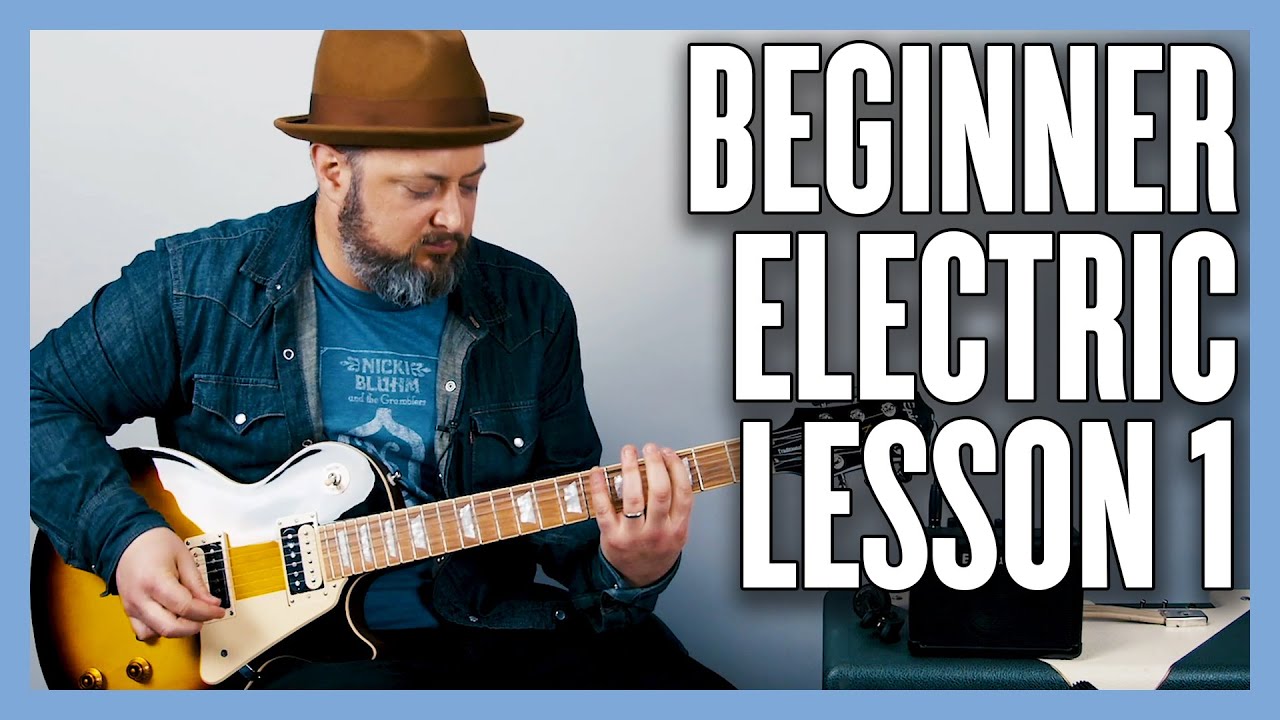
Marty Schwartz picks up an Epiphone Les Paul, holds it out toward the camera, and says the first thing any new player needs to hear: the guitar is supposed to be fun. That single premise shapes everything that follows, and for anyone who has ever plugged in a cable and heard nothing but confusing buzz, it is a genuinely useful starting point. Schwartz, who teaches through his platform Marty Music, built this lesson around one guiding idea: get a complete beginner from zero familiarity to actually playing recognizable rock riffs in a single sitting, without drowning them in theory.
From the headstock to the first riff
The lesson opens with hardware. Schwartz walks through the body, the neck, the headstock, the tuners, the nut, the bridge, and the pickups in plain language, pointing out that the selector switch on a Les Paul-style guitar changes which pickup is active. With the switch flipped toward the back, the tone gets brighter and leans into heavier rock. With it in the middle, both pickups blend together. He recommends experimenting rather than memorizing rules.
Before a single note is played, he addresses tuning. His recommended memory aid for the six string names is ‘Eddie ate dynamite, good bye Eddie,’ which maps to E, A, D, G, B, E from the thickest string to the thinnest. He points out a clip-on Snark tuner as a practical tool, explaining that when the display shows ‘sharp’ the note is too high and the tuner peg needs to bring it down, and when it shows ‘flat’ the string needs to come up.
Two amp sounds and one shape that moves everywhere
Schwartz then sets up the Blackstar practice amp for two distinct tones. The clean channel uses the gain knob left low, the volume brought up to room level, and the EQ knobs centered. For the overdrive channel, he presses the OD button, raises the gain about three-quarters of the way, and explains the order of operations plainly: ‘gain is the amount of crunch and distortion and overdrive you’re getting, volume is the level after you’ve created your crunchy overdrive.’
For the pick, he recommends a light or medium weight for beginners, held between the thumb and index finger with a slight tilt toward the thumb side. The first exercise is simply striking individual strings without hitting the adjacent ones. Then he introduces fret positions on the top E string, explaining that placing the fingertip closer to the higher fret rather than backed up against the lower one makes fretting easier and cleaner.
From there the numbers start flowing: open string (zero), third fret, fifth fret, and combinations of those three positions produce the first riffs. With overdrive on, even those three positions start to sound like something off a rock record. Schwartz closes by previewing the next step: a second finger added to the third and fifth fret produces a power chord, a two-finger shape that, as he put it, is ‘one shape to rule them all’ that can be moved across every string and up and down the neck to unlock Green Day, Nirvana, Metallica, Black Sabbath, and Blink-182.
The pick still sitting on the amp
The medium guitar pick Schwartz recommended from the start rests on top of the Blackstar amp at the end of the lesson, its corner slightly worn.
The lesson ends where it began: one guitar, one amp, and the same Epiphone Les Paul that started the whole thing still resting on Schwartz’s right thigh, exactly where he said to put it in the first place.