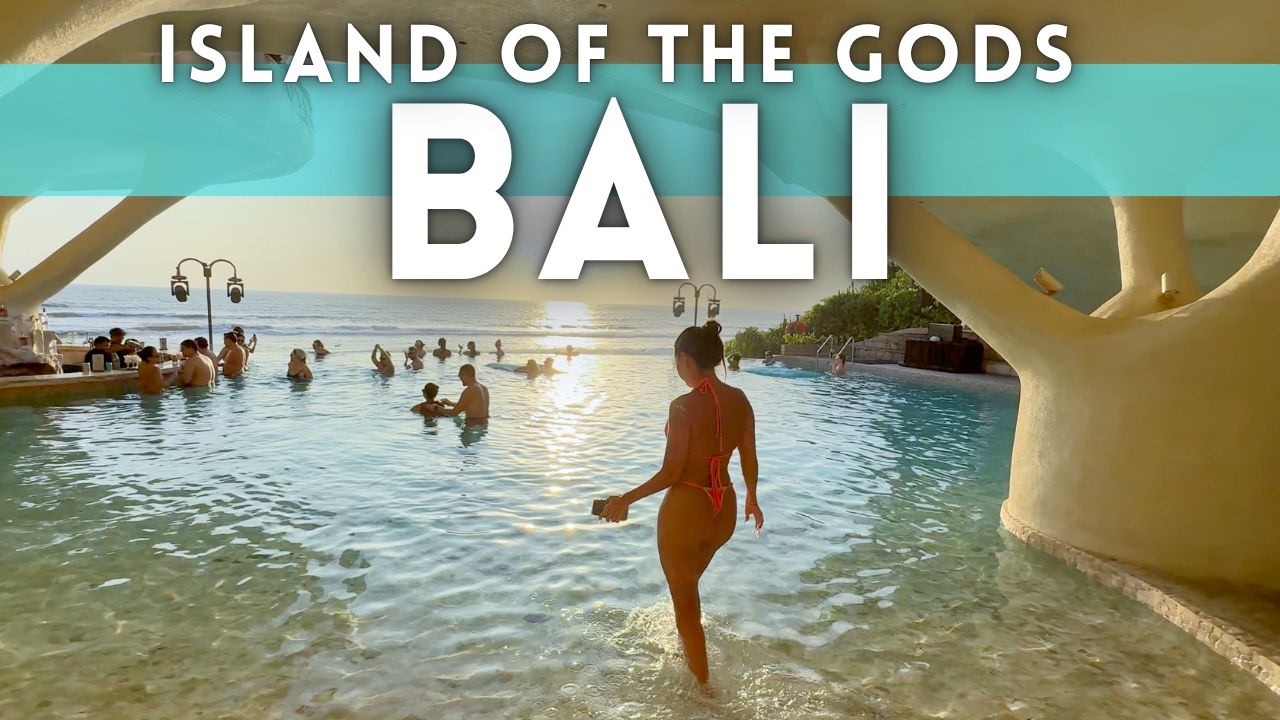
At Kuta Beach on a March morning in 2026, the shore was piled high with driftwood, not the trash that most first-timers assume, pushed in by the west monsoon winds that funnel straight into that corner pocket of coastline. Bali has changed quietly over the last five years, and the version most travelers think they know is already out of date. Island Hopper TV spent 10 full days moving across the entire island, north to south and back again, to document what the place actually looks like right now.
From the southern cliffs to the spiritual highlands
The journey started in the south. Uluwatu Temple, perched on 70-meter cliffs at the island’s southern tip, is one of six main temples on Bali built to protect the island from evil spirits, and the thousand-year-old complex still reads as genuinely dramatic against the churning swells below. During this visit, the southern monsoon swell was running so hard that not a single surfer attempted the water, and the rip currents at Pandawa Beach were equally unforgiving. Red flag days on this coastline are not suggestions. In recent years, several tourists who ignored those flags did not return, and that reality hung over every beach stop in the south.
Single Fins, perched above Suluban Beach, offered a more forgiving experience: a cascade of bars, restaurants, and small shops that step down toward the cliff face, with hat vendors on the beach selling for around five dollars each. The nearby Bluepoint Resort and Spa had a pool with a view worth noting for anyone considering where to base camp.
Moving north, Tanah Lot delivered one of those timing lessons that Bali specializes in. Built in the 16th century on a jagged offshore rock, it is known as Temple of the Earth in the Sea, and at high tide the crossing to the island disappears entirely. The best visit, as confirmed on this trip, is at low tide during sunset, when the golden light hits the stone and the walk out is actually possible. There are also, reportedly, holy sea snakes on the island. They are venomous.
Tirta Empul north of Ubud is a different kind of stop entirely: a thousand-year-old living ritual site where, according to Balinese mythology, the god Indra created a sacred spring, which is why Bali carries the name ‘island of the gods.’ The site has about 30 individual spouts across two main purification pools, each spout assigned a different meaning, from cleansing the mind to removing negative energies. A bamboo bridge crosses the river to reach part of the complex, and as the crew noted plainly, ‘if the river was really rushing, I wouldn’t cross this bridge. It’s kind of janky.’
Ubud, Canggu, and where each crowd actually lands
Ubud still functions as the spiritual and cultural hub of the island, the Balinese word rooted in medicine and healing. The Ubud Palace sits at the center of town with a king said to still reside there, and directly across the street the Ubud Market offers locally made apparel for a few dollars. The surrounding jungle pushes farm-to-table dining and wellness forward as the area actively moves toward sustainable tourism after years of mass overcrowding.
Canggu reads differently. It pulls a younger crowd and carries the island’s most talked-about beach clubs: Finns, which carries the self-applied nickname of the world’s best beach club, and Atlas, which claims to be the largest in the world and was undergoing renovation during this trip, with a reopening planned for May 2026. The night market at Batu Bolong Bazar had the best evening energy seen anywhere on the trip, with Benny and Alexander among the vendors doing brisk business in shirts and easy conversation.
For those considering the newer Nyanyi area near Tanah Lot, a beach club called The Luna is part of a 44-hectare development described as a creative city, built with the environment and Balinese heritage both in mind. The signature drink is called the singing wave, a coconut rum that lands exactly as advertised, and on the night of this visit, the fire show below the terrace ran for a full 30 minutes.
In the north, the rice terraces at a UNESCO World Heritage site in the Jatiluwih area offered the most expansive walking of the trip: a living monument to the traditional Balinese subak water management system that has kept the terraces irrigated for centuries. The nearby Ulun Danu temple on Lake Beratan, at 75,000 Indonesian rupiah per person, is one of the most photographed temples on the island, and the mountain air up at around 5,000 feet elevation runs noticeably cooler than the coast.
The bamboo bridge at Tirta Empul
The makeshift bamboo bridge near the holy spring at Tirta Empul spans a river that moves with more force than its calm surface suggests. It holds. It sways. It does what bamboo bridges do.
A week and a half to two weeks is the honest minimum to feel like Bali has actually been seen rather than sampled, and even after 10 days of moving hard across the island, the driftwood was still washing in at Kuta Beach every morning, same winds, same corner pocket, same shore that most people have already half-made up their minds about before they arrive.