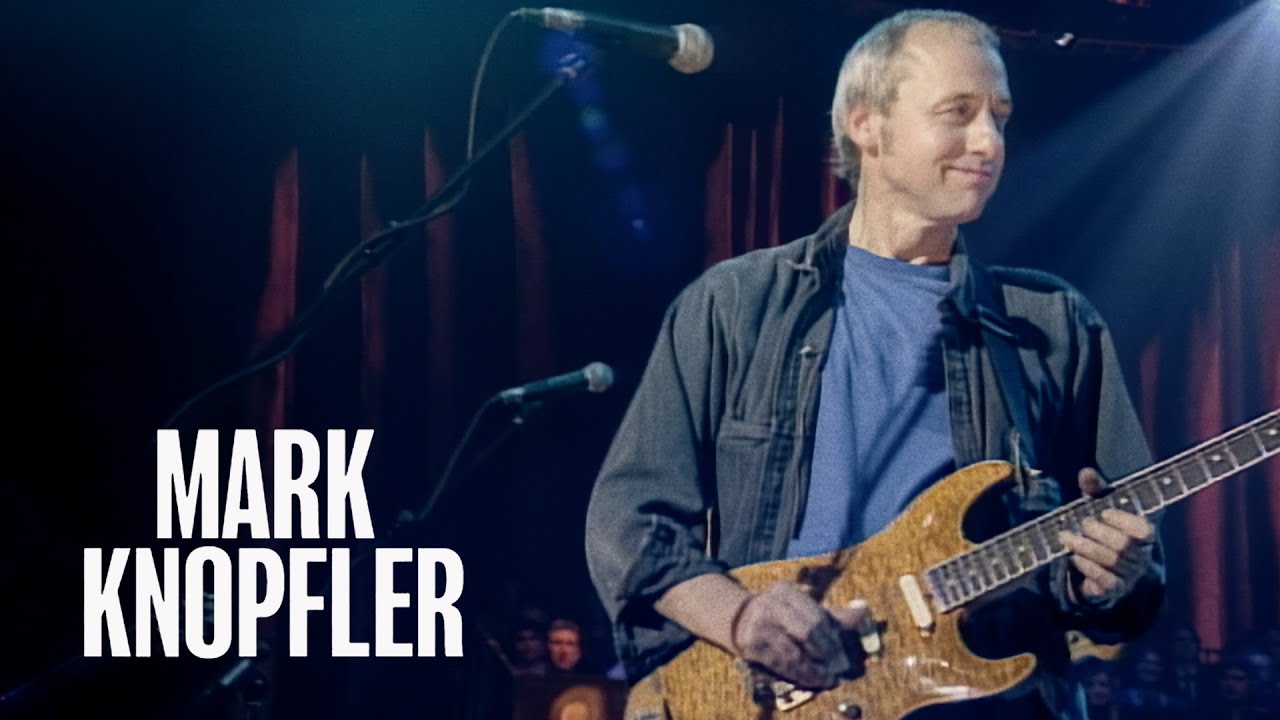
The shiver arrives before anyone in the room can name it. A darkened London stage, rain somewhere out past the walls, and Mark Knopfler fingerpicking the opening of Sultans Of Swing with that signature unhurried certainty that makes the song feel less like a performance and more like a conversation being resumed. This 1996 London concert moment has circulated for decades for a simple reason: it captures the song not as a crowd-pleaser but as a character study, delivered by the man who wrote the characters in the first place.
The story inside the song
Sultans Of Swing is built around a very specific kind of invisibility. Mark, the guitar player at the center of the lyric, knows only fancy rhythm and cannot afford anything better than an old guitar, yet he plays it like anything, fully committed to a room that mostly does not care. The crowd of young faces Knopfler describes are just fooling around, dressed in their best and chasing whatever rock and roll means to them that night. They do not give a damn about the trumpet-playing man, or Mark, or the quiet skill happening right in front of them. That gap between mastery and recognition is the engine of the song, and live in London, with Knopfler running through the chord changes himself, the irony closes neatly: the man singing about an ignored virtuoso is the room’s main event.
The 1996 London performance leans into the song’s internal contradictions. The opening verse arrives spare and close, almost conversational, before the band opens the arrangement outward. When the guitar solo builds, it does not announce itself. It simply extends the logic of everything before it, which is exactly what the song’s fictional George would have done.
What a London crowd in 1996 heard differently
By 1996, Sultans Of Swing had been a known quantity for nearly two decades, but live performance kept resetting its emotional clock. The London audience that night responds to the solo passages with the particular warmth of people hearing a familiar piece played better than they remembered it. The applause that follows the extended instrumental sections is not polite; it is recognizably surprised, the sound of a crowd recalibrating upward.
Knopfler himself closes the performance with a kind of deliberate finality. ‘Now it’s time to go,’ the lyric announces, and the band takes that instruction seriously, pulling the song down rather than sending it out on a triumph. The Sultans themselves, the song reminds everyone, just play the music and then go home.
Mark, still holding the old guitar
Somewhere inside the London performance, between the chord that opens the solo and the one that closes it, there is a still point where the room simply listens. No applause, no movement. Just the guitar and the lyric’s quiet insistence that Mark and his old instrument are, without any fanfare, doing something worth noticing.
The rain was still falling somewhere out past the venue walls when the final note resolved, and the room came back to itself the way rooms do after something genuinely good: a beat too late, slightly reluctant to let it end.