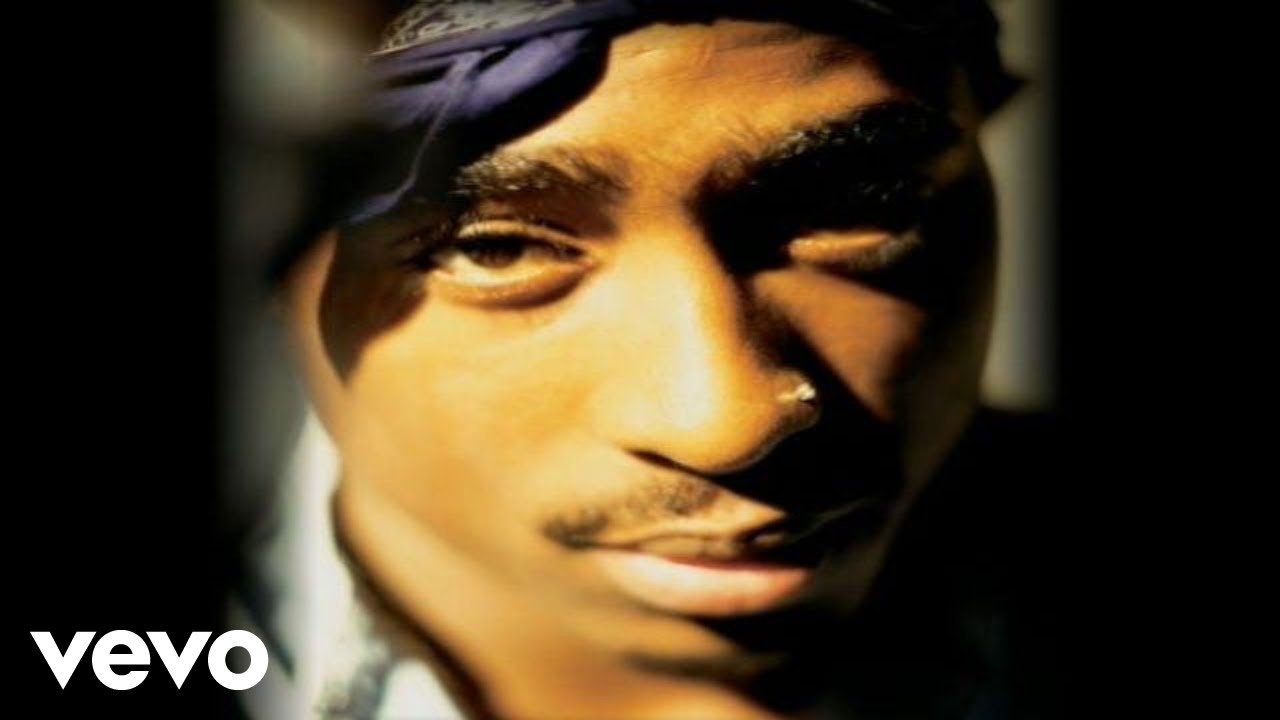
Radio chatter crackles. A helicopter drones overhead. Sirens rise, then a woman’s sob cuts through all of it, and before a single lyric lands, ‘Ghetto Gospel’ has already told you where you are. The song, a collaboration between Tupac Shakur and Elton John, is not a comfort or a celebration. It is a reckoning delivered in two voices across what feels like an impossible distance, and the reason it still travels is that the distance has not closed.
What the streets looked like from the inside
Tupac opens not with rage but with memory, sitting still long enough to recall ‘bliss and the good days’ before the hood, before the weight of it. What follows is a street-level inventory that refuses to be tidy. He sees a younger generation cracking under stress they did not choose, an older generation turning away in shame, and somewhere beneath it all, his own guilt: ‘We left ’em a world that’s cursed.’ The indictment runs in two directions at once, outward at the structures that failed and inward at everyone, himself included, who let it happen.
The references come fast. Malcolm X. Bobby Hutton. Names attached to sacrifice, attached to the fear that the sacrifice counted for nothing. Then, without breaking stride, a pivot toward something almost tender: ‘There’s no need for you to fear me / If you take your time and hear me / Maybe you can learn to cheer me.’ It is the line that keeps the song from becoming a dirge. It asks for patience rather than deference, and it sounds like a man who knew he was often misread.
Two women and a baby born into the same story
The second verse slows down and gets specific. An old woman living out of bags, grateful anyway for what little she carries. Across from her, a woman whose addiction has brought a child into the same broken frame. Tupac does not moralize either scene. He clocks them, acknowledges his own discouragement, and then does something unexpected: he sets a personal bar. ‘I set goals, take control, drink out my own bottles / I make mistakes, but learn from every one.’ He refuses the role-model label while quietly behaving like one, measuring himself against his own failures rather than someone else’s expectations.
The confessional stretch that follows is the song’s most honest passage. He wonders aloud whether smoking and drinking with friends disqualifies him from grace, then answers himself: ‘God isn’t finished with me yet.’ He describes writing rhymes as going blind and letting something larger take over. It is a claim about creative surrender that sits just as comfortably in a church as in a recording studio.
Elton John’s refrain arrives at the close of each chorus carrying none of the cynicism the verses earn. ‘Those who wish to follow me / I welcome with my hands.’ The red sun sinks. The hills go gold. Peace is wished for a young warrior, specifically without the sound of guns. Tupac put it plainly in the final verse: ‘Before we find world peace / We gotta find peace and end the war in the streets.’
The last line that never resolves
The track ends mid-plea. ‘Lord can you hear me speak / To pay the price of being hell bound.’ There is no answer, no resolution, no assurance that the price gets paid or that anyone is listening.
The sirens that opened it have gone quiet by now. The woman’s sob is long past. What is left is the question, sitting exactly where Tupac left it.