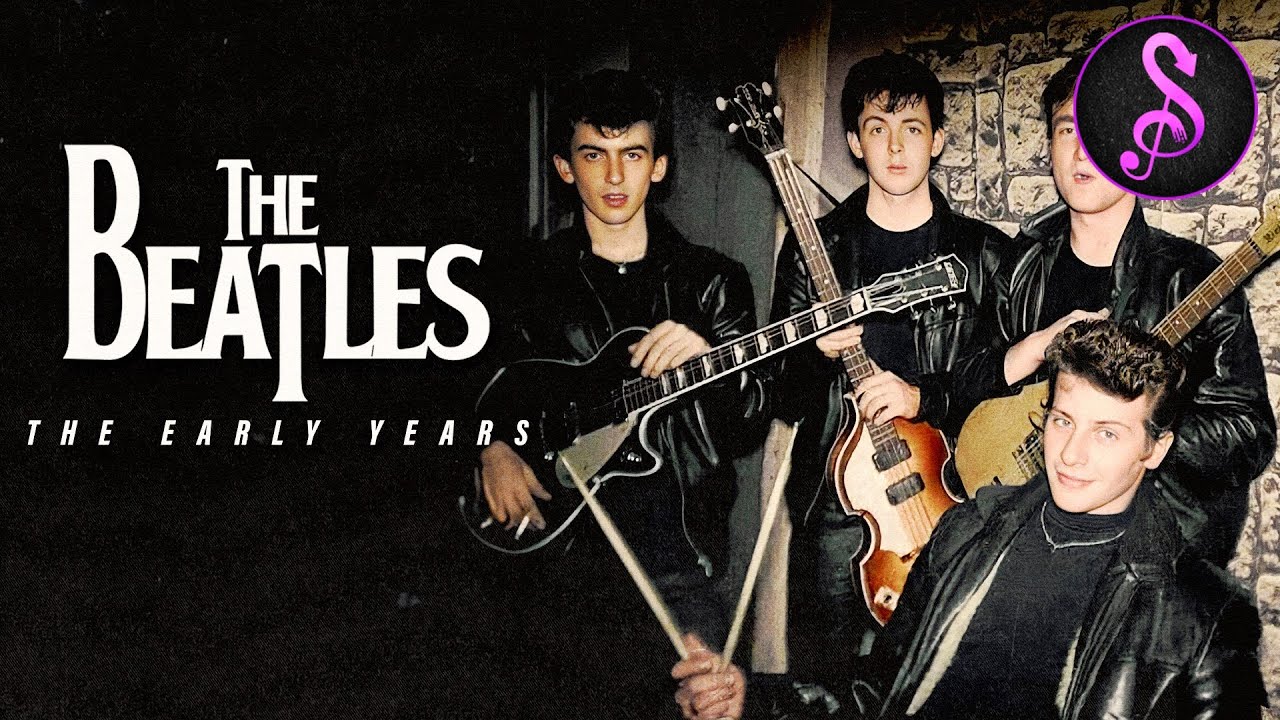
The first night the Beatles played the Casbah Club after returning from Hamburg, kids were squashed so tightly into the room that, as Pete Best put it, ‘you couldn’t move in there.’ Liverpool had sent out a clumsy, leatherjacketed skiffle group and got back something it barely recognized. The stakes of that transformation were nothing less than the shape of popular music for the next six decades. What actually happened in the years before ‘Love Me Do’ is a story of punishing club hours, a well-connected record-shop owner, and one very memorable remark about a tie.
Seven hours a night in a city none of them had permits to work in
Before any of it, Liverpool itself was the incubator. The city had been a hotbed for music well before the 1950s, carrying big-band jazz through the wartime years and into the skiffle boom that gave teenagers like Pete Best his first reason to pick up drumsticks. His mother Mona opened the Casbah Club in 1959, and it was there that John Lennon and Paul McCartney first showed up as, in Best’s words, ‘coffee bar layabouts.’ John wanted toast and Paul told him jam was a penny extra. That penny became something of a preview of McCartney’s lifelong instinct for the economics of the music business.
The group, still calling themselves the Quarrymen, needed a bass player badly enough to pressure Stuart Sutcliffe into buying one with prize money from a John Moore’s art exhibition, around 50 or 60 pounds, on the condition that the others would teach him to play. When a Hamburg residency materialized, a similarly pragmatic audition landed Pete Best the drummer’s seat largely because he owned a kit and was, as one witness recalled, ‘reasonably competent.’ Allan Williams, who ran a coffee bar called the Jacaranda and whose first financial transaction with the group was paying them to redecorate his ladies’ toilets, drove them to Germany himself. He later noted that he had essentially smuggled them in, since none of them had the required work permits.
Hamburg reset everything. The Indra Club at the bottom of the Große Freiheit demanded seven hours a night, fifteen minutes off every hour, in a red-light district that made Blackpool’s famous illuminations look, as Best described it, ‘like a little fairy town.’ To survive those sets, the band consumed pep pills and drink, stretched every song to its limit, and drilled the stamina, self-confidence, and, in the words of one observer, a particular brand of arrogance that no rehearsal room in Liverpool could have produced. Their repertoire was almost entirely covers: Chuck Berry, Ray Charles, Little Richard, Carl Perkins, with an occasional Elvis ballad ‘just for the girls.’ Their first Hamburg season ended ignominiously when Bruno Koschmider had George Harrison deported for being underage, then pursued a trumped-up arson charge against Pete Best and Paul McCartney. They came home broke. Mona Best gave them the lifeline gig at the Casbah on December 19th, and Liverpool discovered it had a different band on its hands.
The audition tape that everyone agreed was terrible
Brian Epstein entered the picture through the Cavern, watching from the shadows before sending word through the club’s DJ, Bob Wooler. The Beatles went to meet him after a few pints, heard his terms, and agreed. Epstein’s renovation project was methodical: set lists, punctuality, suits instead of leathers, no smoking or belching into microphones on stage. John Lennon and Best were, in Best’s words, ‘a little bit obnoxious about the thought of going into suits,’ but they followed suit, literally.
The push for an English recording contract ran into a wall at Decca, where the band showed up to their New Year’s Day audition having spent the previous night in Trafalgar Square doing things they probably shouldn’t have been doing. They played 14 or 15 numbers, celebrated prematurely over a lavish dinner on Epstein’s tab, and were told weeks later that Decca had signed Mike Poole and the Tremeloes instead. Tony Barrow, then working at Decca as a liner-note writer, later acknowledged the tapes were, in his blunt assessment, ‘absolute crap.’ Epstein hawked the same Decca session around every London label with little success until it eventually reached George Martin at EMI.
The Abbey Road test session produced no particular musical impression either, until George Harrison looked at Martin and said, straight-faced, ‘I don’t like your tie.’ The EMI engineer in the room nearly fell off his chair laughing. It was enough. Martin told his engineer he had never seen anything like these four, and despite the music being ‘pretty rubbishy,’ recommended signing them. The recording date was set for June 6, 1962.
Pete Best never made it to that session. Days before it, Epstein called him into the NEMS office and told him, quietly, that the boys wanted him out and that Ringo Starr had already been arranged as his replacement. Best walked back to the van where Neil Aspinall was waiting, said he had been kicked out, and neither of them spoke again until they reached home.
The van outside NEMS
Neil Aspinall sat in a parked van on a Liverpool street, waiting for Pete Best to come back out of a meeting that was supposed to take a couple of minutes.
By the time they reached EMI’s Studio Two that June, four lads who had once decorated a coffee bar’s ladies’ toilets for pocket money were on the verge of becoming the biggest phenomenon their era would produce. The Casbah was still there, at the bottom of it all, where John had wanted jam on his toast and Paul had told him it was a penny extra.
The Beatles – Changed Music for Eternity
Words are not sufficient for explaining or describing The Beatles, and how they helped make the World A Better Place –
John Lennon | Paul McCartney | George Harrison | Ringo Starr
But ALWAYS remind yourself to Imagine, Believe, Achieve … And don’t forget the lessons of Yesterday 🙂
Yesterday is important, so Let it Be 😉
Hey Jude, remember Eleanor Rigby is a lesson to never forget, and also critically essential that While My Guitar Gently Weeps we remember all of the whys In My Life every Now and Then … 😉 ✌️☮️❤️ Don’t miss Ringo Starr on The Beatles Secret to Success and The Beatles Final Rooftop Performance!
And WHEN you are occasionally down, don’t worry, Tomorrow is Another Day and…