
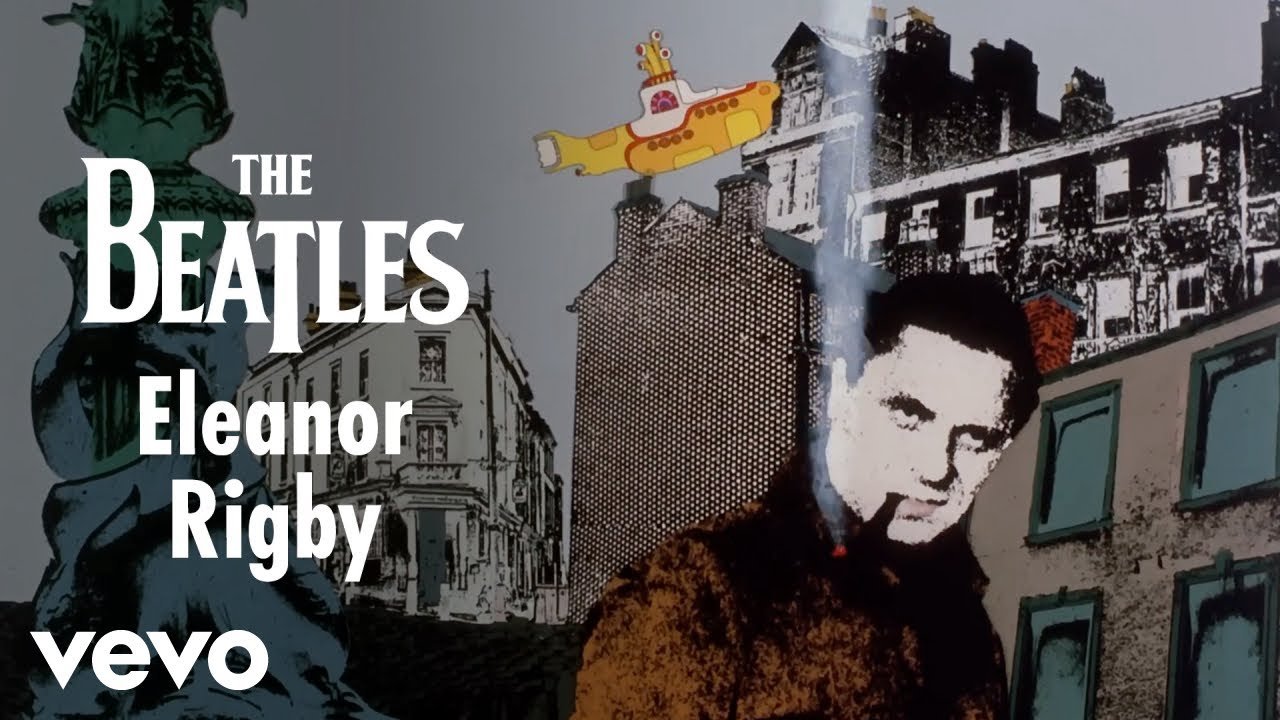
The opening notes arrive before anything else, a string arrangement that tightens the chest before a single word lands. ‘Eleanor Rigby’ has carried its question for six decades: where do all the lonely people belong? This live performance answers not with words but with presence, a room of people gathered around one of the most quietly devastating songs ever written, breathing it back into the moment.
A sermon written for nobody, sung for everybody
The song‘s architecture is deceptively simple. Eleanor picks up rice outside a church after a wedding, saving it for a dream nobody else can see. Father McKenzie writes his Sunday sermon in an empty room, darning his socks at night with no one to notice. Paul McCartney and John Lennon built these two characters independently and then discovered they lived in the same loneliness, two strangers who would never actually meet inside the song itself.
The chorus lands the same way every time, not as a judgment but as a genuine question. ‘Where do they all come from? Where do they all belong?’ The performance here does not try to resolve that question. It lets it hang, which is the only honest thing to do with it.
The moment the third verse changes everything
For most of the song, Eleanor and Father McKenzie exist in parallel. Then the third verse collapses the distance: Eleanor dies in the church and is buried alongside her name, and it is Father McKenzie who walks away from the grave, wiping the dirt from his hands. Nobody came. No one was saved. The two characters finally share a scene, and the scene is a funeral with an attendance of one.
The lyric ‘buried along with her name’ is the kind of writing that sounds simple until it doesn’t. A name buried means a life that left no record, no echo, no one who would say it aloud afterward. That detail, small enough to miss on a first listen, is the thing that makes the song stay.
What the strings do that a vocal cannot
The string octet arrangement, originally scored by George Martin, refuses to be background music. It comments, it presses, it occasionally sounds genuinely distressed. In this performance the strings carry the emotional argument from the first bar to the last, so that by the time the final chorus repeats, the question feels less rhetorical and more urgent.
The song ends, as it always has, without an answer.
Father McKenzie walks from the grave and the strings stop and the room is left with the question the song has been asking since 1966, still unresolved, still pointed directly at the listener.
Words are not sufficient for explaining or describing The Beatles, and how they helped make the World A Better Place –
John Lennon | Paul McCartney | George Harrison | Ringo Starr
But ALWAYS remind yourself to Imagine, Believe, Achieve … And don’t forget the lessons of Yesterday 🙂
Yesterday is important, so Let it Be 😉
Hey Jude, remember Elanor Rigby is a lesson to never forget, and also critically essential that While My Guitar Gently Weeps we remember all of the whys In My Life every Now and Then … 😉 ✌️☮️❤️ Don’t miss Ringo Starr on The Beatles Secret to Success and The Beatles Final Rooftop Performance!
And WHEN you are occasionally down, don’t worry, Tomorrow is Another Day and…