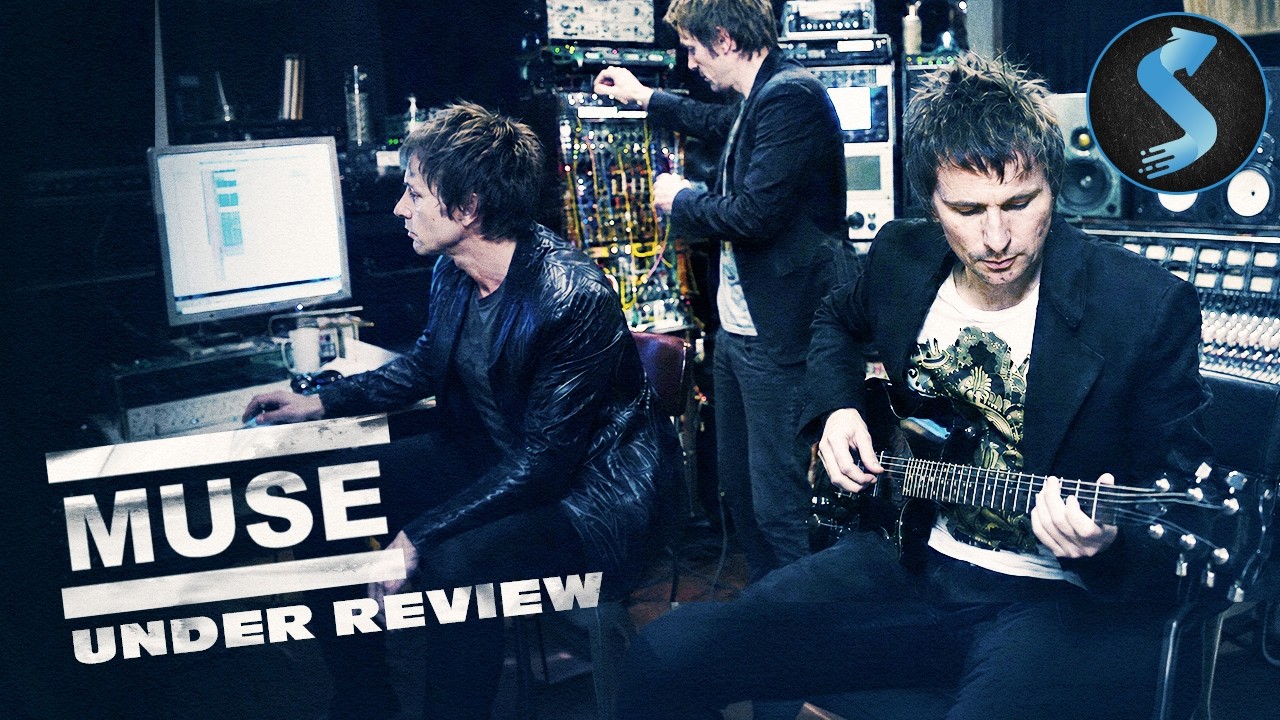
On a stretch of grass called the Den, along the seafront of Teignmouth on the south coast of England, a teenager with a flat-top haircut and shell-suit trainers wandered over to a long-haired drummer one afternoon in 1993 and asked if he could learn a few guitar techniques. Matt Bellamy had been getting into playing guitar and was fascinated about improving. Dom Howard was already drumming in a local rock band called Carnage Mayhem. What neither of them could have known was that their conversation on that fairly dull piece of grass would eventually produce a band selling out multiple nights in stadiums across every continent on Earth. The story of Muse is, in almost every detail, the story of how ambition, stubbornness, and a refusal to make music anyone else would recognise as sensible can quietly become the only thing that makes sense.
The band that record companies literally did not reply to
Teignmouth, by every account of the people who knew it then, offered very little. There was a roller disco. There were cliffs to walk up with friends. There was not much else. Matt, Dom, and Chris Wolstenholme, still only in their mid-teens, played their first real public moment under the name Rocket Baby Dolls at a local Battle of the Bands competition in 1994, with their faces covered in make-up, deliberately trying to cause chaos. They instigated a stage invasion. They won anyway.
By 1997, now renamed Muse, they had come to the attention of local studio owner Dennis Smith, who spent 18 months watching them before deciding they were ready to record. Smith and his business partner Safta Jaffrey formed Taste Media specifically to develop new acts, and they began circulating Muse’s demos to every record company in the UK. The response was total silence. No labels came to gigs. No one followed through. As Jaffrey later recalled with characteristic directness: ‘There was no action at all.’
Jaffrey took the band to the CMJ music conference in New York in November 1998. The showcase drew the attention of Nancy Walker at Columbia Records, who immediately invited them to Los Angeles for a further showcase on Santa Monica Pier at 11 in the morning, arranged so that producer Rick Rubin could attend. Rubin, who had worked with Metallica and the Red Hot Chili Peppers, pulled Jaffrey aside after the set and told him he had ‘the modern day Beatles.’ Days later, before the band could even leave for the airport, a representative from Maverick Records named Guy Oseary called to say he had been watching Muse for some time and could not let them leave without playing a few songs. They booked a rehearsal studio. Oseary arrived with Steve Jones from the Sex Pistols. The band played Muscle Museum and then Cave. Partway through Cave, Oseary stood up and said that was enough, that he did not need to hear any more. By Christmas Eve 1998, Muse were signed to Maverick.
From a church organ in Bath to two nights at Wembley Stadium
The Maverick deal, once it circulated through the industry, broke the logjam. The UK deal was eventually negotiated on a napkin at the Sky Bar of the Mondrian hotel in Los Angeles, with Mushroom UK signing on that napkin after initially passing on the band twice. The debut album Showbiz, produced by John Leckie and released in October 1999, opened with Sunburn, a piano track that Leckie recorded using a military throat microphone laid directly on the sounding board of the piano to give it what he described as a ‘dirty, gritty sound’ rather than anything too clean or classical.
The second album, Origin of Symmetry, pushed further. For the track Megalomania, the band needed a real pipe organ. Driving through Bath, Matt suddenly told the car to stop, ran into a church, walked up to the organist mid-session and asked for a go. The organist said yes. A fee of a few hundred pounds was paid to the church fund. The vicar later requested the lyrics in advance, so Matt, who had not yet written them, scribbled out positive, gentle verses. The vicar called them ‘very nice poetry.’ The actual Megalomania that appeared on the album was a rather different proposition.
Absolution in 2003 brought their first UK top 10 single with Time is Running Out, and Black Holes and Revelations in 2006 achieved what every previous record had been building toward. The supporting tour in 2007 included two sold-out nights at the new Wembley Stadium. By the time The Resistance arrived in 2009, someone told Jaffrey the album had reached number one in 16 countries in a single week.
A napkin that changed the deal
The contract that unlocked Muse’s UK release was never typed up in a formal document at that initial moment. It was scribbled by Safta Jaffrey onto a napkin at a hotel bar in Los Angeles, slid across the table, and signed on the spot by the managing director of Mushroom UK, who had flown in from Australia and suddenly decided he wanted the UK territory after all. That napkin was, in practical terms, the document that put Showbiz in British record shops.
The Resistance, their fifth album and the first they produced entirely themselves, recorded partly at a studio Matt had been building at his house in Italy, arrived at a point where Muse were simultaneously number one across sixteen countries and still, by most reasonable accounts, considered by a portion of the music press to be slightly too much. That tension, between the music being too large and the audience deciding it was exactly large enough, is perhaps the most accurate summary of what the three friends from Teignmouth spent fifteen years building.