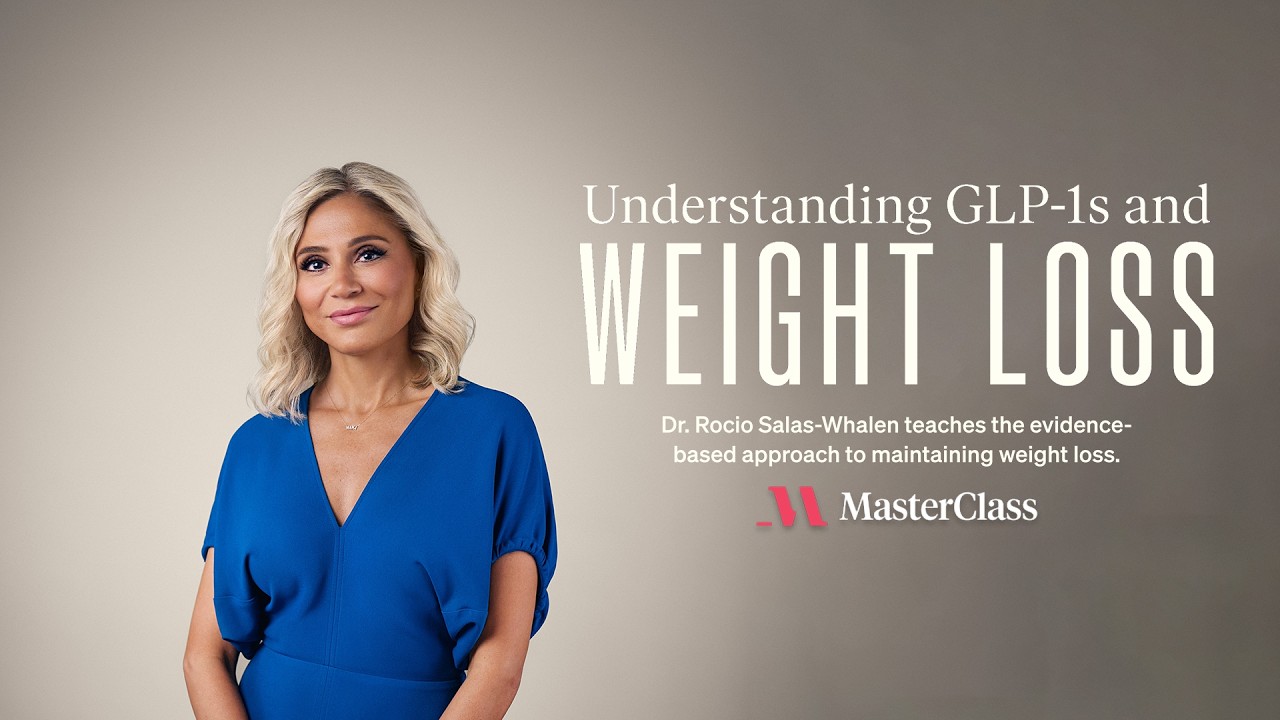
Dr. Rocio Salas-Whalen opens with a number that stops most people cold: 60% of lost weight returns within a year of stopping GLP-1s. For anyone who has celebrated early results on one of these medications, that figure lands differently than a vague caution. It is specific, it is measured, and according to the endocrinologist and obesity medicine specialist, it is completely preventable with the right guidance.
GLP-1 medications have become one of the most talked-about developments in weight management, but the conversation around them has outpaced the medical understanding most people actually have. Dr. Salas-Whalen, who describes herself as one of a small number of physicians in the country specializing in obesity medicine, has spent 16 years building what she calls a tried and tested protocol around these drugs. Her concern is not that people are using them. Her concern is what they have been told, and what they have not.
Why losing weight fast can quietly backfire
One of the sharpest points she makes is about speed. The feeling of rapid weight loss reads as progress. On a scale, the number drops. In the mirror, clothes fit differently. But Dr. Salas-Whalen is direct about what is often actually happening: ‘Losing weight quickly feels like winning, but actually what you’re losing is muscle. And muscle is our fat-burning machine.’ Without protecting muscle mass through the process, patients may be setting up a longer-term metabolic problem while believing they are solving one.
She also challenges one of the most persistent assumptions around obesity itself. Lifestyle choices, commonly presented as the primary driver, account for maybe one-sixth of the reason a person can develop obesity, she says. That reframe matters enormously for how patients approach treatment and for how they understand their own bodies.
What most people on GLP-1s are not being warned about
The risks she flags are not rare edge cases. Most people, she says, are experiencing dangerous consequences without knowing it, including the possibility of long-term metabolic damage. Her protocol, developed across nearly two decades of clinical practice, is built around preventing exactly that outcome.
The MasterClass she is teaching draws directly from the same material her private patients receive. ‘My patients pay thousands for this information,’ she says plainly, ‘and I’m going to tell you everything I tell them.’ That promise is the clear spine of the course: medically backed information, no sales pitch, no shortcuts.
The statistic on a whiteboard that did not need decoration
Sixty percent. The figure sits at the top of her opening remarks without a qualifying clause or an asterisk. It is the kind of number a clinician reaches for when they want to cut through noise.
For the millions of people currently on GLP-1 medications, or thinking about starting, Dr. Salas-Whalen’s course frames that statistic not as a reason to stop, but as a reason to understand what happens next, and to plan for it before it happens.