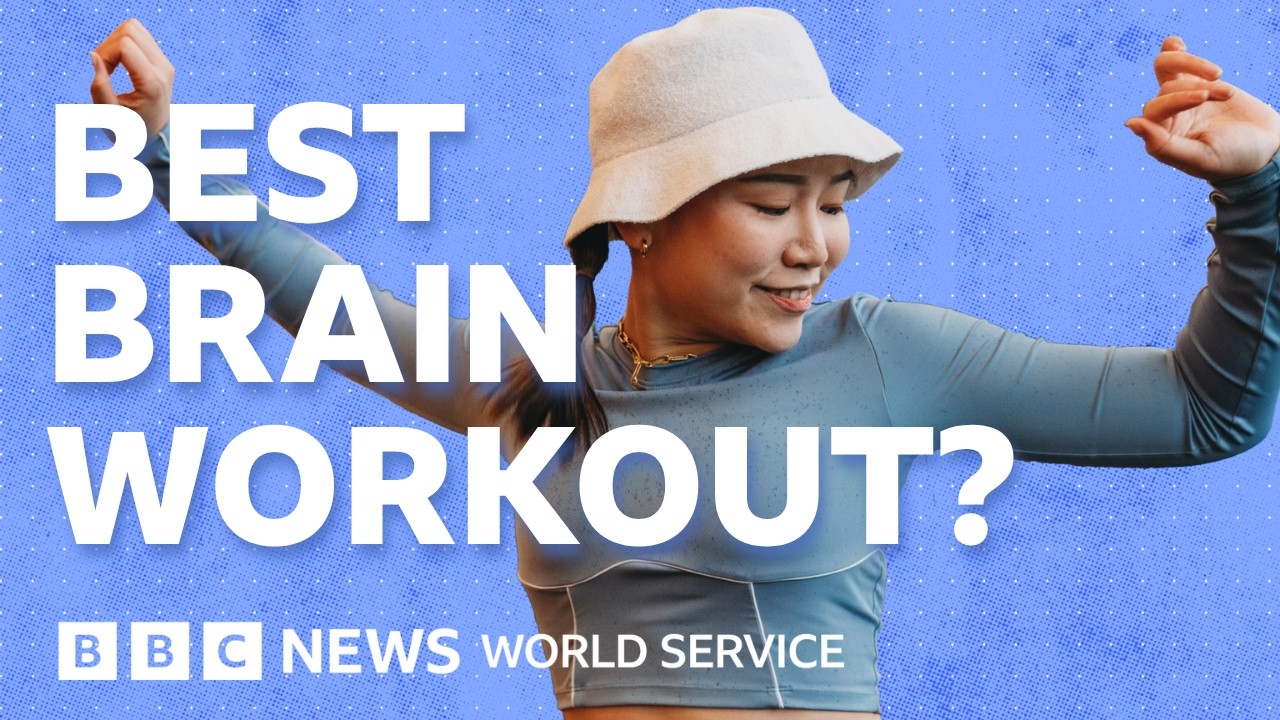
Somewhere between balancing your body, tracking the people moving around you, memorizing a sequence of steps, and staying motivated enough to show up again next week, your brain is quietly doing something remarkable. Dancing, it turns out, is one of the most complete workouts the brain has ever been handed. And unlike a treadmill session that eventually becomes pure muscle memory, it never lets the brain coast.
Why dancing hits differently than other exercise
Doctor Chen, a former professional dancer, draws the distinction plainly. ‘If we are just exercising our muscles, for example, if we’re just running on the treadmill or if we’re just lifting weight, over time, that just becomes muscle memory and you’re not so much challenging your brain anymore. Whereas dancing, you’re constantly engaging different parts of the brain.’
That constant engagement has measurable physical effects. Research has shown that regular dancing grows gray matter, the outer layer of the brain where information is received and processed, made up of the cell bodies, or heads, of individual neurons. It also grows white matter, the axon-based connective tissue that carries electrical messages between brain regions and the rest of the body. Those messages can fire between one and 200 times per second, and dance has been shown to make that signaling faster and more efficient.
Exercise also triggers the release of brain-derived neurotrophic factor, which Doctor Chen describes as ‘basically a fertiliser for your brain cells.’ It supports growth, strengthens the pathways between neurons, and feeds the broader process of neuroplasticity, the brain’s lifelong ability to rewire and reorganize itself.
What faster neural communication actually changes
Doctor Julia Basso measures brain activity in real time using specialized caps worn by dancers as they move, and what she finds goes well beyond motor skill. ‘The flow of information from one region to another can be faster, and it enhances our ability to learn and remember information, to have better cognitive function and to support emotional health.’ She adds that coordination improves, communication sharpens, and even mathematical problem-solving gets a lift.
There is also the chemical side. Dancing floods the brain with endorphins, dopamine, serotonin, and, when others are involved, oxytocin. The more exposure the brain has to that mix, the more it begins to crave the experience, which is one reason people keep returning to the dance floor rather than forcing themselves back.
The savings account you build before you need it
The long-term case for dancing is striking. As the brain ages, neurons naturally begin to die, opening the door to degenerative conditions like Parkinson’s and Alzheimer’s. There is no cure for either, only prevention. The strategy is building what researchers call a neural reserve, described here as a savings account: ‘A catastrophe happens if you only have $100, you’re going to go into debt. But if you have $1 million, for example, if you have a good cognitive reserve, you have a lot of money.’
A large study tracking 11 physical leisure activities and their relationship to dementia risk found that dancing was the only one shown to lower that risk. Every other activity, including swimming, walking, and housework, did not produce the same result.
Neuroplasticity, critically, continues throughout the entire lifespan. Starting at any age still deposits into the account.
Doctor Julia Basso, mid-measurement
She is the dancer on the left, wearing a specialized cap that reads her own brain activity in real time while she moves.
The human brain contains roughly 86 billion neurons. Dancing asks a meaningful number of them to do something at once, and that request, repeated week after week, is apparently one of the better investments a person can make.