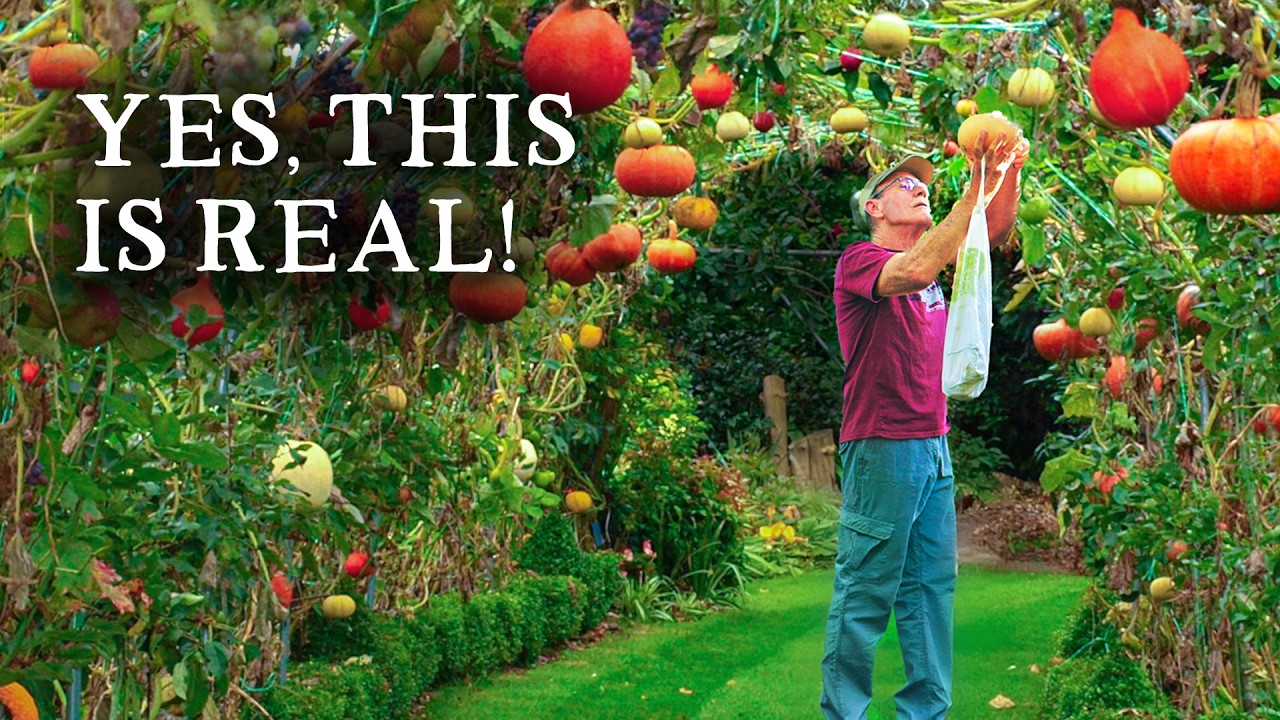
Step inside the allotment on Cool Oak Lane in Barnet and the first thing you notice is the light. On the right afternoon, it catches pumpkins and apples hanging from arched frames above a gently curving path, turning them, in the gardener’s own words, into ‘little Christmas globes hanging down.’ For anyone who has ever wanted to grow food but ran out of ground, this is the proof that vertical space is the answer. The man behind it has spent 14 years coaxing a 40-metre edible tunnel out of polytunnel tubing, semi-dwarf apple rootstocks, and a stubborn love of pumpkins.
Why a South African nursery window changed everything
The allotment holder traces the whole idea back to a nursery he visited in South Africa, where staff had trained plants into shapes along the front of their office. That image stayed with him for years. When he eventually took on the Cool Oak Lane plot, which was larger than his previous one and gave him room for fruit trees, the memory resurfaced. He built the tunnel frames from polytunnel tubing, sinking posts into the ground and adding extension bars and a top bar across each arch for stability. At each post stands an apple tree grown on semi-dwarf rootstock, trained as a three-level espalier: branches guided horizontally along the frame, with a few uprights kept hard-pruned twice a year. Most fruit trees get pruned in autumn and winter, but with this style of tight espalier he prunes again in midsummer, cutting away the long green new growth so that come winter the job is shaping rather than cutting back. A little fruit is sacrificed, but the quality of what remains is higher and the trees stay within the frame.
Pumpkins came later, born of a space problem. A sprawling pumpkin vine can run 20 to 30 feet across the ground. With no room to spare, he let them climb instead, and they took to the arches immediately. In a good year, full-grown pumpkins dangle beside ripening apples the length of the path. This year was harder, he admits freely, but in past seasons the effect has been exactly what he was chasing: a living tunnel where the fruit hangs at eye level and the light, for two or three weeks each autumn, turns the whole structure briefly luminous. Clematis, climbing roses, and wisteria fill the gaps between apple varieties, and pears grow further along the plot.
Building your own without a 40-metre plot
The tunnel follows a slight S-curve rather than a straight line, a consequence of working around existing plants and a shed that needed a path leading to it. That gentle bend means you can see all the way through but the full length only reveals itself as you walk it. It is a detail worth stealing for any garden.
For anyone tempted to replicate the idea on a smaller scale, the advice is direct: get the diameter right before worrying about the length. Stretch your arms out to the sides and use that as your minimum width, because anything narrower becomes claustrophobic and kills air circulation. Height should be whatever you can comfortably reach for pruning and picking without a ladder, roughly 6 to 7 feet for a tall person, less for someone shorter. A single arch between two posts is enough to start. The plants can be apples, pears, roses, or anything else with climbing habit.
One variety he flags as a cautionary tale is Katy, a cider apple that ripens all at once and drops its fruit fast. Visit one week and the tree is full; return the next and everything is on the ground. He takes the surplus to work and encourages colleagues to pass it on to family and friends, but it remains a logistical puzzle he has not entirely solved.
The barefoot gardener who stripes his lawn in winter
In the quieter months he walks the plot barefoot, and in winter he does the heavy digging, turning compost in, and getting the beds ready for spring. The year, he says, just flows.
When the afternoon light fades, the apples return to being apples and the pumpkins return to being pumpkins, ordinary things hanging from a polytunnel frame on a plot in Barnet that happens to be 40 metres long.