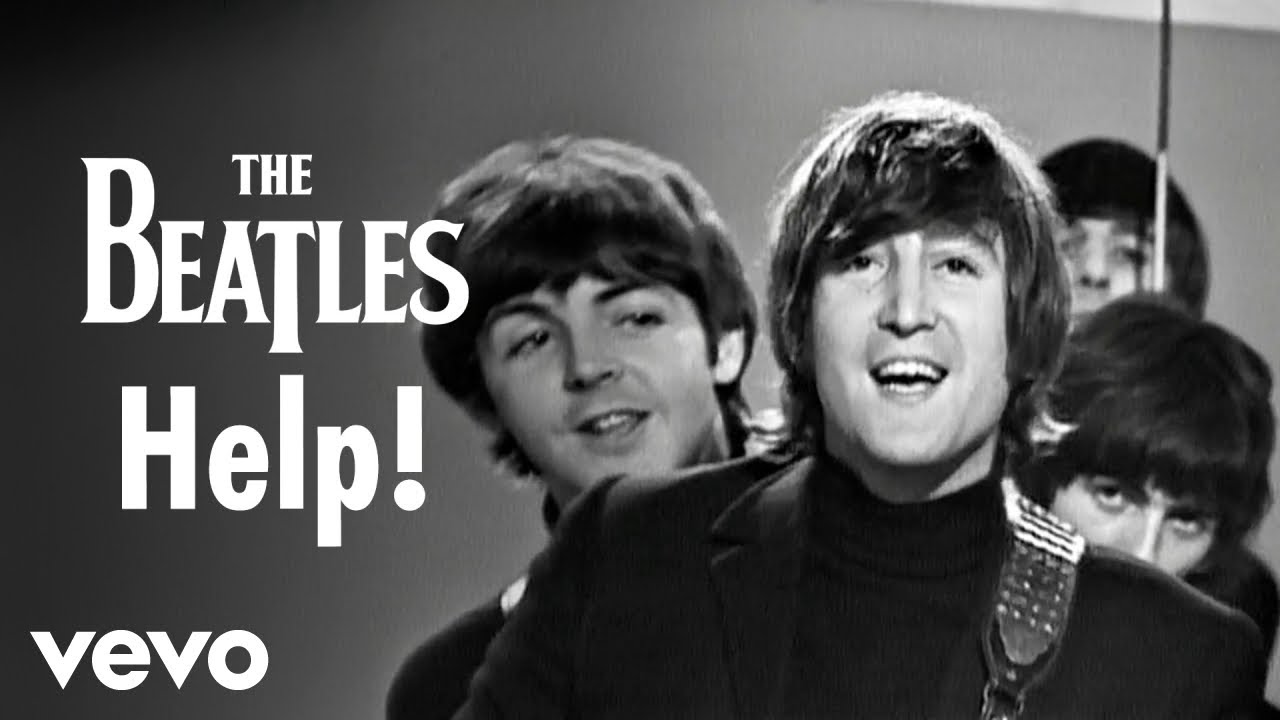
The opening cry lands before anything else does: ‘Help!’ Just one word, stacked in harmony, and the room changes. The Beatles released ‘Help!’ as both a film title song and one of John Lennon‘s most unguarded moments on record, and the 2015 remaster brings that emotional transparency forward with a clarity the original pressings never quite managed. For anyone who has ever felt the ground shift beneath their independence, the song has never asked to be merely enjoyed. It asks to be understood.
A younger self who thought he had it figured out
The lyric that hits hardest arrives early and without ceremony. Lennon writes from the vantage point of someone looking back at a more confident version of himself: ‘When I was younger, so much younger than today, I never needed anybody’s help in any way.’ There is no nostalgia in that line, only the quiet surprise of realizing self-sufficiency was always partly an illusion. The verses build on that admission honestly. Independence ‘seems to vanish in the haze,’ insecurity surfaces without warning, and the chorus does not dress the need up in metaphor. It states it plainly: feet off the ground, someone nearby appreciated, real help genuinely wanted.
What makes the song hold up across six decades is that Lennon never performs vulnerability. He reports it. The bridge returns to that younger self not to mourn him but to mark the distance: doors have opened, the mind has changed, and needing someone is framed not as failure but as a new and honest condition of being alive. By the final chorus, the ‘won’t you please, please help me’ has shed all embarrassment. It is a straight request from one person to another.
What the 2015 remaster actually does to the sound
The remastered version restores separation between the vocal layers that compression had blurred in earlier pressings. The stacked opening harmonies resolve into distinct voices rather than a single smeared sound, and the rhythm track carries more physical weight underneath Lennon’s lead. The result is a recording that feels less like an artifact and more like a room the listener has just walked into. Lennon himself, years after writing the song, said he considered ‘Help!’ one of his most genuine songs, a real cry rather than a crafted one.
The last ‘ooh’ left hanging in the air
At the very end, after the final chorus resolves and the harmonies pull back, a single soft ‘ooh’ hangs briefly before the track cuts. No coda, no fade into resolution.
The request still stands, same as it did in 1965, same as the first time anyone heard it and recognized the feeling from the inside out.