For 3,740 kilometers, rivers across Europe are moving the way they were always meant to. That stretch, longer than the Volga, the continent’s longest river, opened up last year as 602 dams, low walls, and old mill barriers were pulled out of the water for good. The case for removing them was decades in the making, and the results are arriving faster than almost anyone expected. But dam removal is only one corner of a much bigger picture this month, from a bubble curtain catching plastic in Amsterdam’s canals to humpback whales returning in the thousands off Brazil.
The barriers that outlived their purpose
Many of the structures that came down last year had not served any practical function for generations. Old walls that once guided boats or powered mills were still sitting in riverbeds, quietly doing damage. Since 1970, Europe has lost three out of every four migratory freshwater fish, and these barriers are a significant part of the reason. Fish cannot reach upstream breeding grounds. Flow and temperature shift. Sand and mud that should reach the sea pile up instead behind the walls.
In 2020, the removal effort had barely started. Today, six times as many barriers are coming down each year. Sweden led last year’s effort, followed by Finland and Spain. Even Iceland and North Macedonia removed their first barriers in 2026. The EU has set a target of 25,000 kilometers of river flowing freely again by 2030, and the pace suggests it is reachable.
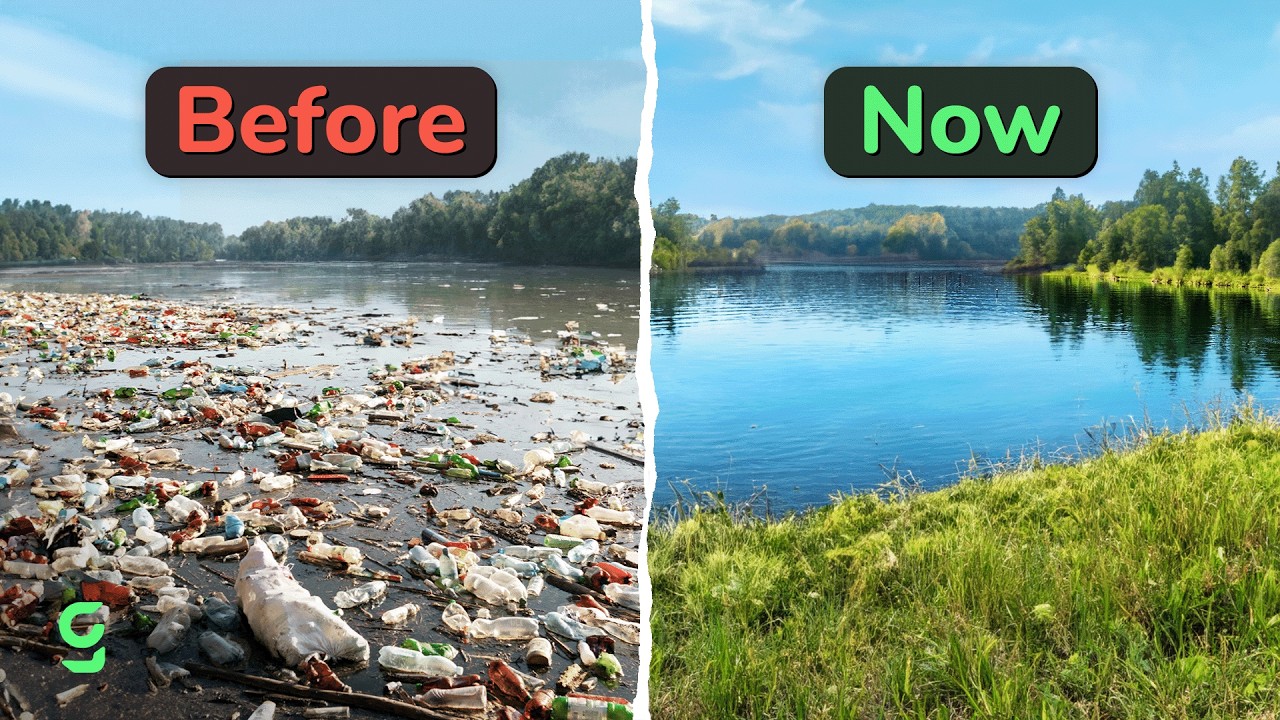
Meanwhile, a completely different kind of barrier is going into rivers on purpose. A tube full of tiny holes is laid diagonally across the riverbed. Air is pumped through it, sending up a diagonal curtain of bubbles. The river’s own current then pushes floating plastic sideways into a collection system. It catches about 86 percent of plastic drifting past, from fragments just one millimeter wide to pieces a meter across, and it runs around the clock without blocking boat traffic. The project is already operating at three sites across the Netherlands, including Amsterdam, and in one river in Portugal. The team behind it is now targeting Southeast Asia, where river-to-ocean plastic flows are at their most severe.
From coral reefs to courtrooms
Off the coast of Benin, scientists returned to a reef that researchers in the 1960s had assumed was dead, having only been able to detect its shape by bouncing sound off the seabed. When Benin’s own marine scientists went back with modern equipment, they found a reef full of living coral spread across a seven-kilometer stretch, with fish moving through it in all directions.
In the United States, one independent group tracking crime across dozens of cities found homicide rates down 18 percent in the first six months of 2026 compared to the same period last year, putting them on course for the lowest level recorded in FBI data in over a century. Robberies, carjackings, and break-ins all fell alongside the murder rate.
In Southeast Turkey, residents living near the country’s biggest coal plant teamed up with doctors and local groups and took an expansion plan to court. They won this summer. The court ruled the expansion posed too great a risk to local people and land, canceling the permit. Turkey had plans for 95 new coal units back in 2015. By 2026, 93 of those 95 had already been canceled, leaving just one coal project still active in the country.
In Germany, electric cars outsold every other fuel type for the first time in June, edging past petrol, diesel, and hybrids to reach nearly 30 percent of the market. The shift came after the government reintroduced grants worth up to 6,000 euros for lower and middle earners, arriving at the same moment petrol prices were climbing. As the narrator put it: ‘For the country that gave us the petrol engine, that is a real turning point.’
And in the South Atlantic, the humpback whale population off Brazil has recovered from just 440 individuals in the 1950s to around 25,000 today, roughly where it stood before commercial hunting began.
Mimi and the 15-hour window
In Argentina’s Iberá wetlands, a young jaguar named Mimi was transported to a park called Olymp, where the wild population had fallen to just 10 animals. She could not be sedated for the journey because the risk to a cat her size was too high, so she stayed awake the entire way. The team had to get her settled into her new home in under 15 hours.
The population she came from at Iberá shows what becomes possible. Jaguars had been absent from that area for around 70 years. Since the first was released in 2021, more than 50 now live there again. The long-term goal is to connect the parks so jaguars can eventually find each other on their own.
Somewhere in a river in the Netherlands, bubbles are still rising through the water tonight, catching what the current carries toward the sea, one millimeter at a time. The tube running along the riverbed is not the kind of thing anyone photographs, but the 3,740 kilometers of river now flowing unobstructed upstream have a quiet momentum that is just as easy to miss and considerably harder to stop.