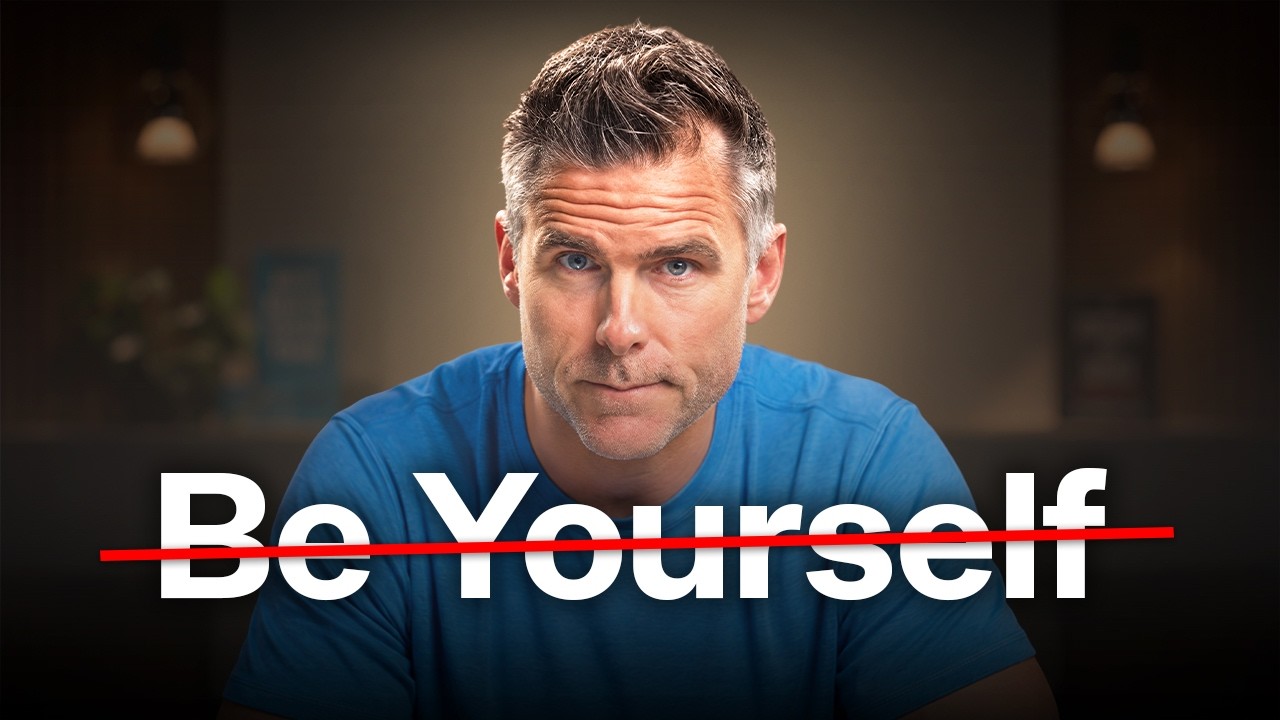
An hour before walking on stage to give the most important talk of his life, Dan Martell quietly told his wife she should probably stick around afterward because he was about to share something he had never said out loud before. She agreed, then mentioned her parents had just arrived to watch. He told her to ask them to stay too. What followed was 15 minutes that changed everything he thought he understood about strength, vulnerability, and what it actually takes to build a life worth living. Martell had been to rehab and jail twice before turning 17, had built several multi-million dollar companies since, and had spent the years in between staying completely silent about all of it. The nine pieces of conventional wisdom he is now willing to challenge come directly from the gap between those two versions of his life.
Why passion alone is a trap, and what to ask instead
Martell does not start with vulnerability. He starts with a server room. His first two businesses collapsed because he was chasing the physical thrill of configuring software, borrowing $10,000 from a bank to sit with his brother in that room selecting hardware. Nobody was paying him for the experience. ‘Passion without market demand,’ he says flatly, ‘that’s just a hobby.’ The person who got rich was not the train enthusiast. It was the one who sold the trains to the enthusiast.
His replacement for ‘follow your passion’ is four questions asked together, never in isolation: What are you naturally good at? What do you love doing? What does the world say it needs? And critically, what are people already paying for? Most people stop at the second question. That is where the advice breaks down.
His challenge to ‘never give up’ lands with similar force. He describes a man on American Inventor who had spent 27 years and his entire life savings on a board game that had never sold. The judges turned him down. The man could not understand why. Martell’s point is not cruelty but clarity: sunk costs are not a reason to continue. The smarter move is to write down the goal, then ask from first principles whether the current path is actually the highest-probability route to reach it. Giving up a failing approach is not quitting. It is choosing a different road to the same destination.
The brother who became the largest home builder in Eastern Canada
When Martell’s brother Pierre launched his construction company, he described it as one business. Martell saw four or five separate companies operating simultaneously with no focused attention on any of them. He told Pierre to pick one and go completely all in. Today Pierre runs what Martell describes as a nine-figure operation and the largest home-building company in Eastern Canada. Zero chance, Martell says, that happens if Pierre keeps spreading across all of it from the start.
The same logic drives his skepticism toward ‘hustle harder.’ He worked with clients for three years straight, napping between meetings, unable to maintain relationships, gaining weight, until his body forced a reckoning in the form of shingles. The lesson he took was not to stop working hard. It was to protect the recovery time that makes hard work sustainable, blocking hobbies and rituals into the calendar the same way meetings go in, choosing activities that are, as he puts it, fun, frequent, and with friends.
The talk Martell gave that night, the one where he warned his wife to keep her parents in their seats, ended with his mother-in-law pulling him into a hug and saying, ‘I understand you now.’ Tim Ferriss, author of the 4-Hour Work Week, came up afterward and said simply, ‘I had no idea.’ Martell connected those two moments to nearly everything that followed: a bestselling book, 16 million social media followers, keynote fees in the six-figure range. ‘The more personal the story,’ he said, ‘the more universal the message.’
The night before the gym
Martell still lays his workout clothes out the night before. He commits to meeting someone there. He pays enough that skipping costs him something real. He posts a photo afterward. Each step adds friction to the easy choice and removes it from the hard one. The habit architecture is not discipline. It is engineering.
His son came to him recently with a business plan. Martell and his wife began picking it apart, not because the idea was bad, but because they had watched the boy leave other projects unfinished and were nervous on his behalf. Martell caught himself mid-conversation and recognized the pattern: a parent trying to protect a child from a fall that had not yet happened. He went back, said he believed in the idea, named the real risks clearly, and offered full support. The next morning his son returned and said he had done more research and decided not to move forward on his own. Martell had not told him to stop. He had simply told him the truth.
That, more than any framework or workbook or calendar ritual, may be the actual lesson threaded through all nine: accurate information, clearly given, by someone with real experience of the thing you are trying to do, is rarer and more useful than almost any advice you will receive from people who simply love you.
The clothes laid out the night before
On a typical morning, the gym shoes are already sitting on the floor beside the door, placed there the night before, waiting.