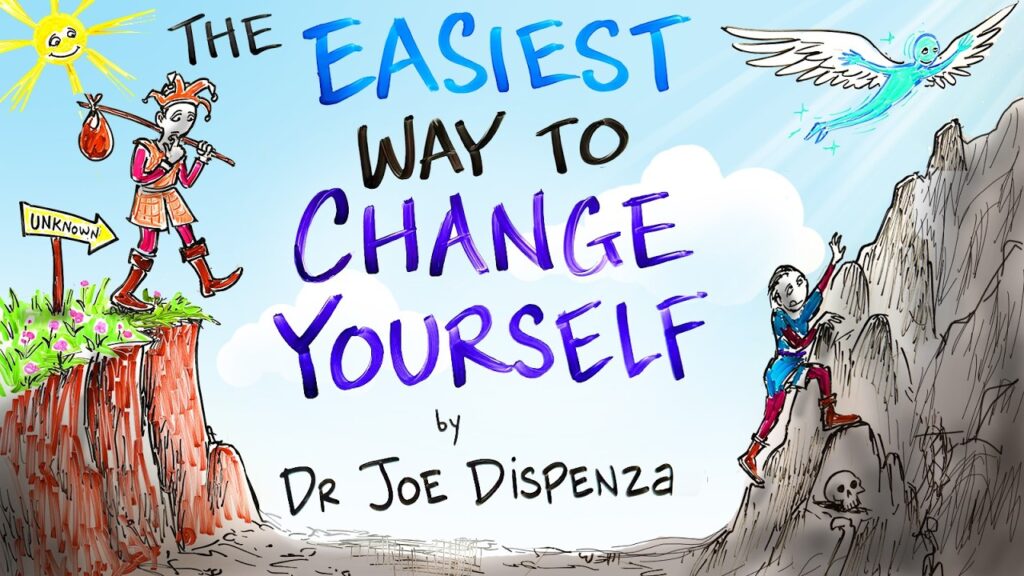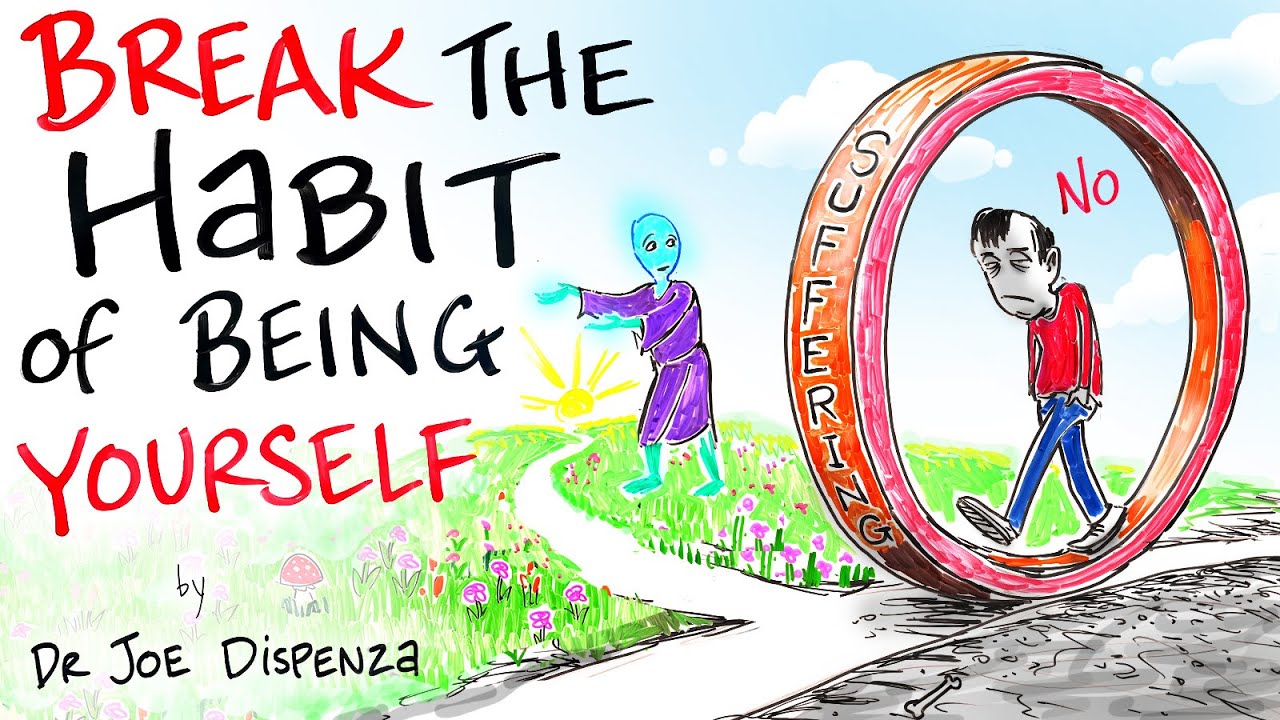
Dr. Joe Dispenza opens with a question he already knows the answer to. He asks a room full of people how many of them genuinely believe their thoughts shape their lives, and almost every hand goes up. Then he asks how many of them woke up that morning and consciously created their future. The hands drop. That gap between what people believe in theory and what they actually do each day is not a motivation problem, Dispenza argues. It is a neuroscience problem, and the mechanism behind it is far more automatic than most people are comfortable admitting.
The case Dispenza makes is rooted in a single, uncomfortable observation: the brain is not a creative organ by default. It is a record of the past. Every familiar route to work, every reflexive emotional reaction to a specific person, every morning ritual from the alarm clock finger to the favorite coffee mug, is the external environment literally switching on pre-wired circuits. As those circuits fire, they produce the same thoughts, which produce the same chemicals, which produce the same feelings, which confirm the same thoughts. ‘Nerve cells that fire together wire together,’ he explains, and when that loop runs for years, the body itself memorizes the emotion. At that point it stops being a conscious choice and becomes a habit, and a habit, in Dispenza’s framing, is when the body has become the mind.
The number that reframes the whole conversation
By age 35, Dispenza says, roughly 95 percent of who a person is consists of memorized behaviors, emotional reactions, beliefs, and perceptions running like a background computer program. The remaining 5 percent is conscious intent. That math explains precisely why the person who wants to think positively keeps feeling negatively, and why the person who builds a vision board still feels unworthy of it: the conscious wish is outnumbered almost twenty to one by the conditioned body. ‘Most people try to create a new personal reality as the same personality,’ Dispenza says plainly, ‘and it never works.’
What William Wallace and Joan of Arc understood about the brain
The practical path out of the loop, Dispenza argues, is not willpower but genuine novelty. Every time a person learns something new, they forge a new neural connection. Learning is the act of wiring; remembering is the act of keeping those wires live. The historical figures he names, from Joan of Arc to Martin Luther King, held a vision so vividly and so repeatedly in their minds that their brains began to reflect an event that had not yet happened in the physical world. Neuroscience, he notes, confirms the brain cannot reliably distinguish a richly imagined experience from a lived one if the mental rehearsal is sustained and emotionally charged enough.
Most people, he observes, wait for a crisis, a diagnosis, or a loss to force that kind of internal restructuring. The ego has to be brought low enough that business as usual simply cannot continue. His argument is that the same change is available without the catastrophe, chosen in a state of inspiration rather than extracted by suffering.
The one tool left standing at the end
Dispenza closes by naming the hardest part of the entire framework. Not meditation, not belief, not neuroscience. Making the time. That is the whole instruction.
Somewhere in the room, a hand that went up at the first question is still in the air.
 Wake up to Only Happy News!