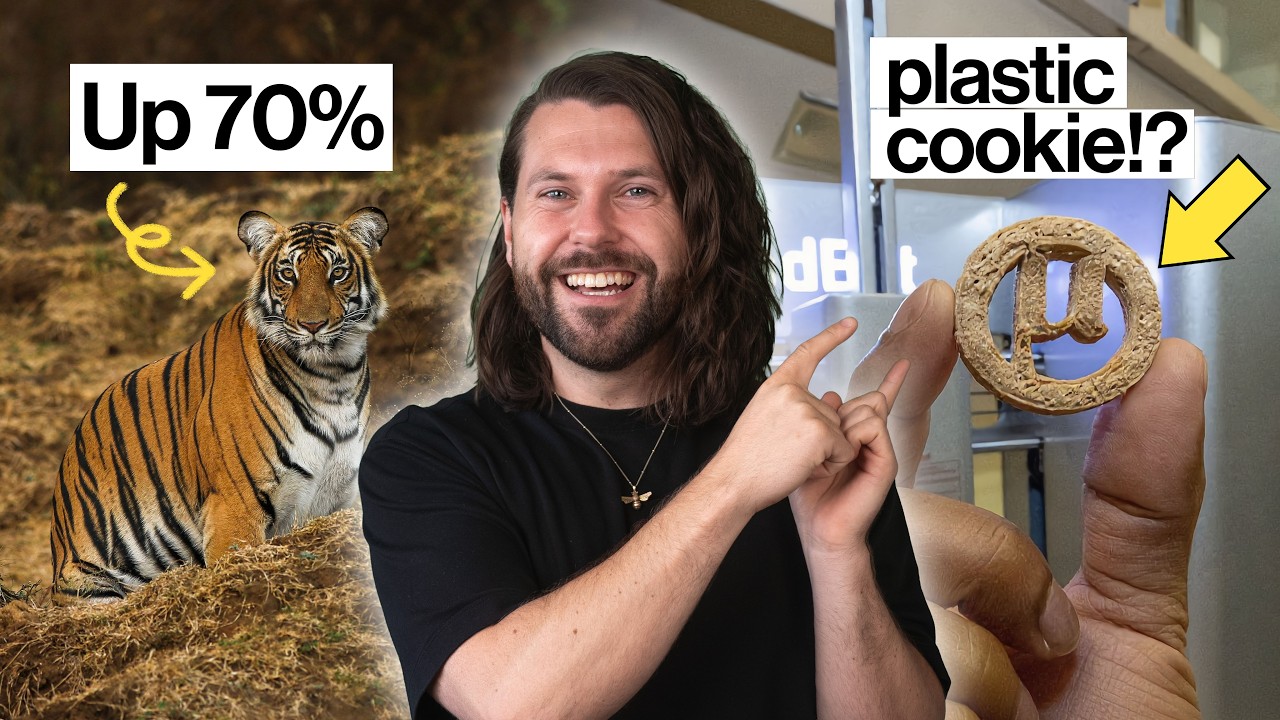
In a lab tank at Stanford, two pieces of coral drifted together by accident, one healthy, one bleached and dying, and where they touched, the color started coming back. It was the kind of discovery that happens before anyone is looking for it, and it quietly set off one of October’s most quietly extraordinary stories. This month brought a remarkable run of breakthroughs, rescues, and small legal shifts that rarely surface in the daily flood of headlines, from an airport that cools itself on sea breeze alone to a cookie assembled from drinks bottle plastic. Sam Bentley rounded them all up, and the sheer range of what went right is worth sitting with.
The science that surprised even the scientists
The Stanford coral story grew from that accidental brush in the tank. The research team followed the lead: bleached corals placed against healthy ones from the same colony had their tissues fuse, and the healthy coral passed its algae, the living organisms coral loses when it bleaches, straight into its dying neighbor. Every single fragment that made contact with a healthy coral fully recovered within 7 weeks. The fragments left just millimeters apart died. There is a catch: the technique only works between genetically identical corals, so reef-wide application is still a way off. But the team is already exploring other ways to deliver that algae transfer.
Also in California, a different kind of repair was underway. Many of the people fighting the state’s wildfires are incarcerated workers who train in conservation fire camps and have at times made up as much as a third of California’s wildfire workforce. Royal Reimel and Brandon Smith both learned firefighting while incarcerated, then spent nearly a year each trying to get hired after release, blocked by the absence of formal paperwork and the presence of a criminal record. They founded the Forestry and Fire Recruitment Program, a non-profit that gets formerly incarcerated firefighters certified and employed. Of the 200-plus people they have placed, just 10% return to prison, against a California average of nearly 42%. A new California bill, which Reimel helped shape, now gives these firefighters priority for entry-level Cal Fire jobs, a pathway to a six-figure income, and a state pension.
Airports, glass, and the right to fix your own stuff
Roland Garros Airport on the island of Reunion opened in 2024 with no air conditioning and no apparent need for one. Designed by AIA Life Designers Architecture alongside local architect Olivier Brabant, the terminal draws on generations of building tradition on the island. A central roofline canyon pulls warm air upward while fresh air enters through adjustable side openings that respond automatically to weather. Ceiling fans keep the flow moving, keeping the terminal 4 to 5 degrees cooler during hot summers. The airport reports savings of around 150,000 euros a year in energy bills.
Back in the United States, a woman in Louisiana named Fannin and her co-founder Max turned a campus glass recycling project into Glass Half Full, a facility now processing around 4 million pounds of glass every year. Machines sort, clean, and crush it into sand and gravel, which goes into biodegradable sandbags used to rebuild wetlands. One project used it to restore a 300-foot stretch of coastline destroyed by Hurricane Ida. Crabs, oysters, and fish have already moved back in. Louisiana loses a football field’s worth of land every 100 minutes to coastal erosion, and the glass sand is holding new ground in place.
And in Paris, the Slow Tech Summit brought together a repair community that arrived ahead of European law. A new EU right-to-repair law came into force this summer, but Back Market had been making the case for refurbished tech long before it passed. At the summit, a company called Recover was pulling rare metals from old electronics to avoid new mining, iFixit was offering free repair guides online, and Team Repair was posting broken gadgets and tools to children to fix at home, then breaking the same device for the next child. As Bentley’s colleague Charlie, a sustainability creator and policy professional reporting from Paris, put it: ‘none of this needs an expert.’
The mouthpad, the Parkinson’s trial, and the dogs
A device called the mouthpad looks like a retainer but functions as a computer mouse controlled by the tongue. Custom-made to fit over the upper teeth, it uses a pressure-sensitive trackpad against the roof of the mouth. A tilt of the head moves the cursor, a small sip acts as a click, and a single gesture opens a menu. No surgery is involved. One user is finishing a mathematics degree. Another said it freed him from the setup built around his wheelchair so he can now work from his bed.
In a major clinical trial, a new daily Parkinson’s pill taken alongside existing medication gave participants more time each day with stable movement, without the uncontrolled movements that stronger treatments can cause. It works without affecting dopamine, the chemical most current therapies rely on, and still awaits regulatory approval.
And the month opened with more than 70 dogs rescued from a farm in Gangjin, South Korea, the final large-scale operation by Humane Society International before the country’s dog meat industry ban takes full effect in February 2027. The farm once bred and slaughtered as many as a thousand dogs a year. Since 2015, the organization has rescued almost 3,000 dogs from South Korean meat farms. Many of the October arrivals have already reached the US and Canada to recover and find homes.
Wendy Wales, still on record
In New South Wales, a community member named Wendy Wales, her partner Tony Bonython, and their neighbors spent more than four years challenging the Mount Pleasant coal mine expansion. Australia’s High Court ruled the approval invalid because planners had not considered the emissions from burning that coal overseas. The precedent now gives other communities a stronger basis to challenge similar projects.
October’s run of good news closed not with a press release but with a lab accident in California, two fragments of coral pressing together in a tank, the dying one pulling color back from its neighbor. The team is still working out how to replicate that transfer at scale. For now, the fragments that touched are alive, and the ones that almost touched are not.
 Wake up to Only Happy News!