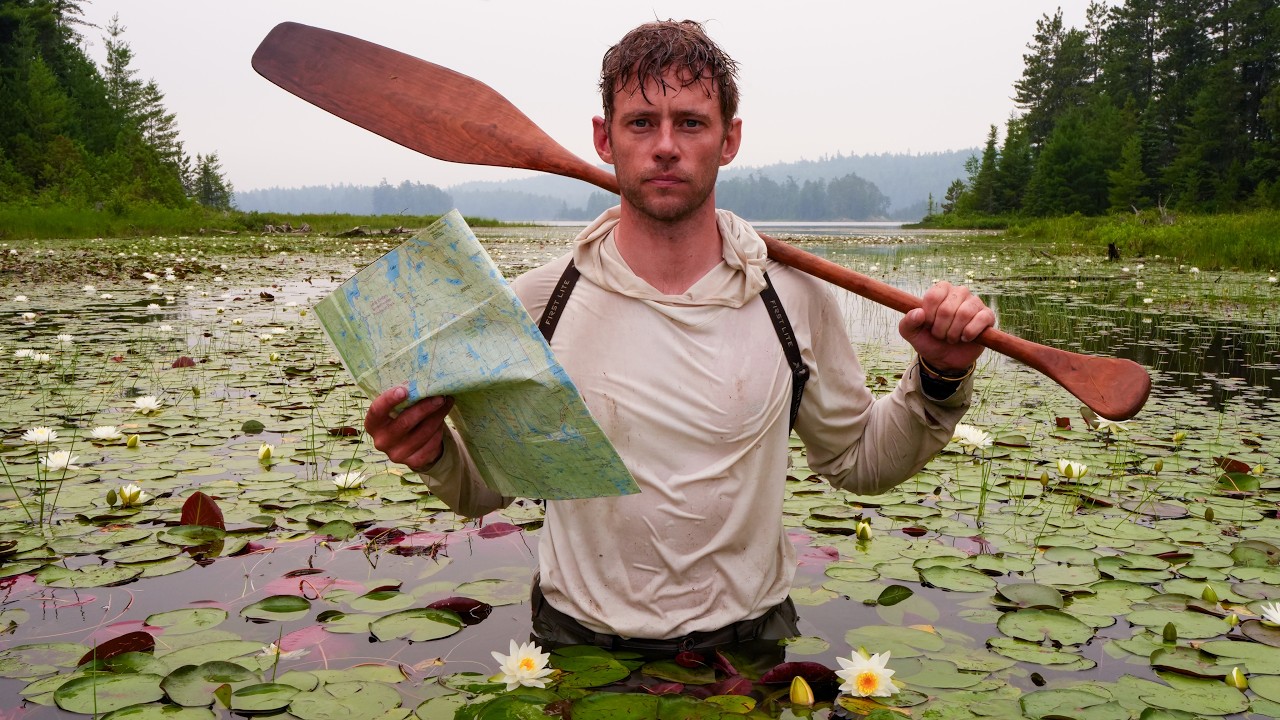
Xander Budnick was packed, bags sealed, route memorized, pointed toward Quebec, and then he pulled out the map. Not a digital one. A physical, dog-eared, waterway-dense map of the Temagami and Chiniguchi region that he has returned to more times than he can easily count, and within minutes of spreading it across the table, Quebec was off and the canoe was going in the water at Madamagasi Lake instead. What followed was eight days of solo paddling, more than 30 portages, back-and-forth load carries totaling over 10 kilometers in a single day, campfire pizzas topped with blue cheese and green onions, and a route so ambitious that he questioned his own intelligence out loud at least three times before he was done.
A lake called Marjorie and the grandma it had to be named for
The first days pushed hard through a route heavier with portages than the original plan suggested. Budnick crossed Madamagasi Lake in roughly three hours, skipped a pair of portages to drop into Wolf Lake, and noted from the map that he was entering what it described as the world’s largest old-growth red pine forest. The bugs were relentless. A spinning lure designed to look like a mouse sat ready in his tackle kit, and a small stick stove purchased from Amazon at the last possible minute kept the coffee going when the conditions cooperated. On the second full day, staring down a sequence of seven or eight difficult portages toward his original line, he chose the harder alternative almost entirely because of a name on the map: the Marjorie Lake route. His grandmother is named Marjorie Budnick, and he improvised a song about it on the water that he delivered with complete sincerity. ‘The name’s Marjorie, not Margarine,’ he said. ‘She ain’t no butter, but she’s buttery smooth.’ When he finally paddled onto Marjorie Lake itself, he called it the most beautiful lake he had ever seen in his entire life, and the timing felt about right.
Thirty portages, one musky story, and a campsite with two fire pits
The Sturgeon River stretch became the emotional center of the back half of the trip. Reaching Kettle Falls after a day that included four consecutive portages totaling more than 1,000 meters was the kind of small arrival that feels enormous after enough consecutive days of hauling a heavy barrel. A lightning strike close enough to the tent to sound like a gunshot marked the night before the final river push. On the section of fast-moving water that followed, red pines lined the right bank and white pines the left, fish jumping clear of the surface, current fast enough that he could barely keep the camera steady, and he eventually gave up filming it and just paddled. The total portage count by that point had passed 30, with more still ahead. One day alone covered 3,500 meters of portaging, which doubles to just over 10 kilometers once the back-and-forth load carries are counted. He described himself, without much irony, as ‘a bit of a savage.’
The final campsite was the same one where he and his brother Max had spent their first night on a canoe trip through this same region years earlier. Back then he was paddling a borrowed blue prospector canoe and sleeping in his younger brother Dylan’s tent. The comparison landed quietly.
The spot where a different trip ended
A bridge on a forestry road near the end of the route marked the place where a winter snowmobile trip with his brother Max, Jim Barrett, and Nate had collapsed under a warm season and wet trails. Standing at that same spot in summer, paddling back toward Madamagasi under haze from nearby forest fires, the geometry of old decisions sat alongside the current ones without needing explanation.
Madamagasi Lake was waiting at the end, the same water he had crossed to start the whole thing.
 Wake up to Only Happy News!