At 2,722 feet, the Burj Khalifa does not ease you into Dubai so much as it ambushes you. Ryan Shirley, a traveler who spent weeks moving through the United Arab Emirates from its southern desert to its northern mountain peaks, returned with a ranked countdown of the ten places that stayed with him longest. The UAE is easy to reduce to a single city, but Shirley’s list makes a case that the country is far stranger, quieter, and more rewarding than any single skyline suggests.
Dubai and the cities that orbit it
Dubai opens the countdown at number one for good reason. The Burj Khalifa anchors the experience, and Shirley rode an elevator to the 154th floor, the highest level open to tourists. The Dubai Mall sits at the base, and stepping back outside to watch the fountain show running multiple times daily is the kind of low-cost spectacle that earns its reputation. For the best exterior view of the tower, Shirley recommends level 42 of a nearby hotel, where entry runs around $32 per person for non-guests. The beach stretch Shirley called the Jeremiah Public Beach lines Dubai’s coast with views of the skyline and the Burj Al Arab, the property billed as the world’s only seven-star hotel. On the day he visited, a precision jet team performed maneuvers and released smoke trails in the colors of the UAE flag. The Dubai Marina comes next as a waterfront district of towers with a genuinely relaxed energy, and right beside it sits the Palm, a man-made archipelago shaped like a palm tree finished in 2006, carrying luxury residences and the Atlantis Hotel on its fronds. The Frame, a 492-foot observatory and museum opened in 2018, rounds out the Dubai section as the largest picture frame in the world and one of the more disorienting structures Shirley encountered.
A desert safari earns its own place on the list. The dune riding was, in Shirley’s words, ‘a little sketch,’ but the Arabian sunset from the middle of the sand made it worthwhile. Not far from Dubai, about an hour out, Fossil Rock rises from the desert alongside a nearby rock formation locals call the Sphinx, making it a striking destination for anyone willing to go off the standard tourist circuit. Love Lake, also about an hour from the city, offers two artificial heart-shaped lakes surrounded by walking paths, with flamingos visible in the ponds along the approach road.
Sharjah, the third largest city and sitting just north of Dubai, carries a noticeably quieter atmosphere. Flag Island draws the eye with a massive flagpole and hosts the Eye of the Emirates Ferris wheel on the same grounds.
Mountains, the capital, and the deep desert
Hatta sits about an hour and a half from Dubai in an enclave carved into the mountains. The lake there is among the most beautiful in the country, and kayaking on it offers a complete change of pace from the coast. The eastern shore near Fujairah holds beaches Shirley loved, particularly around a spot called Snoopy Island.
Abu Dhabi, the capital, runs at a noticeably calmer frequency than Dubai. The Sheikh Zayed Grand Mosque is its defining landmark: 82 white marble domes, four minarets, completed in 2007 after eleven years of construction. The inner courtyard is vast and bright. The Louvre Abu Dhabi on Saadiyat Island adds a different kind of scale. Built in 2017, the museum operates under a naming agreement with France that runs until 2047, an arrangement Shirley found genuinely surprising. The Corniche area along the coast, including a skyline viewpoint, rounds out the city’s appeal. Just outside Abu Dhabi, the Jubail Mangrove Park charges a small entry fee for access to paths winding through clear-watered mangroves.
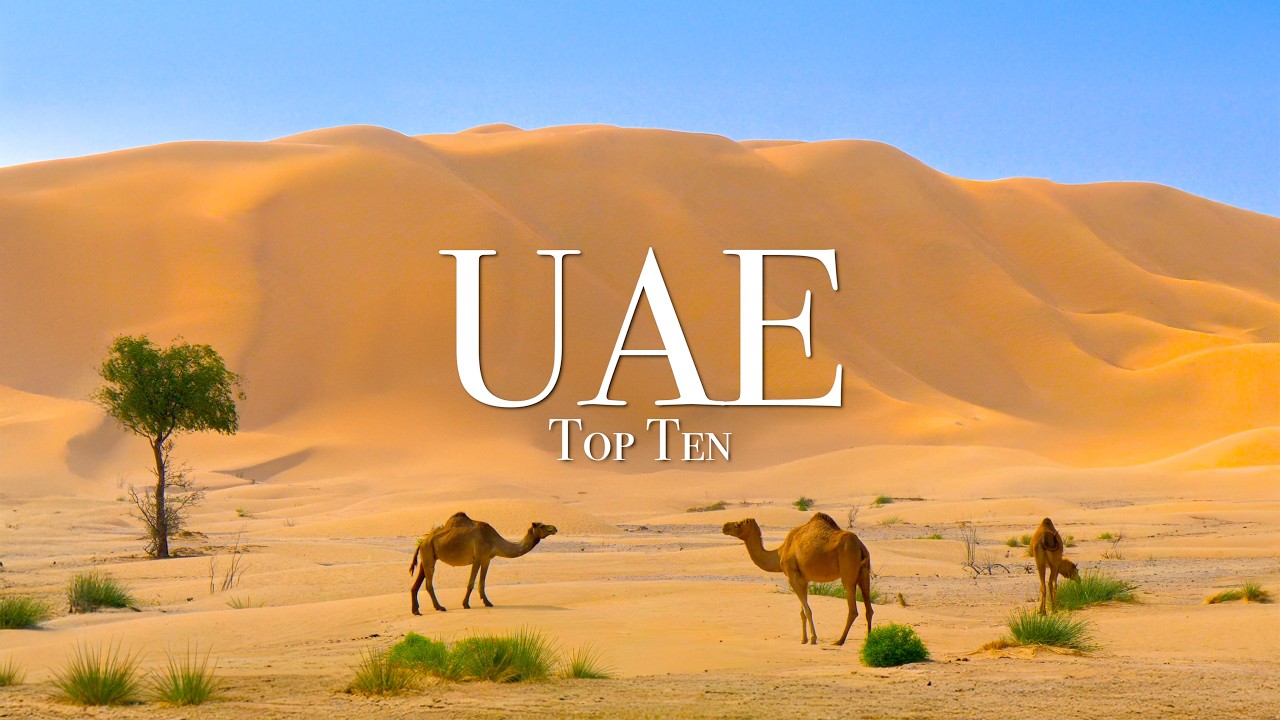
The Empty Quarter in the south is the world’s largest continuous sand desert, stretching into Saudi Arabia, Oman, and Yemen. The Liwa Oasis, about three hours from Abu Dhabi, is the gateway to the UAE’s portion. The dunes are enormous.
In the emirate of Ras Al Khaimah, about an hour and a half from Dubai, a hilltop fort built in the 1800s offers 360-degree views for a small entry fee and stands as the only remaining hilltop fort in the country. Jebel Jais, at 1,934 meters the highest point in the UAE and a two-and-a-half-hour drive from Dubai, closes the ranked list. Shirley hiked from the viewing deck park to a nearby peak in the midday heat and saw the coast from the summit.
As a bonus outside the top ten, Shirley points to the Musandam Governorate of Oman, a region often called the Norway of Arabia for its fjords. It runs about three hours from Dubai each way, and most tours spend four to six hours on the water with swimming and snorkeling included.
The moment the mountains came into focus
At the top of the unnamed peak near Jebel Jais, after hiking through midday heat, Shirley stood and could see both the summit of the UAE’s highest mountain and the distant coastline at the same time.
The Burj Khalifa was still out there somewhere to the south, invisible at that distance, the city that starts every conversation about this country. But Jebel Jais made the case that the UAE’s most surprising views are the ones you have to drive two and a half hours and then climb a mountain to reach.
 Wake up to Only Happy News!