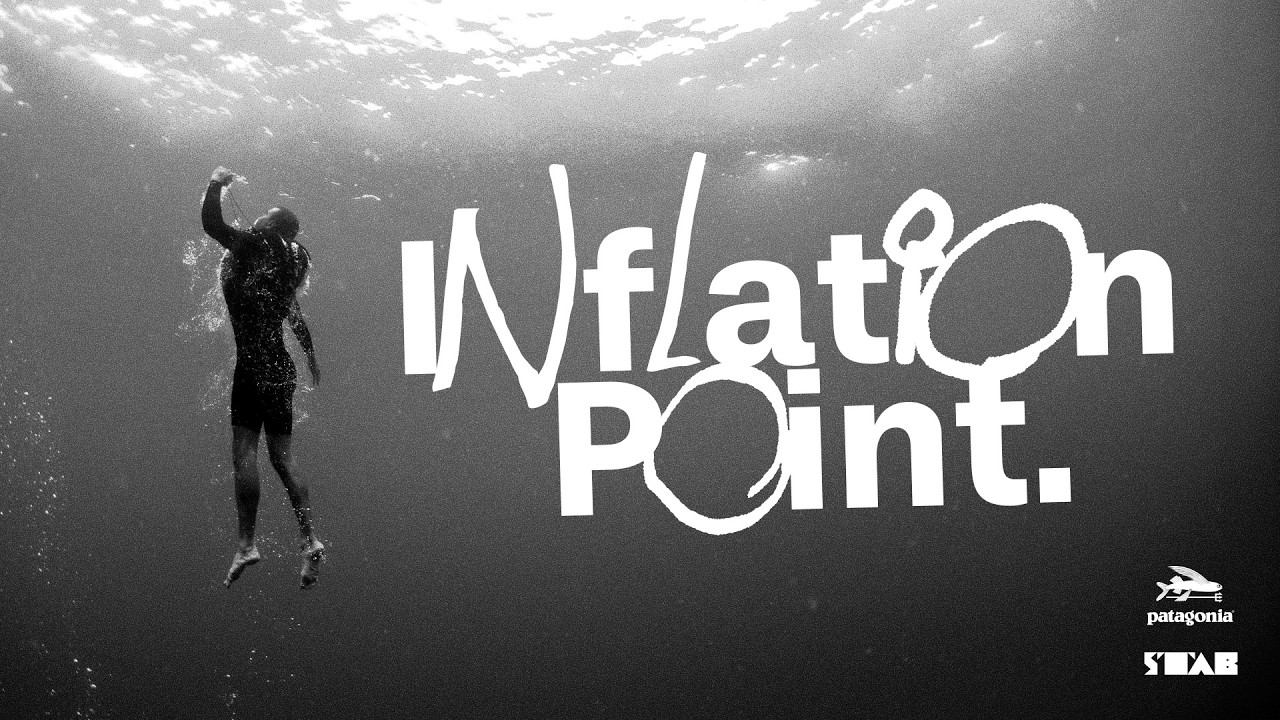
Danilo never saw the wave come. He never saw the ocean suck the reef dry around him, never saw Cole let go of the tow rope at the last possible moment. He only felt the speed, and then the whole world went vertical. That a single piece of inflatable equipment could put a surfer in that position at all, on a wave that made Kelly Slater wade into the channel just to deliver a hug, is the story of two decades of near-death invention, grief, and stubborn reinvention inside big wave surfing. It is a story that begins not with genius but with a concussion, an airplane, and a flight attendant holding a yellow vest.
When the jet ski made everything bigger and worse at the same time
The early 2000s were a kind of controlled chaos. Laird Hamilton’s wave in 2000 set off a cascade: tow surfing spread faster than anyone was equipped to handle it. Anyone with ten thousand dollars for a jet ski was suddenly surfing waves that had no business being surfed by them. The sitting-duck problem of paddle surfing, the terrifying possibility of being caught inside a set, was erased. What replaced it was something subtler and more dangerous: crowds of under-prepared surfers in conditions that had previously demanded years of commitment just to access. As one of the surfers who lived through that era put it, ‘there was just a craze of tow surfing where anybody who wanted to buy a jet ski could quickly learn to surf big waves, and it got so crowded and out of control.’
By 2009 and 2010, a small group had started to feel that something important was being lost. Watching their own clips at night after tow sessions at Todos Santos, surfers started noticing waves that could have been paddled. In February 2011 at a swell that brought Greg, Healy, Sion, Nate Fletcher, and the Brazilian contingent including Danilo and Yuri, a group made a deliberate choice to leave the skis in the water and paddle. Shane got barreled. Danilo took ride of the year. The paddle era had arrived.
But the safety infrastructure for that era had not. Training meant being a confident surfer with the nerve to send it. Nobody had a safety plan. At the 2010 Mavericks contest, Shane Dorian surfed a morning session, watched the event from the shore, went to bed early while others celebrated, and paddled back out the next dawn feeling bulletproof after five consecutive good waves. Then a wave came that he describes as one of the biggest he had ever seen in person. He made the entry clean, hit a bump on the face, got sucked over the falls, took the second wave on a full hold-down, and came up with, in a crewmate’s words, ‘no oxygen left in your body and no blood in your face.’ He was thinking about his very young kids the whole way down.
A fishing swivel, a yellow vest, and thirty-five prototypes
Shane flew out of the area after that session with a concussion and found himself half-dazed on a plane, watching a flight attendant demonstrate the emergency life vest with its pull-tabs and inflating bladder. The joke had always existed among big wave surfers: why not steal one of those airline vests and stuff it under a wetsuit? Sitting in his seat, still foggy, Shane pulled out a pad and pen and started drawing. He called Hub, the wetsuit designer at Billabong, the next day. What he did not know was that Cole Christenson, who had his own close call at Mavericks that same session, was already doing the same thing with Patagonia.
Both vests emerged roughly simultaneously. Shane’s V1, developed with Billabong and a company called Mustang Survival for the CO2 bladders, reached its first real test at Jaws. Shane paddled into the biggest tube the surf world had seen in a long time, did not come out, and then popped up in front of everyone. CNN called. Discovery Channel called. The phones did not stop.
But the product was not safe. The back-flotation design could leave an unconscious surfer face-down in the water. And then on December 21st, 2012, at a big wave paddle expedition to the Cortez Bank, Greg’s vest failed on a triple hold-down. He pulled the cord repeatedly. A fishing swivel inside the sheath had caught, the pin never inserted into the CO2 cartridge, and nothing deployed. DK Walsh spotted his board, felt something was wrong, drove the ski over, and physically tackled Greg’s unconscious body through another wave to hold him at the surface until the team could lift him onto a sled. By the time Greg reached the support boat’s swim step, he appeared dead. He regained consciousness on his own, inside the window.
Sion, and the moment everyone stopped
Before Greg’s incident, the clearest breaking point had already arrived. Sion Milosky was on the form of his life that 2009-2010 season, surfing outer reefs at a level that produced images that looked barely real. He and friends had spent Christmas and New Year together, surfed Jaws together, shared a whole winter. At a late-season Mavericks swell in March, Sion took off on a wave inside an eight-wave set, fell, and was not seen again. Grant Washburn administered CPR for twenty to thirty minutes on the beach. It was not enough. The group gathered in a circle as the sun hit the horizon.
The loss forced the question that everyone had been avoiding: what exactly were they doing out there, and for whose benefit? Out of that grief came the formation of BRAG, the Big Wave Risk Assessment Group, and a wholesale restructuring of how the community approached training, safety planning, and equipment standards. Patagonia eventually made the Big Wave Course a prerequisite for receiving their vest, a requirement that one longtime surfer called simply smart.
The same tension, unsolved
The inflatable vest changed the sport completely and created a version of the original problem in a new form. Where jet skis once flooded lineups with surfers who had not earned their place through paddle skill, the vest now does something similar. Reports of fifty riders in Mavericks who probably should not have been there, all wearing the red vest, started circulating. The vest is not a teleporter out of danger. As Shane put it plainly: ‘even with it you can get absolutely annihilated.’
The people who built the technology are aware of the irony. As one of them noted, Patagonia invested years and rounds of thirty to thirty-five prototypes into a product that essentially makes them no money. The question of what that equipment has taken from the experience alongside what it has given back remains genuinely open. ‘Did it make it better? Yeah, it made it better. But did it take the magic out of it?’
Danilo, still floating in the channel
After almost three hours waiting in the water at Cloudbreak in May 2018, it was just Danilo and Cole left on the ski. Everyone else had gone in. It was cold.
The full-circle wrap: Danilo never saw the wave come and never saw the reef go dry around him, only felt the speed when Cole released the rope. He did not understand what had happened until he saw the footage from the boat. Standing in the channel afterward, Kelly Slater paddled over and pulled him into a hug, which was itself a strange and accurate measure of what had just occurred. The vest that Shane sketched on a notepad while still concussed on a plane, the product that failed Greg at the Cortez Bank, the prerequisite that grieving surfers built into their training culture after losing Sion, was somewhere underneath Danilo’s wetsuit when that wave closed out the horizon above him. He came home at the end of the day.
 Wake up to Only Happy News!