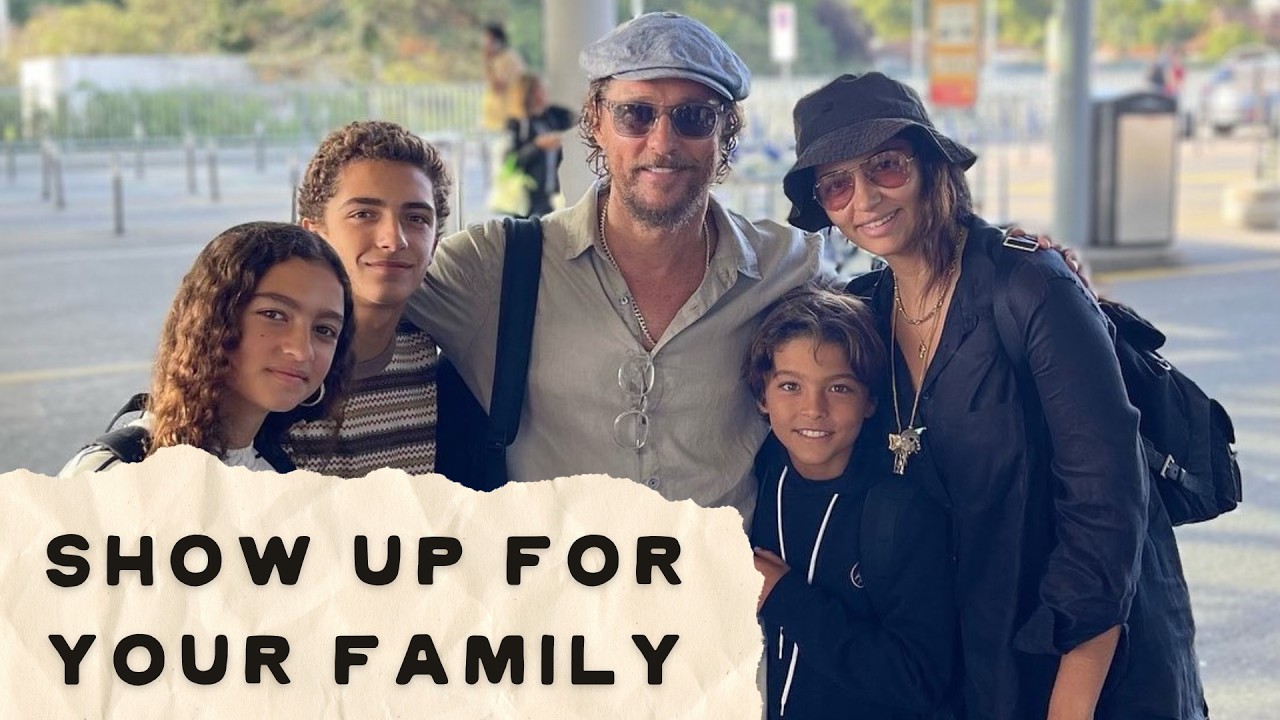
Matthew McConaughey had been spending time that week walking the hallways of a hospital ICU, visiting a friend, when something stopped him cold. Looking around at the patients in those rooms, he estimated that roughly 85 to 90 percent of them had no family member present. The image stayed with him, and by Thanksgiving week it had turned into something he felt compelled to share: a simple, unsentimental argument for showing up even when you would rather not.
The hallways that started it all
The ICU observation was not the first time McConaughey had sat with this particular loneliness. He had delivered Meals on Wheels to elderly people on Thanksgiving in the past, pulling up to houses where the person inside was waiting alone. When he and others on those runs asked where the family was, the answers were rarely ‘far away.’ One woman told him her family was four blocks away. Not across the country, not estranged for decades. Four blocks. And still, she was the one receiving a meal from a stranger on a holiday built around the idea of gathering.
That detail is the engine of the whole idea. Not the dramatic, understandable absences, but the ones separated by a short walk.
Paying what you owe the people who showed up for you
McConaughey is direct about who he is talking to. Not the person who has genuinely cut off a toxic relationship. Not the person with no family left. He is talking to the person who is on the fence: the one who does not particularly get along with a certain relative, whose family dynamic is strained, who has maybe heard the advice circulating in recent years that if the holidays feel hard, you simply do not have to go.
His counter to that advice is blunt: pay the tax. ‘Pay the tithe, pay the duty,’ he put it. ‘If you just show up, it’s worth paying it.’ He even offered a pressure valve for the genuinely difficult rooms: if the tension gets to be too much, take the dog for a walk and come back. The goal is presence, not performance. And the family, he said, will always remember who showed up, even if the visit was not particularly warm.
The word ‘tax’ is doing real work there. It reframes obligation not as something to resent or escape but as something you pay because it is owed, because it matters, and because the return on it tends to show up later in ways that are hard to predict.
A woman waiting four blocks from her family
She did not make a scene about it. She just answered the question when it was asked.
Whatever complicated calculus had kept her family four blocks away on Thanksgiving is impossible to know, and McConaughey did not speculate. He simply remembered her. That memory is exactly the kind of thing the Thanksgiving tax is meant to prevent, the specific, quiet weight of being the person who was not there when the door finally opened.
McConaughey closed with a hunch rather than a guarantee: ‘I got a hunch that it pays off later in the end for the family.’ It is about as unforced a holiday argument as anyone is likely to make, and it starts, as most honest ones do, in a hospital hallway.
 Wake up to Only Happy News!