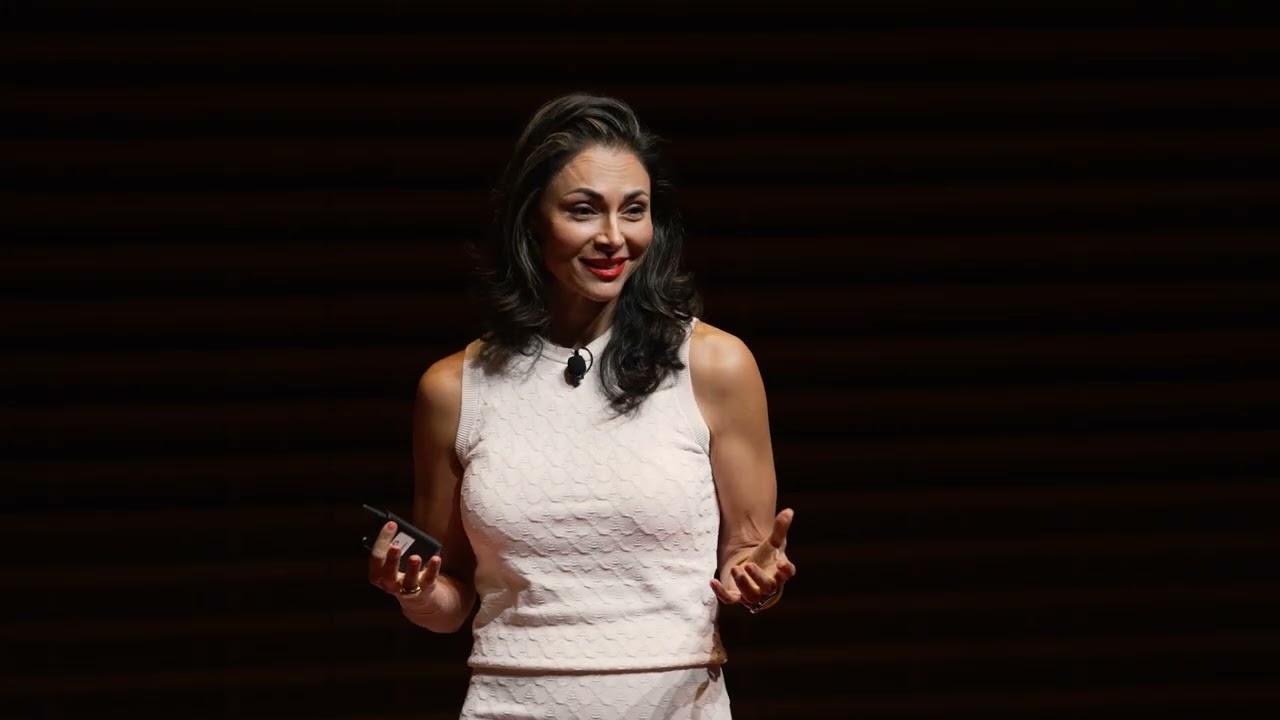
Sol Rashidi handed two analysts the same assignment and waited. One came back in a week with polished slides full of quotes, statistics, and sharp formatting. The other took three weeks and returned with something that looked almost identical on the surface. When Rashidi’s leadership team called both analysts into a room and started asking real questions about consumer behavior, market share, and barriers to entry, the difference became impossible to ignore. The fast one had nothing. The thorough one had everything. That gap, between work that looks intelligent and thinking that actually is, sits at the center of a warning Rashidi delivered at TEDxStanford, one she believes the people most enthusiastic about AI are least prepared to hear.
The threat nobody is naming out loud
Rashidi was appointed the world’s first Chief AI Officer nearly a decade ago, and she helped bring IBM Watson to market as the first AI product the workforce had ever seen. So when she uses the phrase ‘intellectual atrophy,’ she is not speaking as a skeptic. She is speaking as someone who built the thing.
The concept is direct: the slow, quiet erosion of our ability to think deeply, critically, and independently, caused not by a dramatic machine takeover but by a series of small, reasonable-seeming shortcuts. Every time AI writes for you rather than with you, every time it makes a decision you could have wrestled with yourself, your cognitive muscle goes a little softer. The machines, meanwhile, keep getting stronger. ‘What we think is simplifying our lives,’ Rashidi said at Stanford, ‘is actually complicating our future.’
She frames the problem with a specific distinction that she now enforces as policy on her own teams: AI can expedite your work, but it cannot do your thinking. One accelerates. The other replaces. Her junior analyst had used AI to do his work. Her senior analyst had used her own mind to do hers, then executed with precision. The deliverables looked the same. The humans behind them were not.
Five moves that keep your mind in the game
Rashidi’s prescription is practical and specific. First, master your craft without shortcuts, because the next three to five years in the workforce will reward the person who can leverage AI while genuinely knowing their field. She points to Warren Buffett, who she says spends 85% of his day reading, not delegating the learning to his team, but absorbing it himself and building mental models from it.
Second, develop cross-disciplinary strengths and connect dots that AI cannot. The ‘aha moment’ in the shower, on a run, mid-workout, is the subconscious integrating things you actually absorbed. AI cannot replicate that. Steve Jobs did not invent the computer; he combined technology, psychology, and product design into something nobody had imagined.
Third, be an AI collaborator rather than an AI consumer. Use outputs as a first draft, then let your own thinking take it somewhere. As Rashidi puts it plainly: ‘It’s easier being an editor rather than an author.’ Fourth, keep humans in the decision-making loop wherever the stakes are real. AI was trained on the internet, and the internet contains biased, wrong, and conflicting data. You cannot catch its errors if you do not know your own field.
Fifth, and most distinctly, choose to be remarkable rather than reliant or routine. Copy-paste habits scaled across millions of users produce work that is repeatable, redundant, and ultimately interchangeable.
The analyst who took three weeks
Rashidi never named her senior analyst, but the detail that stays is simple: she had done the forensics. She had read, cross-referenced, and understood. When the room got hard, she was ready.
By the end of 2025, a billion people will be using some form of AI, roughly an eighth of the world’s population, according to Rashidi’s framing at Stanford. At that scale, the work of someone who only prompts and pastes will look like everyone else’s work. The person who thought it through will still be recognizable.