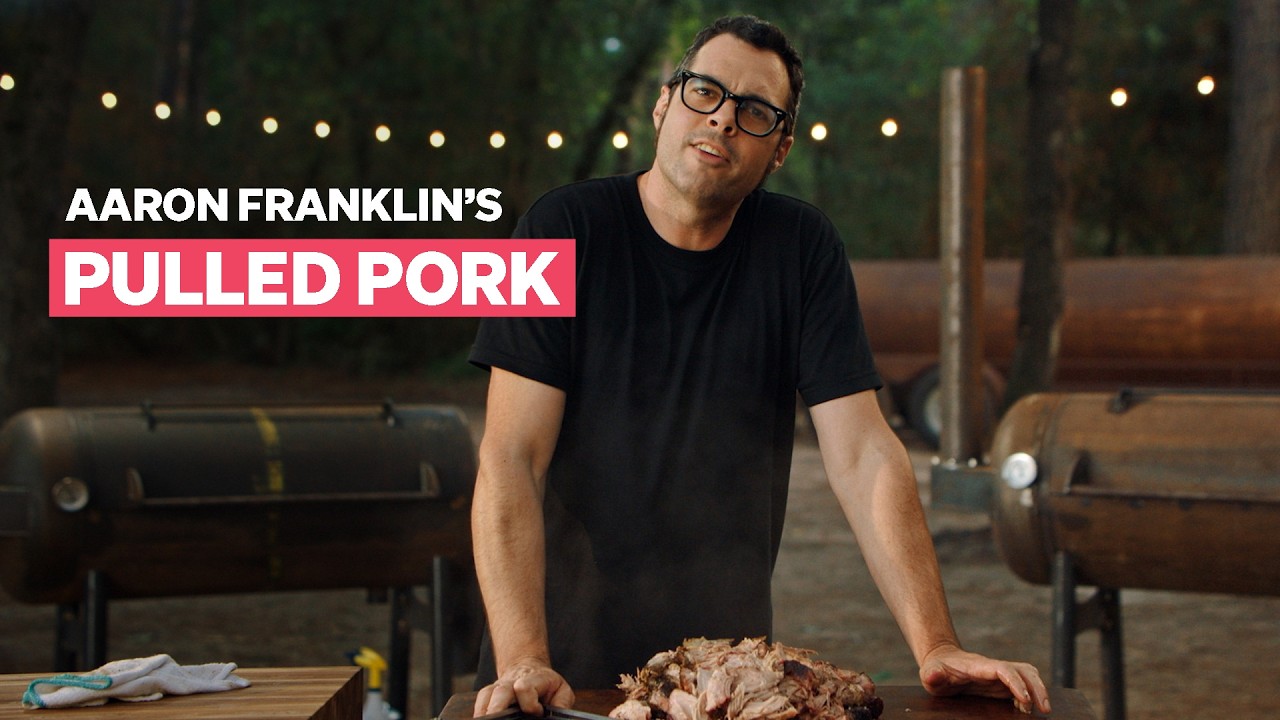
Aaron Franklin lifts the foil-wrapped pork butt off the cooker at the ten-hour mark, presses his palm against the outside, and feels what he has been waiting for: a gentle squish, the faint give of meat pulling away from the bone beneath all those layers. The whole cook, from rub to rest, follows a logic so clear that a first-timer can follow it without panic. That accessibility is the point. Franklin built his reputation on a product that most people assume requires years of instinct to get right, and the pork shoulder is his proof that good barbecue does not have to be mysterious.
Why the rub goes on heavy and the trimming stays light
Franklin starts with a bone-in pork butt, a choice he is firm about. Bone-out cuts tend to butterfly out, making it difficult to cook the meat in one dense lump, and the bone itself doubles as a doneness gauge: when it twists and slides free cleanly, the cook is done. For a piece this size, he adjusts his usual two-parts-pepper-to-one-part-salt ratio to equal parts kosher salt and black pepper, then adds a small amount of paprika purely for color, enough to push the finished bark toward a deep mahogany without adding any detectable flavor.
The binder is mustard, applied in a thick slather, and the reasoning is structural rather than culinary. As the meat shrinks during the cook, the bark stays at its original size and begins to flake. Those brittle, salty, peppery chips break off and fold back into the pulled meat at the end, seasoning the interior from the outside in. Because the inside of a pork butt is naturally bland, Franklin loads the exterior with what he calls a ‘way too much rub’ quantity, reasoning that the excess corrects for what the interior lacks. Trimming is almost nonexistent: the fat cap renders down, and since the whole thing gets pulled apart later, precise knife work offers no real return.
Managing the fire across eight hours before the wrap
The cooker starts at 270 degrees Fahrenheit, with a water pan in place from the beginning for moisture. Franklin cooks fat side up because his cookers run hotter at the top. Starting around the three-hour mark, he spritzes roughly every hour with a sugar-free liquid, apple cider vinegar, water, or beer all work, mainly to cool the outer edges and prevent them from drying out before the interior catches up.
The visual cue Franklin watches for is the fat cap splitting. It happens around the eight-hour mark as the meat contracts and the bark cracks apart. That split is the signal to wrap, not a specific internal temperature. He pulls two long sheets of foil, places them dull side out so the wrap absorbs rather than reflects heat, and rolls the butt tightly, folding small wings in on themselves with each pass until the package is sealed in four tight layers.
The thermometer he almost ignores
After roughly two more hours in the foil, Franklin probes through the top rather than unwrapping, trying to minimize steam loss. He is aiming for somewhere around 203 to 206 degrees, but as he put it: ‘I’m going more by feel than by temperature.’ The probe should glide through with almost no resistance, what he describes as the feel of a bag of melted butter. A slight grip in the center, which his butt shows at 203 degrees, tells him the meat needs only carryover heat to finish, not more time on the cooker. He pulls it, lets it rest for 45 minutes to an hour, then works it apart by hand, folding the flaked bark chips back through the meat as he goes.
The bone that already came loose
When Franklin reaches in and gives the bone a gentle twist, it offers almost no resistance before sliding free.
The pork comes apart in long, moist strands, the bark chips scattered through like dark confetti, and the cook that started ten hours earlier with a rubbed shoulder and a lit fire ends exactly where it was always headed.