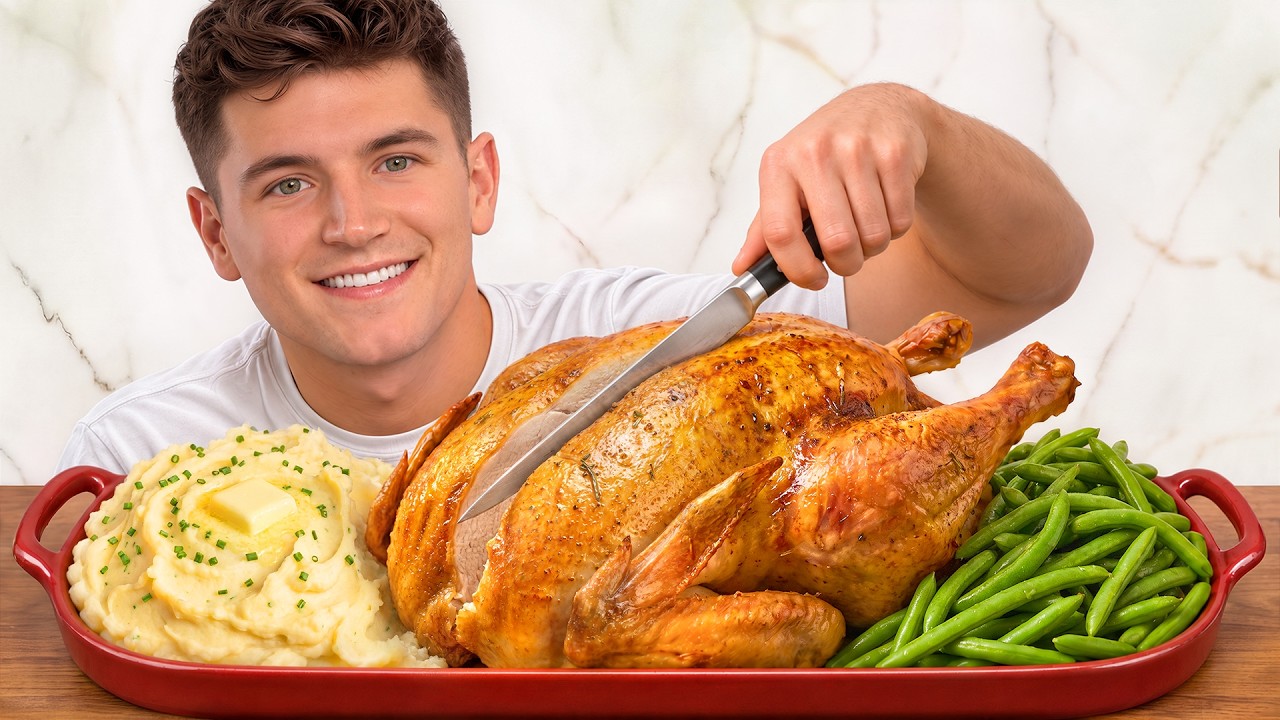
Nick DiGiovanni pressed both hands down on the breastbone of a raw turkey on his kitchen counter and waited for the crunch. It came, and so did a splash he did not quite anticipate, which is exactly why he was wearing an apron. That single unglamorous moment is a useful entry point into what this Thanksgiving guide actually is: not a highlight reel of perfect food, but a full working blueprint, turkey, five potato methods, and an apple pie, built from real techniques that solve real problems most cooks do not know they have.
The turkey that cooks in two hours instead of five
The central argument of the main course is spatchcocking. The process means cutting out the backbone entirely with a strong pair of kitchen scissors, then cracking the breastbone flat so the bird cooks in roughly the shape of a book rather than a football. The practical result is a two-hour roast instead of five, which matters enormously on a day when the oven is also needed for stuffing, potatoes, and pie.
The flavor architecture goes in layers. First, fresh thyme, sage, and rosemary blended with salt into an herb brine that sits on the uncovered bird in the fridge for 24 to 48 hours. Second, a compound butter of softened butter, lemon zest, brown sugar, and salt packed under the skin without tearing it. Third, that same butter melted with white wine and black pepper, used to soak strips of cheesecloth that cover the bird through four 30-minute basting cycles. The cheesecloth method is an old French technique, and by the final cycle the cloth has gone dark and the steam rising from the pan is, as Nick described it, an early hint of what the gravy is going to taste like.
The gravy itself starts in the roasting pan, built directly from the turkey neck, backbone, giblets, roasted leek, orange, and lemon that served as a rack during cooking. Butter and flour go in over medium-high heat, then wine, salt, and pepper, cooked down five to seven minutes and strained to a velvety finish.
Five ways to cook a potato, one table to settle an argument
The potato section exists because, as Nick put it plainly, ‘my family can never agree on the best way to make them.’ The five methods each use a specific variety for a reason. Russet potatoes, with their high starch and low moisture, go into baked potatoes brined in salt water, cooked at 450 degrees Fahrenheit, then split open immediately so steam escapes before the inside turns gummy. Yukon Golds go into mashed potatoes run through a potato ricer rather than a masher, keeping them from turning into glue, then folded with room-temperature butter and warm cream. The same Russets appear again for crispy roast potatoes, par-boiled with baking soda to roughen their surface, dried overnight in the fridge to open cracks for the oil, dusted in potato starch, and finished in a mixture of neutral oil and beef tallow at 425 degrees. French fries follow a double-fry method, 350 degrees Fahrenheit first, then 400 degrees, with the cut fries frozen overnight between rounds. The final method is a potato gratin, Yukon Golds sliced thin on a mandoline and layered with a cream infused with garlic, thyme, nutmeg, and white pepper, then finished with Gruyere and Parmesan.
The apple juice nobody should pour down the drain
The pie uses two apple varieties deliberately. Granny Smith holds its structure and keeps the filling tart. Honeycrisp softens into something closer to warm applesauce. Both get salted and sugared before going into the crust, then drained in a colander for about an hour. The liquid that collects is not discarded. Reduced for a few minutes on the stove, it becomes a glaze painted over the finished crust while it is still hot, essentially concentrated apple cider brushed back over the pie it came from.
The crust rests in the fridge in stages and gets finished with a woven lattice, an egg wash, a scatter of sugar, and a small cube of butter tucked between every square. After 3 to 4 hours of cooling, Nick DiGiovanni tried a slice with a piece of cheddar cheese, a tradition he had encountered from Vermont and New England but never actually tasted. His assessment was immediate: ‘I might like it better than ice cream. I didn’t expect to like that.’ He attributed it to the same logic as salted caramel, a sweet and salty balance that is unexpected and then suddenly obvious.
A pie tin lined with parchment, waiting on the counter
The metal pie tin, its parchment round pressed flat against the bottom, sits at the edge of the work surface after the crust has been lifted in. The excess dough has been trimmed away and set to the side. Nothing has been filled yet.
The finished pie, apple syrup glaze still wet on the lattice, is as close as a homemade bake gets to the thing it was always trying to become. The turkey rested before carving. The gravy strained smooth. The potatoes, in all five forms, made the case that a family argument about sides does not need a winner, only a bigger table.
 Wake up to Only Happy News!