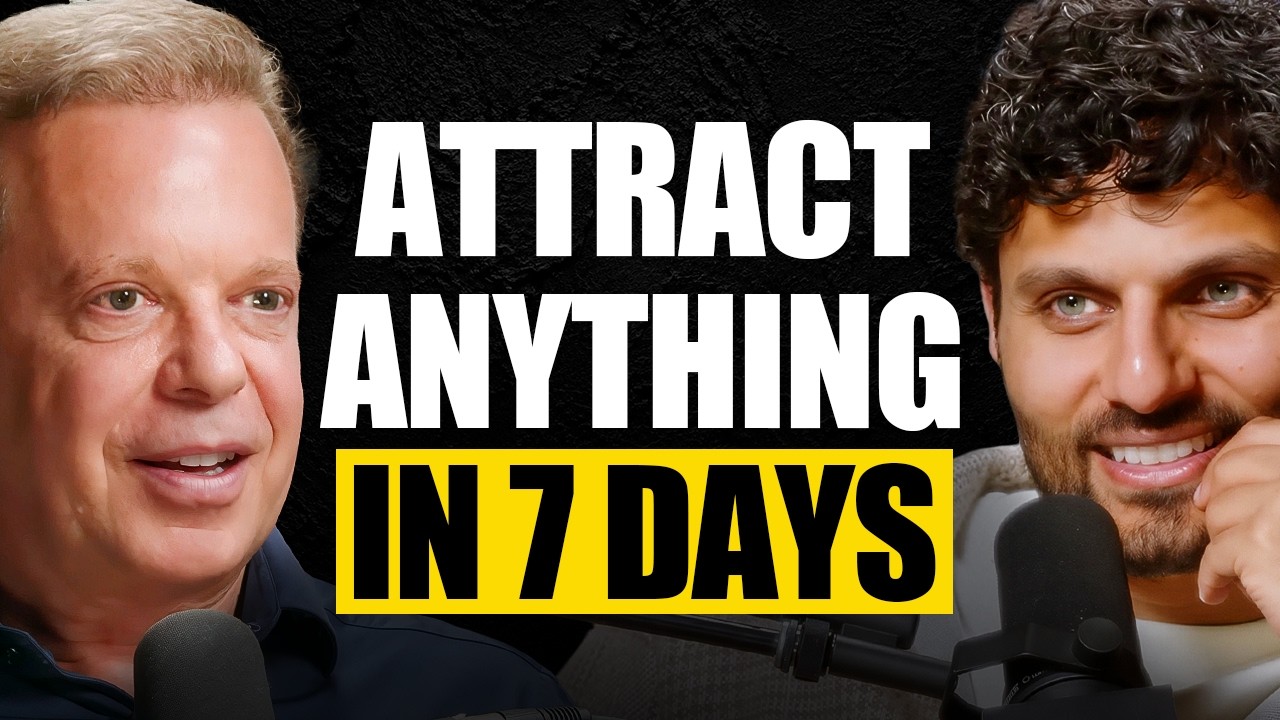
Dr. Joe Dispenza was midway through explaining why so many people fail to attract love when he stopped and reframed the whole problem: the issue is not who you are looking for, it is the state your nervous system is in while you are looking. If the body is locked in survival mode, the heart simply cannot open, and no amount of swiping or dating will change the chemistry running underneath it all.
The survival loop that blocks romantic love
Stress hormones exist for one reason: to get a person out of danger fast. They are not designed for connection, vulnerability, or openness. Yet Dispenza argues that most people spend the majority of their waking hours in exactly that activated state, including, and especially, when they are trying to find a partner. The anxiety of a ticking biological clock, the exhaustion of back-to-back disappointing dates, the quiet dread of opening a dating app – all of it registers in the body as a threat signal. ‘When we’re stressed, we’re altered,’ Dispenza said plainly. ‘We’re not ourselves. We can’t relax and be authentic.’
The deeper mechanism he points to is memory. When a person has been cheated on, betrayed, or gaslit, the brain does not file that experience away neutrally. It freezes the emotional frame and stores it as a long-term memory loaded with chemical charge. Every time that memory is replayed, the body produces the same hormones as if the event is happening right now. The person is, in a very real physiological sense, living in the past while trying to build a future.
His definition of forgiveness reframes the concept entirely. It is not a moral gesture toward the person who caused harm. It is the moment when the emotional charge attached to the memory dissolves. ‘The memory without the emotional charge is called wisdom,’ he explained, ‘and you never have to do it again.’ The betrayer moved on. The only one still held hostage is the person replaying the tape.
What actually happens to the brain and body in seven days
Dispenza runs multi-day immersive retreats, and his team has been running biological measurements on participants before and after. The numbers surprised even the researchers running the tests. By the end of seven days, 75 to 84 percent, and in some cohorts 100 percent, of participants showed blood, plasma, and brain profiles consistent with advanced meditators, regardless of whether they had any prior meditation experience. The scientists were, by his account, running the same experiment five times in a row because they kept expecting a different outcome.
His broader claim, grounded in that data, is striking: ‘Your autonomic nervous system manufactures a pharmacy of chemicals that works better than any drug.’ Drug trials, he noted, typically show meaningful response in about one in four participants and require three months or more to register an effect. His seven-day results, across repeated studies, have consistently outpaced that benchmark.
The daily practice he recommends does not require a retreat. It requires a checkpoint. Before lunch, or on a break, a person pauses and asks honestly whether they have drifted back into a reactive, survival-based state. If they have, the return path is breath: slow the breathing, slow the brain waves, shift the body out of sympathetic arousal. From that calmer baseline, the practice is deliberately generating elevated emotions, genuine gratitude, care, kindness, rather than waiting for an external event to produce those feelings as a reward.
That last point is where the logic inverts in a way that takes a moment to settle: most people wait for the relationship to feel loved. Dispenza argues the feeling must come first, because you cannot attract what you feel separate from. The person who has genuinely stopped looking, not from resignation but from a felt sense of wholeness, is, in his view, the person most likely to find an equal.
The scientist watching his own beliefs break in real time
Dispenza described watching researchers in his own studies run the same experiment repeatedly, unwilling to accept the result they kept getting. He said he knew exactly what was happening in those moments: ‘They’re changing their belief. They’re discovering something new.’
—
A set of brain scans from participants who had never meditated once before arriving at a seven-day retreat, their profiles indistinguishable from those of long-term advanced meditators, sits in Dispenza’s research archive, waiting for the next group of skeptics to replicate it.