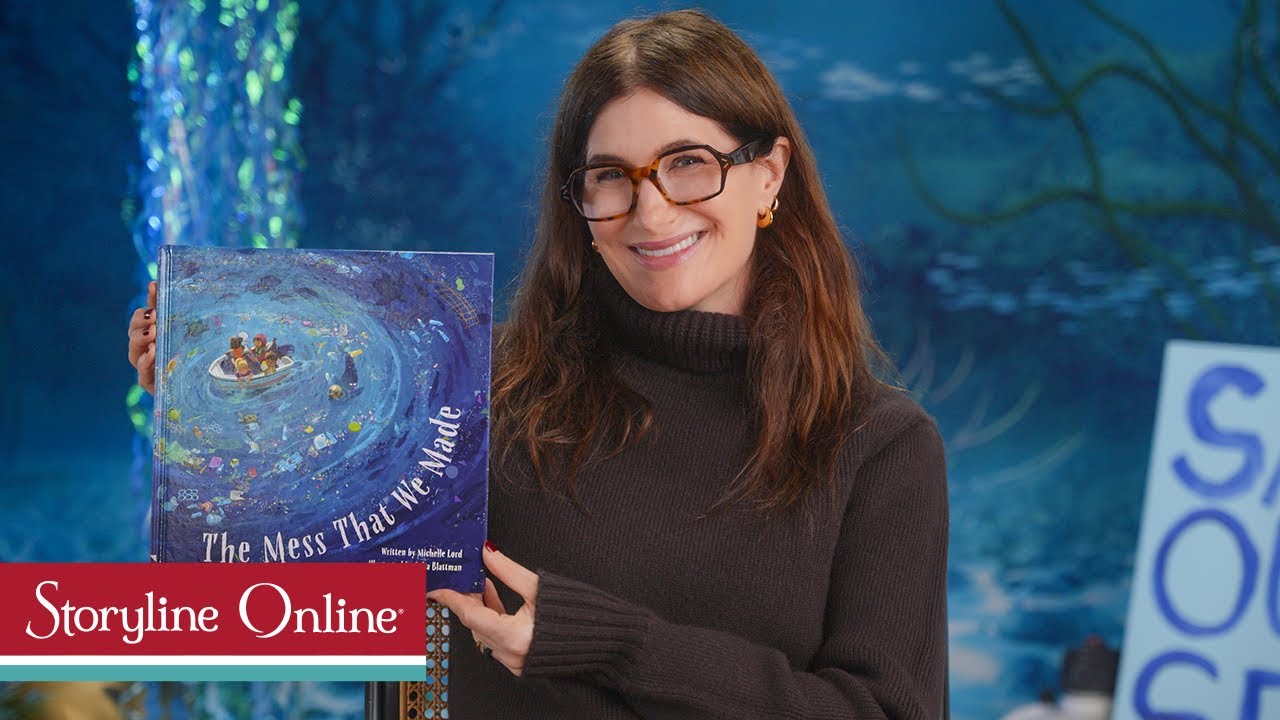
Kathryn Hahn sits down with a picture book and builds a world, one creature at a time. The Mess That We Made, written by Michelle Lord and illustrated by Julia Blattman, opens on a simple, damning line before it spirals outward into a chain of consequences that connects a stuffed landfill to a trapped turtle to a seal caught in a net to the fish beneath it all. The book is designed for young readers, but the weight it carries is real, and Hahn reads it with exactly the right balance of gravity and warmth.
How a children’s book builds an ocean crisis from the ground up
The story works the way a nursery rhyme does, each new stanza folding the last one inside it, adding one more link to a chain that humans started. Fish swim in the mess. A seal eats the fish. A boat dumps a net that catches the seal. A current rocks the boat. A turtle rides the current and gets trapped in plastic. The plastic spills from a landfill. The landfill grows because of people, at work and at play. By the time the full chain is assembled, the reader has traced a single piece of thrown-away plastic all the way back to its source, which is us.
Then the book pivots. The same people who stuffed the landfill can shrink it. The same hands that dumped the plastic can collect it from the bay. The net gets gathered, the seal goes free, the turtle is rescued, and the final line lands the turn cleanly: not the mess that we made, but the ocean that we save.
Why Hahn says the book refuses to let anyone feel hopeless
After the last page, Hahn spoke about what drew her to the book. ‘It also tells you how serious it is,’ she said, ‘how serious it is that our ocean is hurting. But at the same time, it’s very hopeful. Because there’s a lot of action steps that we can take, every one of us.’ She was specific about what she valued in that balance: not a vague call to care more, but the idea that small individual actions add up, and that children can encourage each other to take them.
The reading is part of Storyline Online, a program run by the SAG-AFTRA Foundation that pairs professional actors with children’s books for free, accessible read-alouds. The series has long used the format to put literary voices directly in front of young audiences who might not otherwise encounter them.
The illustrations by Julia Blattman track the book’s emotional arc closely. Hahn noted the way they capture the ocean’s colors and what she called the magic of being close to it, before the imagery shifts to show the damage and then, finally, the cleanup.
A green and gray turtle, mid-current
The turtle, described in the book as green and gray, appears first as a creature simply riding the current through the bay. It is not yet tangled. The plastic has not reached it. For one stanza, it is just moving through water, unhurried, before the next line arrives.
The book closes not on a landfill or a policy argument but on fish swimming freely in an ocean that people chose to protect. Hahn’s reading ends there too, with the chain reversed and the water, at least in the story, clean again.