Brian had bugs crawling across his skin, a rat dropped in his lap, and then a snake thrown at him for good measure. He cursed, he flinched, he fought back with everything he had. The trouble was, none of it was real. What was sitting in the dark with him were pistachio nuts, a pair of funny gloves, and a length of rope. That gap between what his brain told him and what was actually happening is the whole point, and it turns out that gap is enormous.
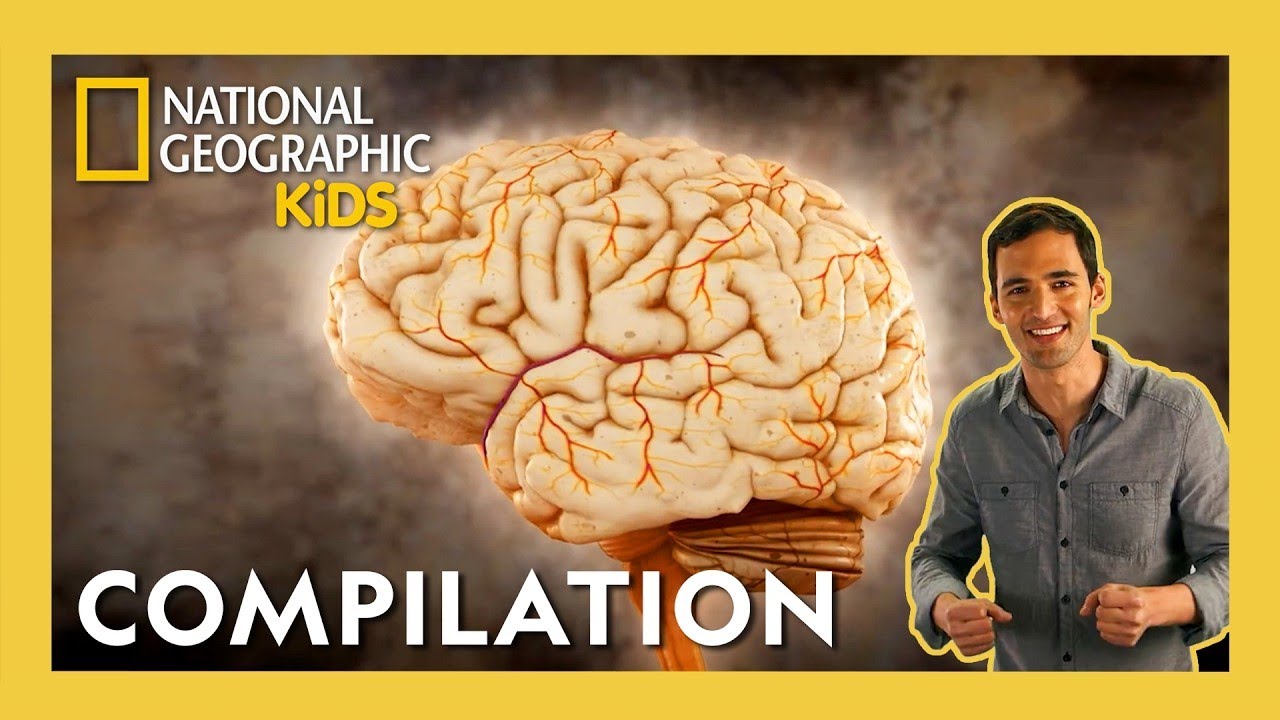
Brain Games, from Nat Geo Kids, drops viewers into a series of live experiments and street tests designed to expose the surprising ways the human brain fills in gaps, jumps to conclusions, and occasionally invents things entirely. Host Jason Silva guides the action, but the real stars are the unsuspecting volunteers whose reactions reveal just how little conscious control any of us have over our own perception.
Why your brain sees snakes faster than shoes
The show opens with a deceptively simple image test. A rapid sequence of pictures flashes by, including shoes and keys buried in the mix, and most people miss them completely. Run the same sequence again but swap in photos of snakes and spiders and suddenly the brain locks on instantly. Dr. Kamran Fallahpour, an expert on the psychological effects of fear, explains that the amygdala has been shaped by evolution to flag those specific threats before conscious thought even gets a look in. The amygdala functions, as Silva puts it, like a smoke detector in your home: inactive for long stretches, then blaring the moment anything reads as danger.
Horror director Larry Fessenden, who has made over 20 horror films, demonstrates the same principle with music. An ordinary gym scene set to cheerful, upbeat audio produces no reaction at all. The identical footage scored with low, dissonant strings becomes immediately unsettling. The images did not change. Only the sound did.
The wire that trips your confidence every time
The second major strand of the show tackles something called the illusion of knowledge, the brain’s tendency to believe it understands things it has never actually examined. College students are asked to draw a bicycle from memory. Over 90 percent produce something that could not physically function: frames missing a chain, handlebars connected to the wrong point, pedals placed nowhere near the wheel. One student named Lauren added a bell to her drawing and still got the geometry backwards. ‘I was so confident in my bicycle that I didn’t even realize it was backwards,’ she said afterward.
Deception specialist Apollo Robbins then takes the test outside, asking people on the street to give a numeric range they are confident contains the right answer to trivia questions. How many countries are in Africa? How many books make up the Old Testament? Participant after participant gives ranges so narrow they miss the actual number by a wide margin. The answer to the Africa question is 57. Most people cap their high estimate well below that. According to the show, 79 percent of participants demonstrated this overconfidence effect, giving ranges that excluded the correct answer entirely.
The train-car memory test lands the hardest. Viewers watch a train roll past carrying ten words, all loosely related to rail travel. A second train appears with four different words, one of which is ‘track.’ Eighty percent of people tested remembered seeing ‘track’ on the first train. It was not there. The brain, surrounded by context, simply manufactured it and filed it as a genuine memory.
Scott Barry Kaufman, a cognitive scientist at NYU, frames the solution in terms any gym-goer would recognize: the brain needs exercise just as muscles do, and the capacity for change is called neuroplasticity. He designed the two-ropes challenge that closes the episode, a puzzle that requires volunteers to tie together two ropes that cannot reach each other by turning a paint can into a pendulum. Most people stare at the can for minutes before it clicks that an object they have spent years associating with paint can swing through the air.
The kid who answered in two seconds flat
A small girl named Gia, introduced as one of the show’s ‘creative geniuses,’ looks at an abstract Droodles drawing and announces it is ‘a spider doing a handstand.’ Then, without pausing, ‘somebody’s walking up a hill with a bad hair day.’ The adults in the same experiment averaged fewer than three ideas each.
The bus riddle that opens the third segment makes the same point from the other side. A simple line drawing of a bus: which way is it moving? Nearly 80 percent of adults cannot answer quickly. Children under ten get it immediately, because the door is on the side away from the curb, and children ride buses and know exactly where the door goes. Adults have stopped looking at buses. They think they already know.
Pistachio nuts in the dark. A paint can swinging on a rope. A girl on a hill with a bad hair day. The brain that confidently drew the wrong bicycle is the same brain that confidently remembered a word that was never on the train.