
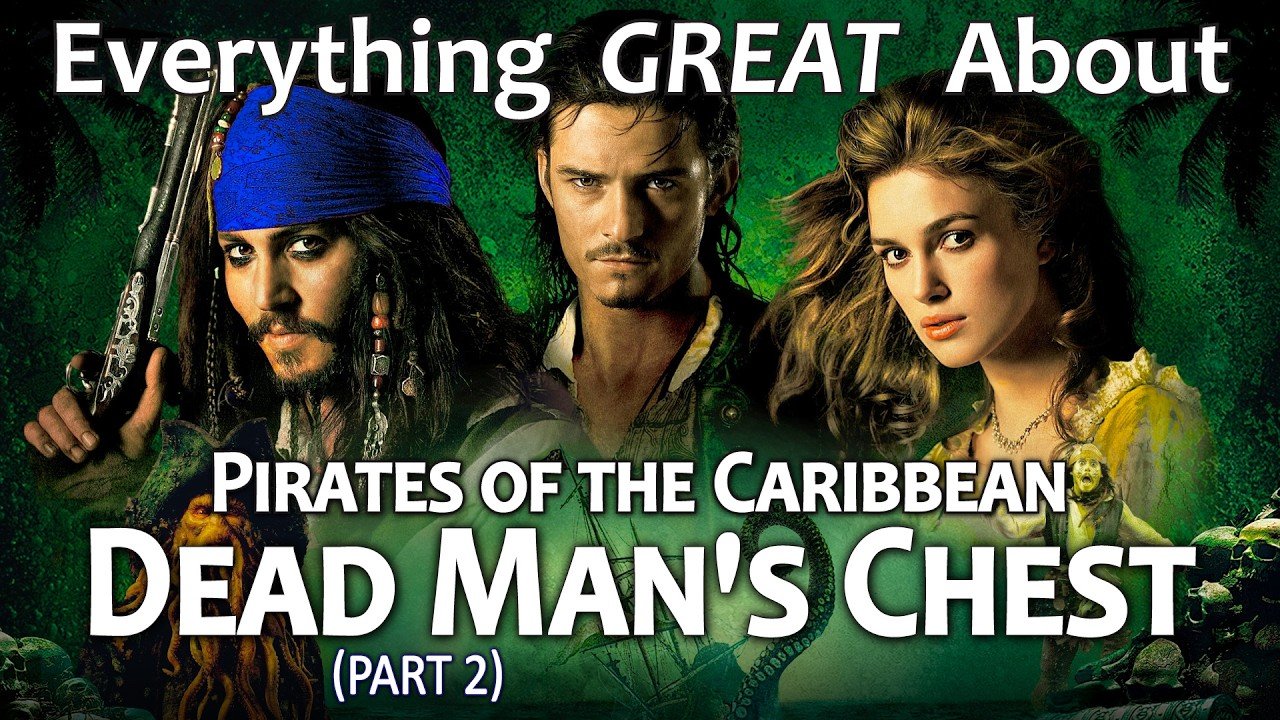
CinemaWins delivered a meticulous, scene-by-scene celebration of Pirates of the Caribbean: Dead Man’s Chest in a two-part appreciation series, with Part 2 drilling deep into the film’s most technically remarkable and emotionally resonant moments. From Bootstrap Bill Turner’s barnacle progression to the symphony of sound design aboard the Flying Dutchman, the analysis makes a compelling case that Dead Man’s Chest is one of the most densely crafted blockbusters of the 2000s.
Bootstrap Bill, Davy Jones, and the Art of Silent Storytelling
CinemaWins spotlights Bootstrap Bill Turner’s gradual physical transformation across the film, noting that barnacles and a starfish near his eyes gain increasing color and prominence in each scene — a detail that originally read as a tumor in early appearances. The analysis highlights the liar’s dice sequence, in which Bootstrap’s deliberate sacrifice during the game communicates an act of profound self-preservation for his son without a single explanatory line of dialogue. Davy Jones’s use of a tentacle as an extended finger receives specific praise, as does the shot of Jones holding his hat in place with his tentacles as the crew submerges — a background detail that CinemaWins describes as something only close observation reveals. The stomach-sewn crew member whose wound dates back to Will Turner’s earlier sword slash is also flagged as an example of the film’s extraordinary visual continuity.
The Three-Way Sword Fight, the Kraken, and Hans Zimmer’s Score
The watermill sword fight earns extended praise as one of the most inventive action sequences of its era, with CinemaWins noting that Jack Sparrow visibly avoids injuring Will Turner throughout the duel, even while appearing to fight in earnest. The sequence aboard the Black Pearl culminating in the Kraken attack receives high marks for sound design, specifically the noise of tentacles against the porthole, which CinemaWins describes as extraordinary in its unsettling tactile quality. The 170-foot length of both the Edinburgh Trader and the Black Pearl is cited to explain why the Kraken must drag the vessel fully underwater rather than simply smashing it — a logistical detail embedded quietly in the film’s production design.
Composer Hans Zimmer’s full score receives a dedicated closing tribute. CinemaWins traces the musical arc from the sea shanty energy of the film’s opening adventure sequences through to ‘Hello Beasty,’ which builds to what the analysis calls an operatic crescendo. The pipe organ theme is noted as functioning simultaneously as an auditory portrait of Davy Jones’s internal grief and as a dramatic engine for the Edinburgh Trader’s destruction.
Dead Man’s Chest, released in 2006, grossed over one billion dollars worldwide and became only the third film in history at the time to reach that threshold, a commercial achievement that reflected audience appetite for exactly the kind of layered, densely constructed spectacle CinemaWins methodically documents. The film’s visual effects team received an Academy Award for their work on Davy Jones and his crew, vindicating the attention to transformation details that CinemaWins traces across individual characters throughout the runtime.
CinemaWins closes Part 2 by confirming that Pirates of the Caribbean: At World’s End will receive its own full appreciation video within the current year, framing Dead Man’s Chest not as a standalone entry but as the first movement of a two-film story whose full emotional resolution arrives only in the third installment. The return of Barbossa in the film’s final frames — greeted with genuine surprise by CinemaWins even upon theatrical viewing — is singled out as one of the most satisfying closing beats in the entire franchise, promising that the At World’s End analysis will have considerable emotional ground to cover.