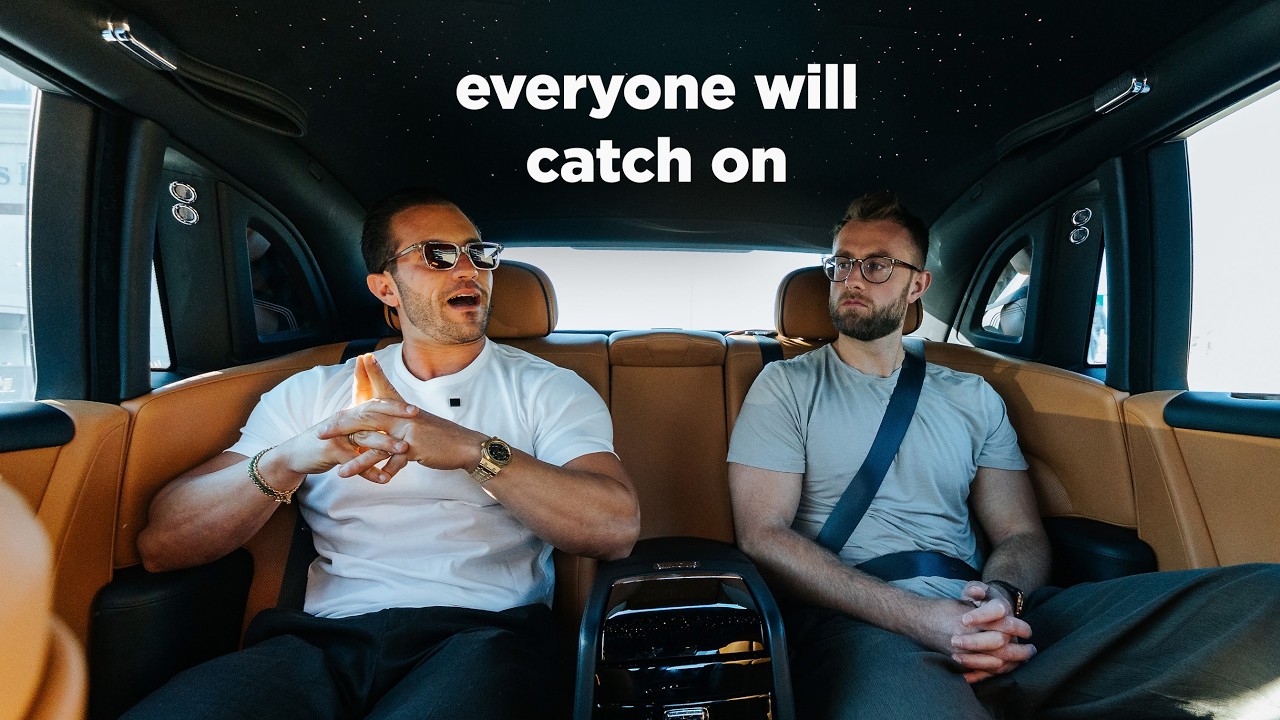
Greg LaVecchia was standing on a convention floor, about to shake a thousand hands, when he stopped to think about the pitch he was going to have to make. Somewhere in that crowd was a 60-year-old gas station marketplace owner from Kansas who had never opened TikTok, who had watched Monster and Red Bull print money for a decade, and who was about to be told that a purple energy drink can was going to outsell them. The stakes of that conversation were not abstract. Eighteen months earlier, Bloom had come within 24 hours of massive layoffs. Everything, as Lav put it plainly, would have gone under.
That near-collapse came from a period when Greg Lav had leaned on a marketing agency he was not overseeing closely enough. The agency bought fake reviews on Bloom’s Amazon account without his knowledge, and Amazon suspended the brand for 45 to 60 days. Lav called it the most stressful stretch of his career. Bloom survived, but the experience burned into him a lesson about what he calls marketing arbitrage: the discipline of finding low-cost impressions before the rest of the market catches up.
Finding white space before the crowd arrives
Lav traces the arbitrage principle back through Bloom’s own history. Early on, the brand bought ads on Instagram meme pages when the algorithm was still chronological and audiences were not yet desensitized to sponsored posts. Then, when TikTok emerged, Bloom paid creators who had never had an agent and had never monetized their content, building real relationships at a fraction of what any traditional media buy would have cost. Today, Lav points to TikTok Shop, where Bloom’s current cost per thousand impressions runs under two dollars. A hot podcast CPM, he noted, can run anywhere from thirty to seventy-five dollars. ‘That is full-on arbitrage,’ he said.
The practical implication for brands, in his view, is that the value chain keeps moving downward. It starts with celebrities, moves to large influencers, then to mid-size creators, and eventually lands at the individual consumer. TikTok Shop democratized that last step, but the catch is scale: you cannot work with twenty people anymore. You need thousands.
Amazon has become its own version of that equation. On Prime Day, Bloom climbed to number three in its category without paying for placement. The previous day, Amazon had put Bloom on its homepage organically after recognizing that Bloom was driving external traffic from Instagram and TikTok to the platform. Lav said a paid version of that homepage spot for 24 hours would have cost six hundred thousand dollars. He knows because he bought the entire front page roughly four years ago for 1.3 million dollars.
The two-sided bet on convenience stores and warehouse clubs
The convention Greg LaVecchia attended was a convenience store industry expo, and Bloom’s presence there was the product of 18 months of grinding through skepticism. Industry consultants had said a purple energy drink would never work in convenience stores because the format historically serves blue-collar working males, and Bloom was not traditionally positioned for that demographic. The brand had to send people into stores asking why Bloom was not on shelves, one location at a time, until the sales data started talking for them.
At the expo, Lav met a coconut water founder who had built his distribution entirely on cruise ships and was now on 150 vessels. He spent time with Larry Wheels, who broke powerlifting records before building a brand called PR Lifestyle, and had a long conversation with Christian Guzman, who relaunched his energy drink after recovering a million and a half cans of old inventory and no distributor relationships following a partnership breakdown. ‘A nine-year overnight success,’ Lav said, and Guzman laughed.
The dual growth strategy Lav outlined is deliberately split. Convenience stores mean single cold cans sold to someone grabbing lunch. Warehouse clubs like Costco and Sam’s mean a household shopper buying 18 to 24 cans at once. Two completely different customers, two completely different shelf propositions, both in play at the same time.
The moment that did not have a playbook
One conversation at the expo landed differently than the rest. A man walked up to Lav, described going from federal prison at 23 to building a small convenience store footprint a year and a half later, and said he had learned how to do it partly by listening to Lav. His mother’s signature was on the can he was holding. She had passed away from cancer while he was working on the brand.
The Bloom convoy wrapped the two-day trip with an appearance on a business podcast, where Lav was asked about a nine-figure day. He confirmed he and his wife had sold a piece of Bloom for cash, delivered in four wire transfers over 24 hours, deposited into a new bank account he opened specifically for it. The origin story of that wealth began in a TD Bank student checking account, where he withdrew cash every day until the bank accused him of being a drug dealer and closed the account. He and his co-founder Mari then walked into Chase Bank with roughly forty thousand dollars in physical cash and asked to open a business account. That business was called Mari Fitness.
By the time the sun set over the expo, Lav said what he was actually building toward had shifted. He missed Thanksgiving for five years. He missed Christmas for five years. When he finally called his mother and siblings to restart those traditions, they told him they had stopped doing them. They had built their own individual routines while he was gone, and there was no longer a family gathering to return to.
 Wake up to Only Happy News!