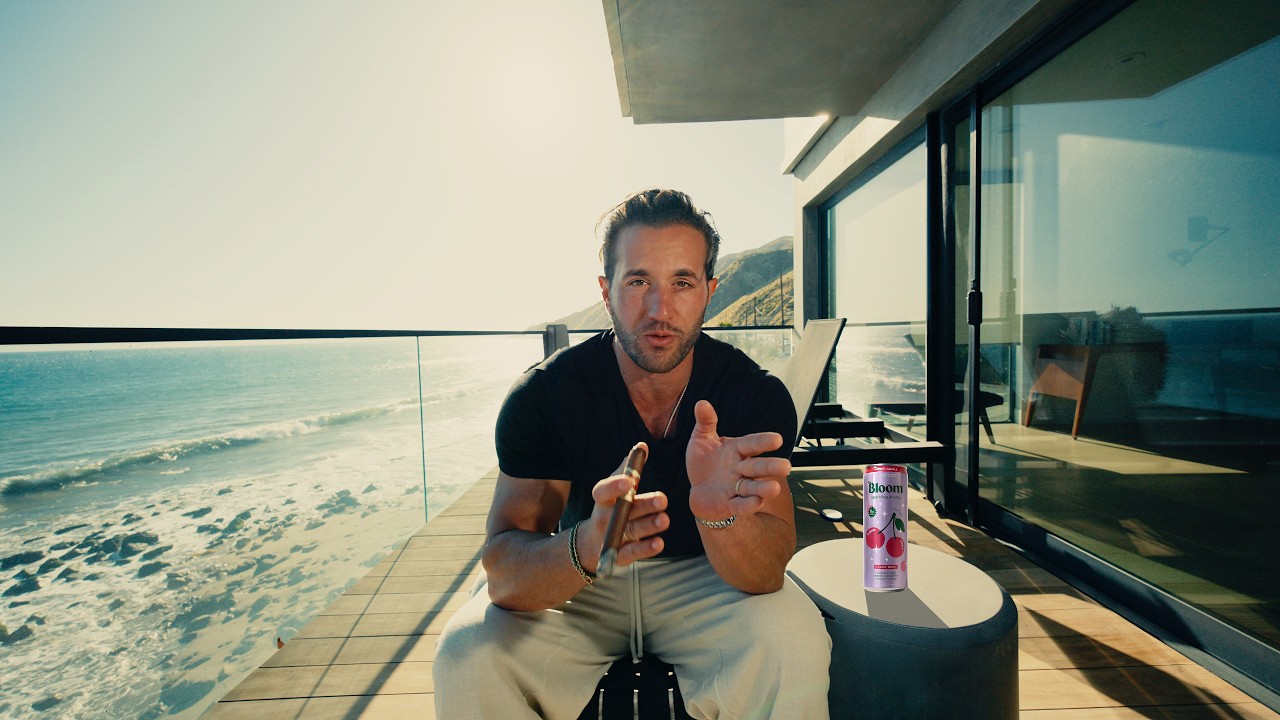
Greg LaVecchia was sitting in a Malibu Airbnb the week a major retailer sent back 150,000 cases of Bloom Nutrition’s summer launch with ten days until the product was supposed to hit shelves. By Thursday morning, he had already stopped caring about the loss and started hunting for somewhere to put the inventory. That instinct, forged through two decades of building and scrapping businesses, is the same one he says most capable people in their 20s have never been taught to trust. At 31, as CEO and co-founder of Bloom Nutrition, a multi-million dollar energy drink and supplement company now stocked in 50,000 retail doors nationwide, Lav recently laid out the six decisions he wishes he had made earlier.
Why a seven out of ten life is the most dangerous place to be
The first lesson cuts against the self-help instinct to wait for rock bottom. LaVecchia argues the most dangerous place for any entrepreneur is a life that scores a seven out of ten. It pays the bills. It is not painful enough to leave. And that comfort quietly sets the ceiling. He watched this pattern repeat with every person who stalled out, and he deliberately burned it down in his own career more than once, walking away from a PDF fitness guide business that was generating a couple million dollars a year to launch Bloom with a single pre-workout. When the pre-workout hit a couple million dollars a year, he scrapped it for protein powders, then greens, then the energy drink category where he is now chasing Monster and Red Bull directly. ‘When I say moonshot,’ he explained, ‘I’m not saying stop everything and go after some billion dollar opportunity. I’m saying go after right now what is your moonshot.’ That moonshot, he noted, will change every six to twelve months, and the job is to take the wisdom from each chapter and apply it to the next one.
Lesson two is about what happens after the inevitable loss. Bloom has launched 250 products. Five of them account for roughly 85 percent of all revenue generated. That means more than 98 percent of launches failed. If he had become a cautious operator after the first ten failures, he said, he would not be where he is. His rule after a loss: the scoreboard resets to zero the next morning, not to negative, not to five, to zero.
Build something first, then let the network come to you
Lesson three flips the standard startup advice on leverage. Bloom did not raise outside money until the business was doing $180 million a year. Before that, the only leverage available was reputation, with customers, with business partners, with banks, with credit card companies. A better credit reputation meant a bigger credit line, more ad spend, more reach.
Lesson four is the one that lands hardest: networking in the early years is mostly a waste of time. LaVecchia is blunt about why. If you have not yet built something, you have no utility to offer a successful operator. He says the meaningful network did not start arriving in his inbox until Bloom was doing $150 million a year. The action item is simply to build something worth noticing.
Lesson five is about youth as a squandered asset. Lav spent ages 18 to 25 being patronized and not taken seriously. His counter was to build something real and to show up physically sharp, because both signals compound when you are young and trying to command a room. He now actively surrounds himself with 21, 22, and 23 year olds. The Bloom team for its first five years was almost entirely under 30, specifically because younger operators had their hands on what was actually working in culture, e-commerce, and retail in real time.
Lesson six is the closing provocation. LaVecchia used to carry a Bluetooth keyboard attached to his iPhone because he was typing customer DMs so constantly that his thumbs gave out. He and co-founder Mari personally coached customers through 100-pound weight loss journeys even when those customers had only paid $9.99 for a fitness guide, because the transformation stories were what Bloom needed to build credibility. None of that was scalable. All of it was necessary. Early entrepreneurs who optimize before they have built anything, he argues, never build anything large.
The Bluetooth keyboard that launched a brand
Somewhere in those early years, there was a version of Bloom that existed only in customer DMs, typed one message at a time on a phone propped against a desk, a Bluetooth keyboard plugged in because the volume of conversations had outpaced what two thumbs could handle.
Greg LaVecchia’s closing thought is not about clarity or timing or confidence. It is about momentum. Most people, he says, do not lose their future from one bad decision. They lose it from taking too long to get back into motion after one.