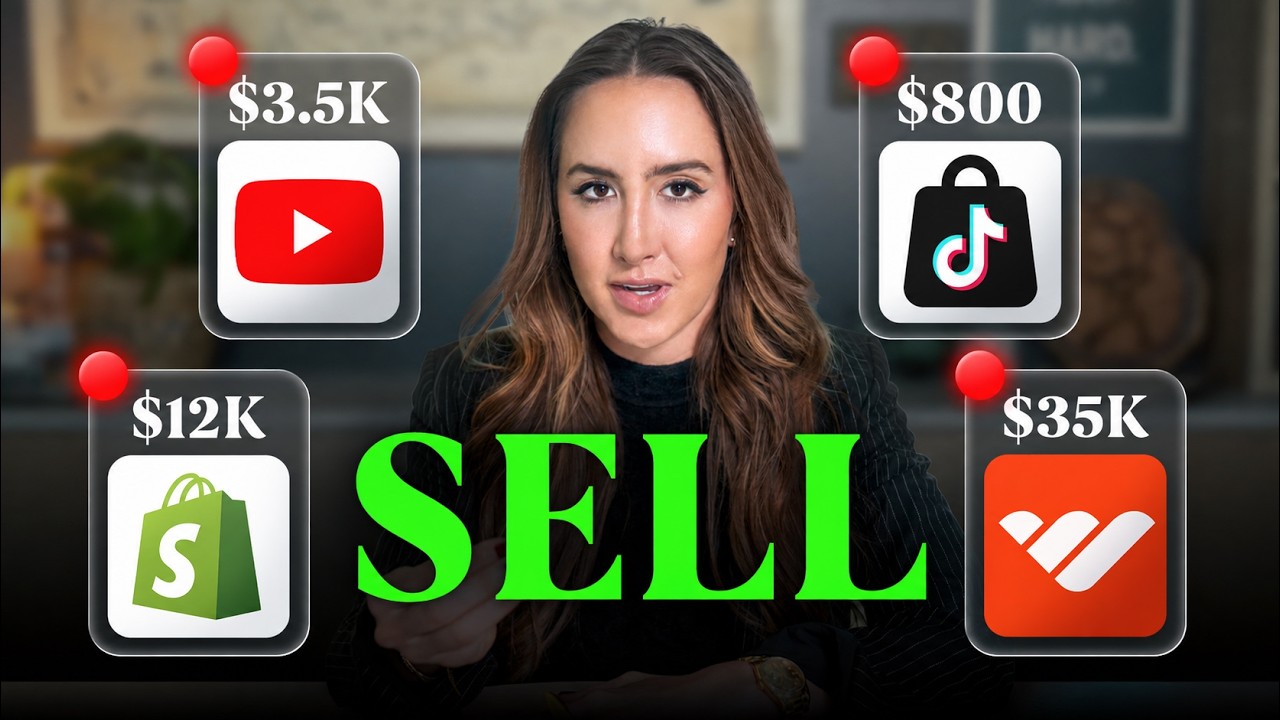
Codie Sanchez opened with a number that stops a scroll cold: she spent over a million dollars in the past 90 days running ads, testing copy, and engineering a book launch from the ground up. That figure is not a flex. It is the tuition bill for a live-fire experiment in what actually persuades people to buy things online, and she is handing over the full syllabus. Her framework, which she calls the 6 M, covers the entire arc from the first sentence a stranger reads to the moment they hand over a credit card, and every piece of it is grounded in real results from her own campaigns.
Why your best ad probably starts with the wrong sentence
The highest-converting ad Sanchez ever ran opened with a single line: ‘I’ll let you in on a little secret.’ Not a tips list. Not a platform description. A quiet signal that what follows is not available to everyone. The principle behind it is not about slapping the word ‘secret’ onto everything. It is about weaving language that makes a reader lean in: ‘I normally only show this to clients,’ or ‘I’m opening this to 100 people.’ Scarcity, when it is real, creates attention.
The second-best ad worked on an entirely different mechanism. It opened with: ‘If you need to hire more but your margins won’t cover it, this video is for you.’ Two things happen at once. The reader asks ‘Is that me?’ and then answers yes, which researchers call self-referencing. That first internal agreement, small as it seems, measurably improves the chance someone takes an action. The template is portable: ‘If you own a business and you’re still answering employee texts at 10 p.m., this is for you.’
The third tactic is reciprocity, and Sanchez is blunt about what it is not. ‘I don’t mean the fake version where you say I’m going to give you something for free and then hold it hostage behind a sales call,’ she said. Real reciprocity means something useful lands in the person’s hands before they have done anything for you. For her launch, that meant a personality test called the Owner Score, built at a cost of hundreds of thousands of dollars and given away free at ownerscore.com. The rule is that the gift must have a nameable value. ‘Free training’ means nothing. ‘The exact spreadsheet my team uses to rank our top 100 ads’ is something a person can picture.
The copy mistake every business makes, including hers
The second M is message, and Sanchez illustrates it with a caption her team actually wrote for her book launch announcement. It listed her firm’s five-year history, the 5,000 business owners they had worked with, the revenue levels they had helped companies reach. She read it back to the camera and described it accurately: ‘a paragraph-long resume.’ The replacement caption dropped all of it and opened on the reader’s own life instead: slow mornings with coffee, gym sessions in the middle of the day, never missing a magic moment. The book was mentioned as the guide to get there, not the subject of the story.
The governing rule she draws from it: ideal state first, mechanism second. Nobody cares about a proprietary seven-step AI process. They care about what changes in their actual life if it works. Delete the product from the pitch and sell the outcome.
Micro-commitment follows the same logic. Her launch gave the first page free with no purchase required. Only after someone clicked yes and registered did the next offer appear: a 47-dollar VIP upgrade. A study she cited found that 76 percent of people who agreed to a small initial request later agreed to a larger one, compared to 16 percent of people who received no initial request. The CTA section of the framework reinforced this further. Longer copy, she found, outperformed short two-word commands because it answered the actual questions in a reader’s head: why should I care, what am I getting, why now. Clarity, she said, is kind.
The final pieces of the 6 M cover money and map. On money, she walked away from traditional publishing deals she described as potentially worth millions because the publisher owned the customer data, the email addresses, and the direct relationship. Self-publishing through her own imprint kept roughly 40 to 50 percent margin after costs, compared to 10 to 15 percent under the traditional model. The number she watches obsessively is gross margin per customer, which she wants running at least two to three times the cost of acquiring that customer. On map, she runs a 90-60-30-10-day content countdown. Ninety days out, red books appeared quietly in the background of her videos. Sixty days out, the announcement. Thirty days out, nearly every post carried a direct call to action. Eight days before launch, by her own instruction to her team: if it is not about the book, do not say it.
The character in the corner of her grid
Somewhere in the content plan sits a small illustrated figure named OXO, the Greek word for growth, introduced to handle the videos Sanchez could not film while pregnant. OXO appeared doing ridiculous things, including playing a video game inside the actual gaming setup.
The strategy behind him was identical to the strategy behind every other piece of the 6 M: multiply the presence, reduce the dependency on a single voice, and keep the launch from becoming entirely about the person running it. A million dollars and ninety days of testing had pointed toward the same conclusion every time. The customer is Luke Skywalker. The business is just the little green man with the map.