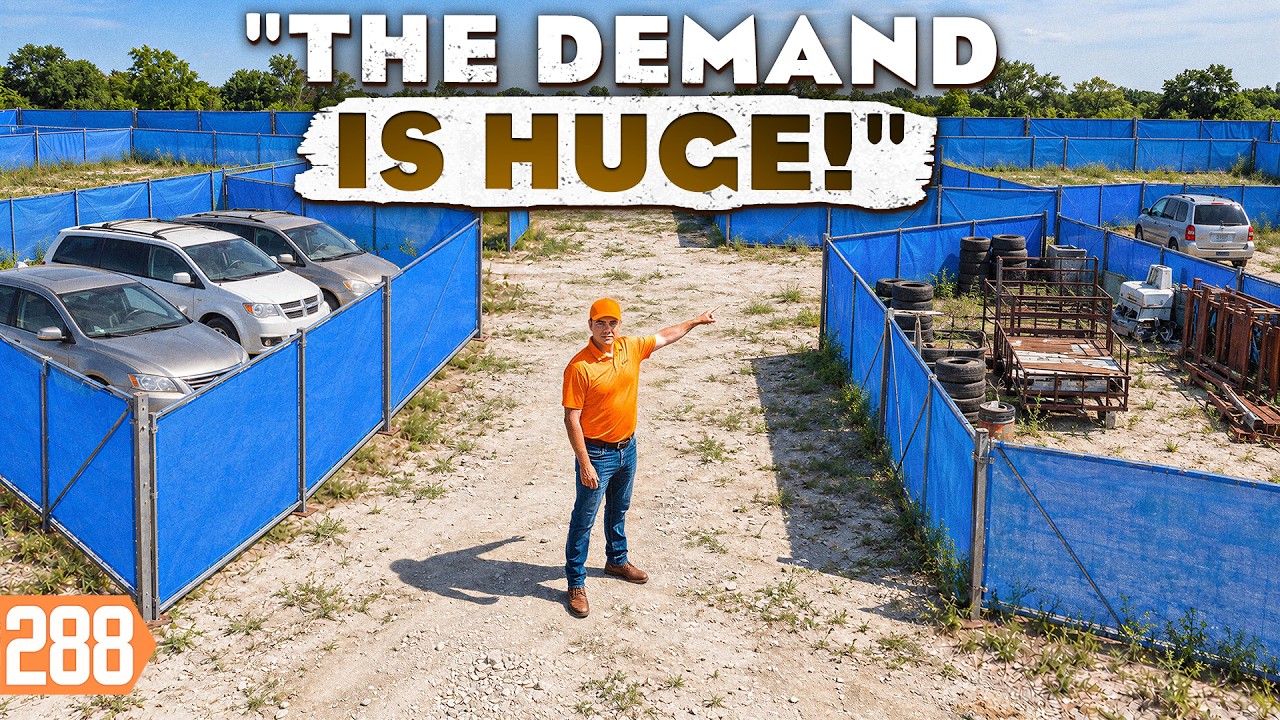
Chris, the founder of Longyards, was standing on 6.7 acres of fenced Florida dirt when he said the quiet part out loud: ‘I rent dirt to contractors, and it’s boring, and I love it.’ That plainness is the point. In a real estate landscape crowded with complex plays, Longyards has built a business model around the one asset contractors cannot find anywhere else: a secure, month-to-month outdoor yard big enough for a trailer, a fleet of tow trucks, or a flamethrower, if a tenant insists. The story of how Chris got there, and nearly lost it all along the way, is worth every detail.
From licensed carpenter to storage yard operator
Chris came up through the trades. He completed a 7,300-hour apprenticeship in Canada, earned his carpenter’s license, and launched a general contracting company he named after his grandfather. At its peak the company carried 14 employees and 10 active jobs. Then a large commercial client contracted for a major job, shook hands warmly, and never paid. ‘I lost everything,’ Chris said. He put the tool belt back on himself and rebuilt from the ground up, but this time he rebuilt differently.
His first customer paid $25 a month for a spot to park a single van. Chris moved that van 12 times as he built fence around the yard with the money coming in. He pre-sold the first five yards by the year just to afford the front gates. He cold-called contractors at red lights. He left flyers in door handles at Home Depot parking lots. ‘If I need it, other people need it,’ he said. Within three years he was generating more than $15,000 a month in positive cash flow and called himself financially free.
How the numbers actually work on a single property
The Florida site visited during the trip runs 34 yards across 6.7 acres. The practical math starts with net rentable square footage. A three-acre parcel carries roughly 130,680 gross square feet, but roads, roundabouts, wetland setbacks, and buffer zones eat about 30 percent, leaving around 92,000 usable feet where a contractor can actually park. Multiply that by 25 cents per square foot and the gross monthly potential lands near $23,000. Strip out a 10 percent vacancy assumption and operating expenses, including roughly $1,000 for maintenance, $1,000 for property tax, and $2,000 for phones, power, and miscellaneous items, and the property produces around $16,000 before debt service. Using an 8 percent cap rate, that net operating income implies a future market value of roughly $2.4 million once the yard is leased up.
The flagship Canadian location is already at that stage. It brings in $40,000 a month in gross revenue, carries about $6,000 in location expenses and a $9,000 mortgage payment, and clears $25,000 a month in net profit, a 62 percent margin on fenced dirt.
Yards range from small 1,000-square-foot spots renting for around $300 a month to 6,000-square-foot plots that recently held a tenant paying $1,800 monthly. The most popular size sits in the middle, closer to 500 dollars a month. One prospective tenant who toured the site, a tow business operator named Reed who had been searching for a secure yard for over eight months, started in a smaller yard across the street and is already in talks to expand into Longyards’ indoor warehouse space.
The gate that locks itself
Chris credits one feature with changing his entire outlook on the business: ‘If they don’t pay, the gate automatically locks them out. It’s my favorite employee.’ That line is not a joke. It is the operating philosophy. The whole model is designed to stay lean, a small ops team, a ground-level site manager named Eddie who handles maintenance and was so persistent when he applied through Facebook Marketplace that Chris told him to stop calling before hiring him anyway, and a phone line that generates five to eight inquiries a day per location. Total hours required each week to manage a single site: about five.
For anyone wanting to enter the business, Chris’s clearest advice is to lock up a good piece of land before fully financing it. A refundable one-month deposit buys a 90-day due diligence window. SBA financing can cover 90 percent of a project, including a 10-year lease valued up to $350,000, meaning the cash required to start could be as low as $35,000, and a partner or investor can cover even that if the deal is strong enough. ‘If you find a good deal,’ he said, ‘lock it up. Then get the right people and the right money partners.’
A 6,000-square-foot yard sitting empty for five days
The largest yard on the Florida property, around 6,000 square feet, had just turned over. Its previous tenant paid $1,800 a month. It had been vacant for five days at the time of the visit.
Chris did not seem worried. The yard was still exactly what it had always been: open ground, blue privacy fabric on chain-link fencing, a power outlet running to a security camera, and a well in the corner. Contractors had been calling.