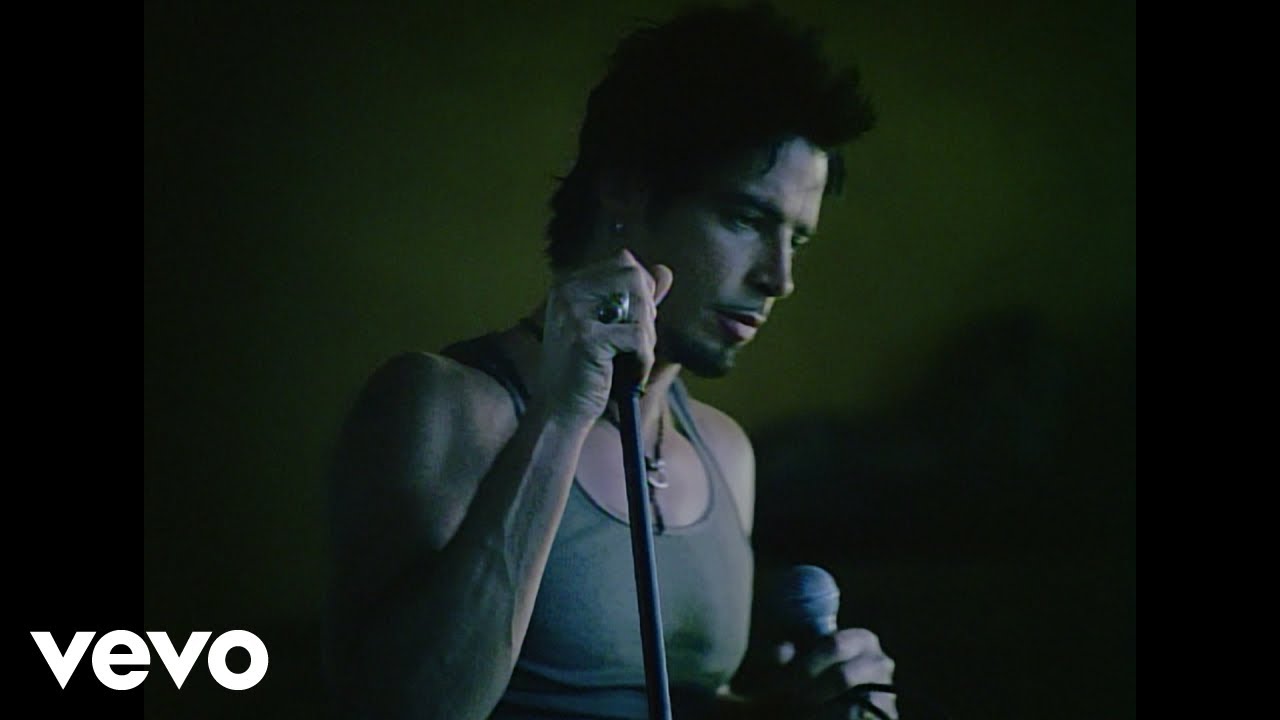
The amplifiers are still whirring when the director calls cut, and somewhere in that gap between the last chord and the crew’s indistinct chatter, ‘Like a Stone’ does what it has always done: it refuses to let go. Audioslave built one of rock’s most quietly devastating songs around a single, almost unbearable image of waiting, and the official recording captures that weight from the first note. What keeps people returning to this track, years after its release, is not the volume or the guitar heroics but the stillness at its center.
A room full of emptiness, a freeway, and a book full of death
The song opens on a scene so specific it feels lived-in: a cobweb afternoon, a freeway close enough to hear, a narrator lost in a book about dying. That domestic, slightly rundown geography grounds what could have been abstract grief in something almost embarrassingly real. The narrator is not on a mountaintop. He is sitting by a freeway, reading about mortality, confessing to no one in particular. From that low, honest starting point, the lyric reaches toward something bigger, a longing to belong somewhere after death, in a house whose rooms he is prepared to move through one by one, patient as stone, patient as someone who has stopped expecting a quick answer.
The chorus lands its central image simply and without decoration: ‘In your house I long to be, room by room, patiently, I’ll wait for you there, like a stone, I’ll wait for you there, alone.’ The repetition is the point. Each return to those lines adds a year, a verse’s worth of regret, another layer of things done and wronged and blessed and not yet settled.
A pagan prayer and a bruised sky
The second verse pulls the stakes higher. The narrator imagines his deathbed, and the prayer he pictures himself offering is not a confident one. He reaches toward gods and angels ‘like a pagan to anyone who will take me to Heaven,’ which is about as honest as last-rite theology gets. A remembered place surfaces: a bruised sky, wine that bled, being led on by someone. The details are fragmentary, the way memory actually works, and the song does not try to explain them.
Chris Cornell’s vocal performance, drawn from the official recording, holds all of it with a restraint that makes the open moments hit harder. The mellow alternative rock arrangement keeps space around the words rather than filling every beat.
As the final verse closes, the narrator is still reading, still sitting in regret, still tallying the things he has done and the things he has wronged, vowing to wander in dreams until his death. The director calls cut. The amplifier whirs one last time.
The crew that kept the room quiet enough to hear it
In the background of the production, crew members speak indistinctly between takes, the ordinary business of making something that does not feel ordinary at all.
The amplifiers go quiet. The song, room by room, is already waiting somewhere else.