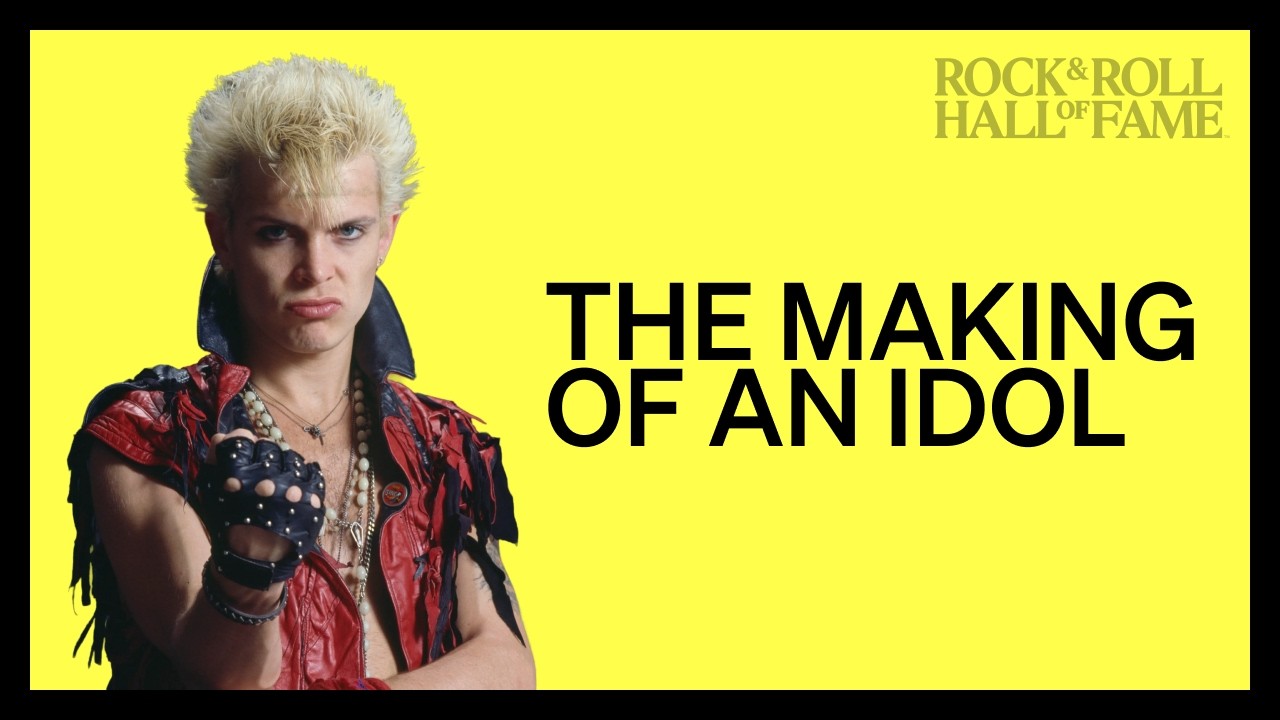
William Broad grew up feeling like an outsider in two countries at once. Born in Middlesex, London, he spent formative years in New York, then returned to England only to be mocked by schoolmates for his American accent. That sting of not belonging became the engine of everything Billy Idol would do next, pushing him toward stages, studios, and a career that has now outlasted most of the genre he helped invent.
From a Sex Pistols crowd to the center of the stage
Idol’s entry into music was not through a conservatory or a record label’s talent search. He fell in with the Bromley Contingent, a loose crew from the London punk scene who attended Sex Pistols gigs together in the mid-1970s. In 1976, he taught himself guitar. That same scrappy, self-directed energy led him and bassist Tony James to form Generation X, a band that threaded punk’s raw aggression through retro pop and rock and roll influences. Singles like ‘Ready Steady Go’ gave crowds something they could actually move to without sacrificing any of punk’s hard edge.
When Generation X dissolved, Idol did not retreat. He relocated to New York City and began folding dance pop and new wave into his already restless sound. Under the shortened moniker Gen X, he released ‘Dancing With Myself’, a single that barely registered commercially but became a fixture in dance clubs and DJ sets. When MTV launched in 1981, Idol saw the opening immediately. He re-recorded the track with an accompanying music video and stepped directly into the new medium’s hungry frame.
Rebel Yell and the blueprint that followed him everywhere
His 1982 self-titled debut introduced two things that would define the decade: the hits ‘Hot in the City’ and ‘White Wedding’, and a creative partnership with guitarist and songwriter Steve Stevens. Together they were not just making records. They were constructing a visual and sonic identity that television could carry straight into living rooms. The 1983 album Rebel Yell turned that identity into something bulletproof, delivering ‘Eyes Without a Face’, ‘Flesh for Fantasy’, and the title track to an audience that had no real frame of reference for a punk who could also be a pop star.
A near-fatal motorcycle accident eventually slowed the pace. Idol stepped back, healed, and spent years releasing occasional material and taking cameo roles. In 2005, he returned with Devil’s Playground, described as a raw, back-to-basics rock record in the vein of his Generation X days, his first studio album in twelve years. He has not gone quiet since. A collaboration with Miley Cyrus arrived in 2020, and his 2025 album Dream into It, recorded with Joan Jett, Alison Mosshart, and Avril Lavigne, marks his first studio release in a decade.
As one observer put it during the Rock and Roll Hall of Fame tribute, Idol ‘sneered at, danced to, and set mainstream music ablaze’ in equal measure, building blueprints that bands from Fall Out Boy to My Chemical Romance would later follow into the pop charts.
A crooner voice that never softened the sneer
What makes the arc strange and durable is how little the core identity shifted even as the music moved through punk, dance pop, new wave, and back again. The outsider kid with the American accent in an English schoolyard never entirely left. He just found bigger rooms.
Dream into It, released in 2025, sits in those rooms now, carrying the same punkish attitude the Bromley Contingent carried to Sex Pistols gigs nearly five decades ago.
The final track on that debut Generation X run closed with a simple instruction that Idol has apparently never stopped following: ‘Nice day to start again.’