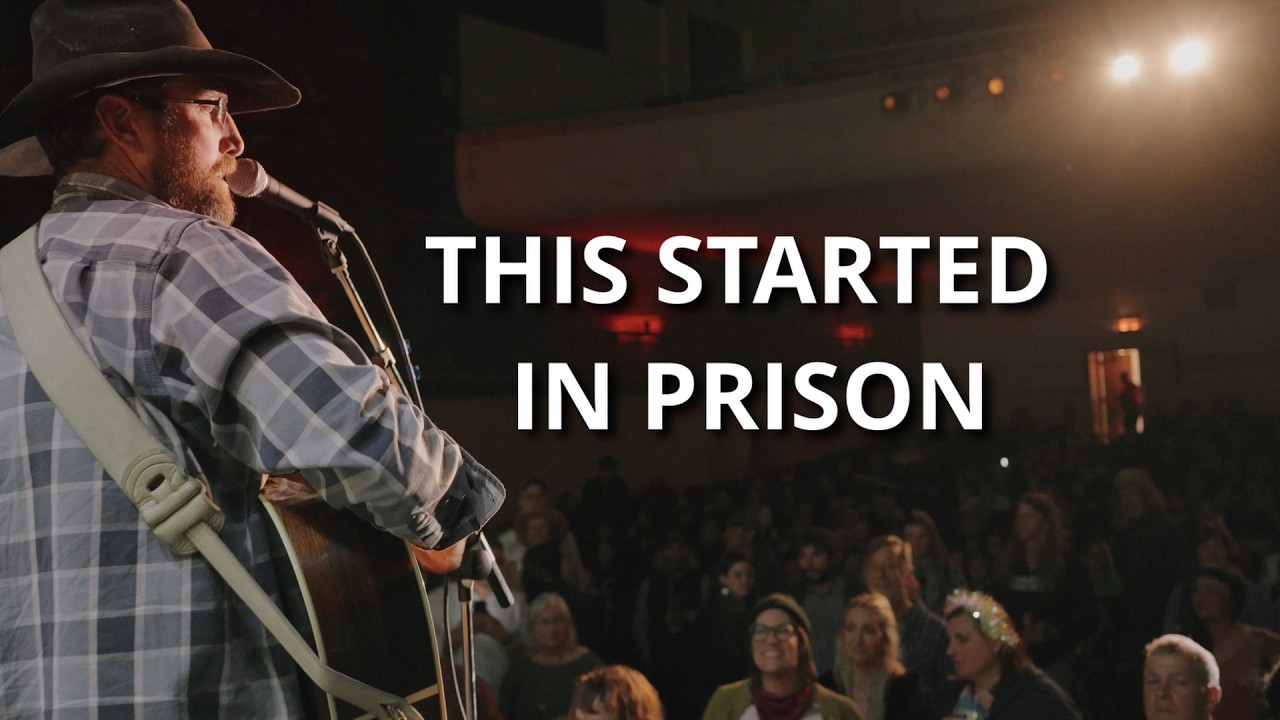
Brett McFarland walked onto the stage at the Eureka Theater and opened with a line most country singers would never dare: he got sent to prison for plants he grew, and he refused to tell on the people he knew. The crowd was already leaning in before the first chorus landed. That kind of unvarnished honesty is the engine of McFarland’s story, and the song he performed that night, ‘Blessing in Disguise,’ is not a metaphor so much as a literal accounting of how the worst stretch of his life became the foundation for everything that came after.
[See the Full Article featuring Brett McFarland’s Story on Peter Santenello’s Documentary]
The guitar in the dusty hall
McFarland has said he was scared when he first arrived inside. He never imagined living in a place like that. But in a dusty old hall, there were a few guitars. He picked one up, played a few bars, and before long he was drawing a crowd. When he got to the part about not being a snitch, the guys threw fits. That was the moment, he told the Eureka Theater audience, that he knew he was going to be okay. Standing in the prison yard with his eyes closed, he had a vision of himself on a mighty big stage. As he put it from the stage: ‘Come to think of it, it looked a lot like this one.’
The song’s chorus distills the whole arc into four lines the audience was singing along with by the second pass: sometimes the bad times lead to good times, sometimes the worst times are the best times of all, sometimes you break down just to get found, sometimes you lose big just to go and win it all.
See the Full Article about Brett McFarland’s Folk Song “About Losing the Country You Grew Up In Is Striking a Nerve Right Now“
The shovel, the hammer, and the couch
Release brought its own complications. McFarland’s first morning out of the halfway house in Oakland, California, he spotted a long line and asked what it was for. Someone told him it was for the dispensary, because weed was legal now. He was not bitter, he said. He just did his time, because he knew he was destined to be a Nashville country star.
But getting home was harder than getting out. He put the guitar away, buried some dreams, picked up a shovel and a hammer, and worked every day for three years. His wife, who had waited for him through all of it, came to him in tears with news that they were going to have a baby. He kept building. By the time he was done, she was leaving, telling him he had gotten mean since he came home. He watched her go with their baby girl, and that night things got dark. He started drinking and thinking about dying.
He woke up the next morning and knew what to do. She had waited for him. He would wait for her. He moved out, convinced her to move back in with their daughter, visited every chance he got, kept his head down, prayed a lot, and eventually she told him he could sleep on the couch. That, McFarland told the crowd, is when he started to sing again.
Music saved his life at least twice by his own count. The second time, he drove back to the prison where he first had his dream, stood outside in the wind, and somewhere down the road spotted a tour bus rusting in the dust. The owner’s old lady pulled a gun on him. He got out fast but knew he would be back, because that bus was his destiny.
A moment no one quite let go of
A single guitar sitting in a dusty prison hall, waiting for someone to pick it up.
The Eureka Theater crowd sang the final chorus back at McFarland without being asked, full voice, on a line about losing big just to go and win it all.