
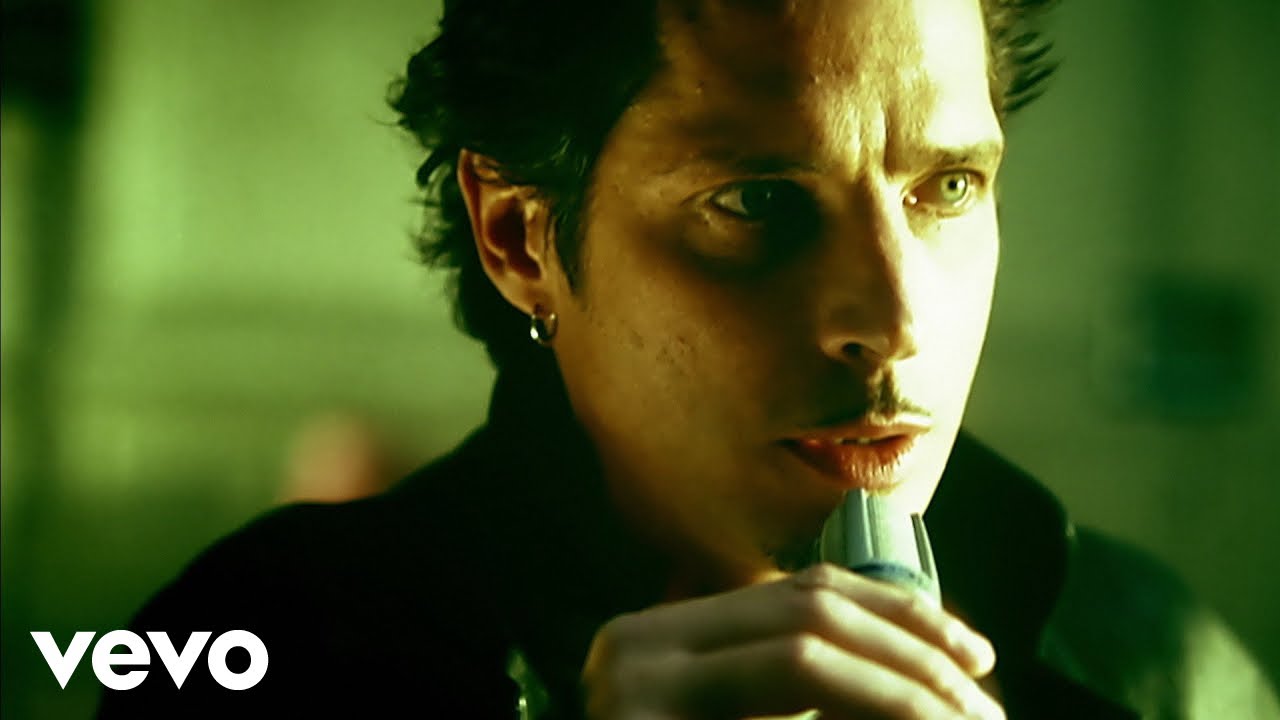
Audioslave built ‘Be Yourself’ around a truth so plain it should have been obvious long before anyone set it to music: that every human life, regardless of how it unfolds, bottoms out at the same irreducible fact. The song holds that idea without flinching, and two decades on, it has not loosened its grip. What makes it remarkable is not the sentiment but the specificity with which the band populates it, pairing grief and joy in the same breath until the listener cannot look away. Chris Cornell’s voice is unmistakable, his iconic angelic tone is unparalleled…
Two lives, one yard, no resolution needed
The song opens on a quiet collision of opposite lives. One person catches a bouquet in a chapel yard. Another lays a dozen white roses on a grave. The two images are not contrasted for dramatic effect; they are simply placed side by side, as life places them side by side, and the listener is left to sit with both. Chris Cornell’s vocal does not push toward either emotion. It reports, and the restraint is what makes the moment land.
The verses continue in that register, sketching figures who find salvation in everyone, or only pain, who swear true love until the end of time, or run away. None of them are resolved. The song is not interested in resolution. It is interested in the full range, the ‘separate or united, healthy or insane’ sweep of human experience, and the single thread connecting all of it.
The bridge that earns the chorus
The song’s emotional center arrives in the bridge, where the accumulated weight of all those unnamed lives finally turns toward the listener directly. The writing acknowledges being pulled apart, being held up, carrying every memory of good and bad. Then it offers what it can: ‘Don’t lose any sleep tonight, I’m sure everything will end up alright.’ Cornell delivers those lines not as a promise but as a companion saying the only honest thing available, which is that the outcome is uncertain but the instruction remains the same regardless. You may win or lose.
The repeated chorus, returning again and again to that single phrase, stops functioning as a hook and starts functioning as something closer to a mantra. By the final pass, the simplicity is not a limitation. It is the whole point.
The white roses, still there
A dozen white roses laid on a grave, mentioned once and never returned to, sitting somewhere in the first verse.
The chapel yard empties. The bouquet gets tossed. The song ends. The roses remain exactly where they were placed.