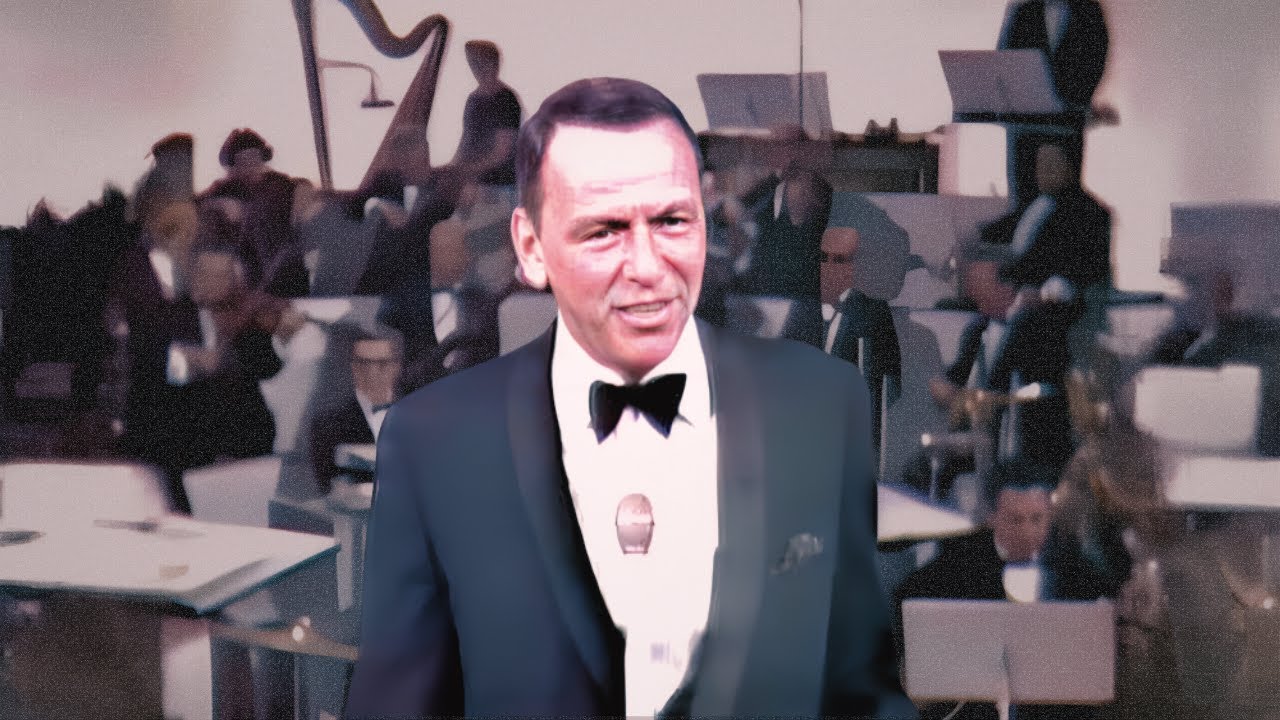
Frank Sinatra steps into the spotlight, and before the brass even fully lands, the room is already his. That quality, the ability to make a live audience feel personally addressed by a lyric about resilience and failure, is exactly what made this 1966 television performance of ‘That’s Life’ one of his most discussed of that era. The song had been kicking around as a regional hit before Sinatra got hold of it, and what he delivered on ‘A Man and His Music Part II’ was something closer to a declaration than a performance.
A song about getting knocked down, sung by someone who had been
The lyric does not flinch. ‘You’re riding high in April, shot down in May,’ Sinatra delivers with the flat certainty of someone reporting the weather rather than complaining about it. The verses catalogue a life of contradictions: puppet and king, pirate and poet, up and down and over and out. What gives the song its particular weight in Sinatra’s hands is that the audience in 1966 knew his biography well enough to hear the autobiography inside it. The line ‘I thought I quit, baby, but my heart just won’t buy it’ lands differently when the man singing it had actually stepped away from the top and clawed his way back.
The structure of the song is a small engineering achievement. Each verse lists the roles, accumulates the losses, and then pivots hard on a single repeated resolution: ‘Each time I find myself flat on my face, I pick myself up and get back in the race.’ Sinatra does not soften the pivot or milk it. He snaps into it like someone ending an argument.
The moment the applause breaks early
Halfway through the performance, the audience begins applauding before the final phrase resolves, which is the specific tell of a crowd that has stopped watching and started feeling. The transcript captures it plainly: applause erupts mid-lyric, then again at the close, then again after the music holds. Three separate bursts. Sinatra earns each one differently.
The closing threat of the lyric is the strangest and most honest line in the song. ‘If there’s nothing shaking come July, I’m going to roll myself up in a big ball and die,’ he sings, and the room takes it not as a joke and not as despair but as the third option: a man telling the truth about what it actually costs to keep getting back up.
The man who sang it once, then again, then once more
Sinatra performs the central verse twice across the arrangement, the second time with the full weight of everything that came before it already in the room.
By the final chord, ‘A Man and His Music Part II’ has done what only the best live performances manage. It has made a single song feel like a complete life compressed into three minutes.
The brass fades. The applause does not.