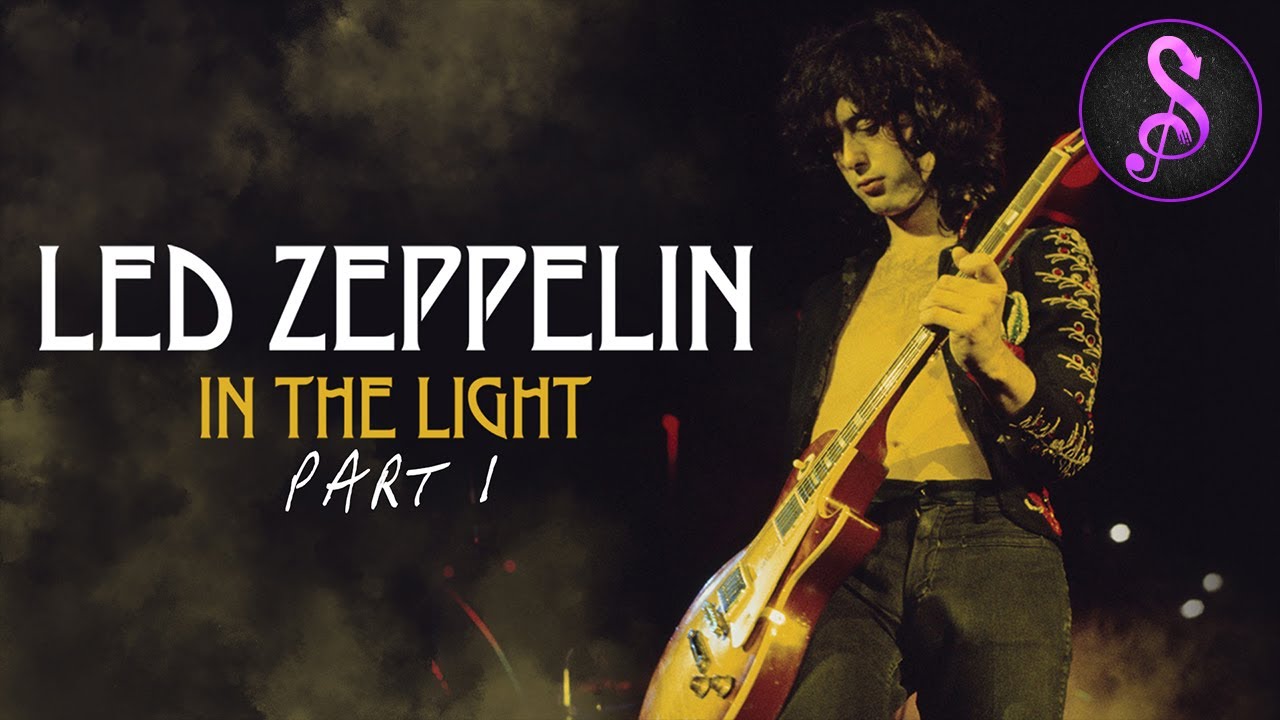
In a basement room on Gerrard Street in what is now London’s Chinatown, four musicians stood wall-to-wall with amplifiers, leaving just enough space for a door, and asked each other a simple question: what should we play? The answer changed rock music permanently. What happened next, inside that tiny room in late 1968, is a story about four people who were each extraordinary on their own but became something genuinely inexplicable together, recorded for less than 2000 pounds in roughly 30 hours of studio time, with no computer assistance and no procrastination, just a band standing in a room and playing.
Jimmy Page had a clear vision when he left the Yardbirds. He wanted a band capable of handling improvisation, contrast, and the full emotional range from quiet acoustic fingerpicking to something that could tear the roof off a club. His first choices for a vocalist were Steve Marriott and Terry Reid. Reid passed but pointed him toward a 19-year-old from the Midlands named Robert Plant, who at the time was helping fix roads on weekends. John Paul Jones, already one of London’s most in-demand session bassists and arrangers, called Page directly after his wife spotted a mention in a music paper. John Bonham came in on Plant’s recommendation. The four of them met, someone suggested an old Yardbirds number called Train Kept a Rollin, and the room, in Plant’s words, just exploded.
The album that cost less than a used car
Before the first Led Zeppelin record had a name, the band had already tested the material on a Scandinavian tour. The purpose was practical: play the songs live, see what worked, discard what did not, then go straight into the studio with something road-tested. They did exactly that in October 1968. Producer Glyn Johns later recalled that across nine or ten days of sessions, the band was probably inside the studio for under 30 hours total. There were no overdub marathons. No drums one day, bass the next. They stood together and played, capturing the kind of live energy that studio perfectionism tends to sand away.
The sequencing was deliberate. Good Times Bad Times opened the album not by accident but as what one contributor called ‘an introduction to the orchestra.’ Bonham’s bass drum work on that track, a rapid-fire pattern that sounded to other drummers like it required two feet, announced immediately that something new had arrived. Jimi Hendrix once leaned over to Bonham at a jam session at Steve Paul’s Scene in New York and told him, ‘you’ve got a foot like a rabbit.’ Babe I’m Gonna Leave You, which Page had heard on a Joan Baez record, established the light-and-shade architecture that would define Zeppelin across every subsequent album: acoustic fingerpicking descending into electric heaviness, soft into loud, back again. Dazed and Confused, which had roots in a folk song Page encountered while touring with the Yardbirds, became a live centerpiece partly because of his violin bow technique, a method traced back to a casual suggestion from David McCallum’s father during a session, who noted that angling the bow against the string’s edge rather than laying it flat was the only way to generate friction on a metal guitar string.
Peter Grant, Atlantic Records, and a deal that redefined the business
The album’s commercial launch was as audacious as its recording. Manager Peter Grant walked into Atlantic Records and demanded five times the royalty rate the Beatles were receiving, a 200,000 dollar advance, and complete artistic control down to sleeve design. In 1968, a lavish American advance would have been around 20,000 dollars. Grant left with ten times that. Atlantic’s Ahmet Ertegun and Jerry Wexler said yes to everything. Grant had correctly calculated that he had something Atlantic needed more than Atlantic knew.
The first Rolling Stone review dismissed the album outright. The critics were, by most accounts, lukewarm. The audiences were not. Queues stretched three times around the block at small clubs. At the Fillmore in San Francisco, a 19-year-old Plant stood at a microphone in his wedding suit with no shoes on, manually adjusting his own vocal level from a 150-watt amplifier placed in front of the bass drum, because the band had one person driving the station wagon and no dedicated sound engineer. It was, he later said with some affection, a very funny sight.
A wedding suit and a 150-watt amplifier
That 150-watt amplifier Plant dragged from his previous band, the Band of Joy, sat in front of John Bonham’s bass drum through those first San Francisco shows. Plant could hear bootlegs from those nights decades later, still wincing at the sound.
Thirty hours. Less than 2000 pounds. A basement in Chinatown, a tour that tested the material before anyone committed it to tape, and four people who had been playing together for under three weeks when they finished it. As Page put it at the time, the only thing he truly wanted was to make something that could stand the test of time.