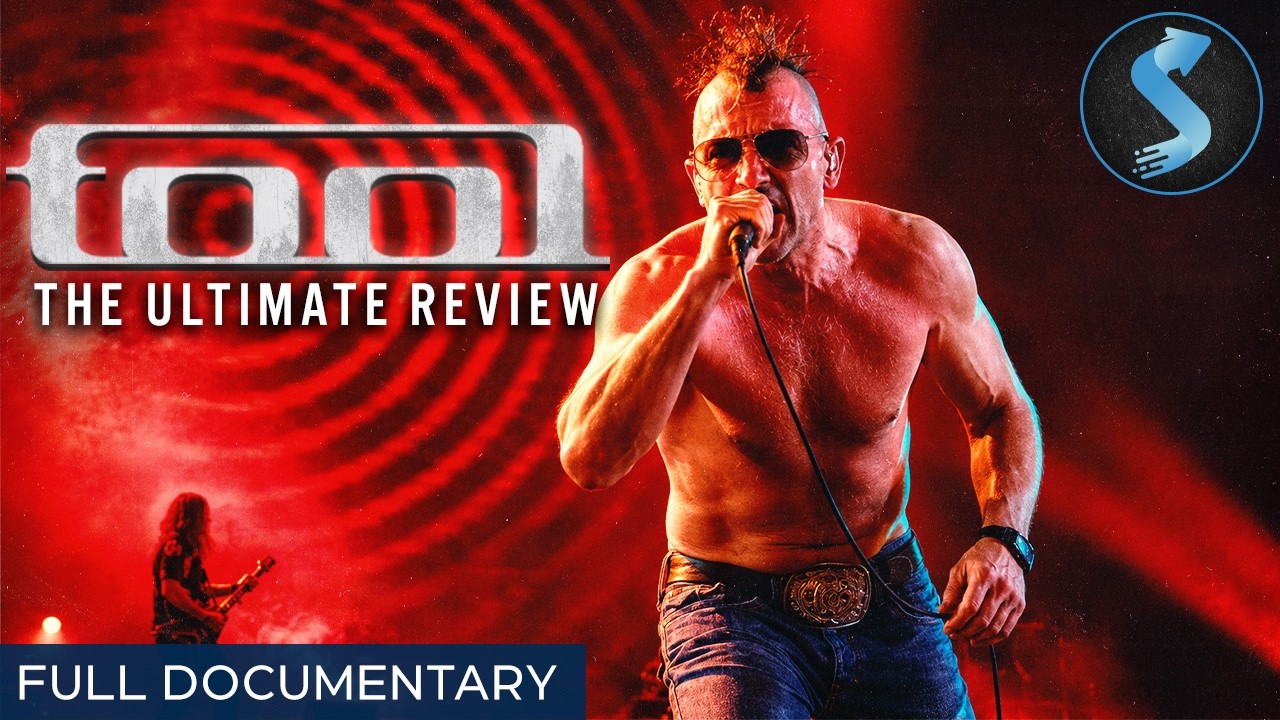
Maynard James Keenan was sleeping in a shared Hollywood loft and working shifts at a pet store when he decided, almost on a whim, to put together a band for a house party. The year was 1990, and the Sunset Strip outside was still choked with hairspray and the last gasps of glam metal. What emerged from that party would spend the next decade-plus dismantling every expectation rock music had quietly assembled for itself, and doing it one 79-minute album at a time.
A loft full of misfits who didn’t want to be rock stars
The four future members of Tool arrived in Los Angeles separately and for reasons that had nothing to do with each other. Adam Jones was doing special effects work at a film production company. Danny Carey came from Kansas. Justin Chancellor’s predecessor, original bassist Paul D’Amour, came from Washington. Maynard relocated from Ohio. The connective tissue between them was a ramshackle comedy-metal collective called Green Jello, fronted by Buffalo native Bill Manspeaker, who had driven across the country after spotting an ad for The Gong Show in an LA newspaper. ‘I was like, this is a perfect thing for my band,’ Manspeaker recalled. ‘I could get gonged and prove I’m the worst band in the world.’ He did get gonged. He also ended up housing half of what would become Tool in his Hollywood loft, including a freshly arrived Maynard who, Manspeaker remembered, ‘just needed a place to live.’
The timing of Tool’s formation turned out to be almost surgically precise. By late 1991, Nirvana had effectively closed the door on the scene that had dominated the Strip, and a generation of record labels was suddenly hungry for something with more interior life. Tool had recorded a four-track demo cassette by hand, and it circulated fast. ‘I played the hell out of that cassette,’ Manspeaker said. ‘I’d bring it to work and everybody at work loved it.’ Seven or eight live shows later, they had a record deal with Zoo Entertainment.
The leap that changed everything
Their 1992 debut EP Opiate introduced the band’s framework: aggressive, unornamented, with a dark current running underneath. Their 1993 full-length Undertow, produced by former Green Jelly collaborator Sylvia Massie, was closer to a conventional grunge-era rock record than anything that followed, but it broke the band commercially and, as one observer put it, ‘foreshadowed the greater things that were to come.’
The real transformation arrived when bassist Paul D’Amour departed in 1995 and British musician Justin Chancellor joined. Producer David Botrill, who had worked with King Crimson, Brian Eno, and Peter Gabriel, came aboard for the 1996 album Aenima. Botrill recalled that Tool had specifically sought him out after cataloguing which of his records each member admired most: Maynard had been drawn to his world music recordings, Danny was a devoted student of Bill Bruford’s drumming on the King Crimson material, and Adam’s favourite record of the previous few years was a collaborative project between David Sylvian and Robert Fripp that Botrill had produced. ‘We know who he is,’ the band told his manager, ‘and we don’t want to sound like every other LA metal band.’
Aenima was the leap. Darker, stranger, and funnier than anything they had released, it contained a track whose chaotic Germanic screaming turned out, on translation, to be a recipe for Spanish cookies or truffles. The album was dedicated to comedian Bill Hicks, who had died of pancreatic cancer in 1994 and whose routines were sampled on the track Third Eye. Hicks had opened for Tool at live shows and shared a stage with Maynard at open-mic nights at a venue called the Natural Fudge Company. ‘Both of them got that a psychedelic experience is going to have a dark side,’ one close observer noted. ‘It’s not just woo, flowers.’
Lateralis followed in 2001 after a period of legal disputes and a lengthy hiatus. It entered the American charts at number one. Artist Alex Gray, whose translucent anatomy-chart artwork defined the album’s visual identity, described how Adam Jones had approached him at a gallery and introduced a concept built around examining the body and the spirit simultaneously. Gray had no access to the music until the record was released. The 10,000 Days album in 2006 pushed further still, its packaging built around a pair of stereoscopic lenses that let listeners view the artwork in three dimensions, a detail that, as one band member put it, required finding ‘four guys that’ll agree on doing something like that.’
A color preset from a YouTuber he used
The four members of Tool at the point of 10,000 Days had been together, with one change along the way, for roughly fifteen years. ‘It’s tough to stay married to just one person for ten years,’ Maynard said, ‘let alone stay married to three people.’
The full-circle wrap on Tool’s story keeps landing on that same quality: a refusal to separate the music from the visual, the humor from the darkness, or the career from the conviction. Drummer Danny Carey, working with engineer Joe Baresi on 10,000 Days, initially doubted a guitar-oriented producer could handle his drum sounds. By the end of the sessions, Baresi had given him some of the best drum sounds he had ever gotten on record. That outcome, unexpected and hard-earned, describes the band’s entire working method: push against the obvious, and see what comes back.