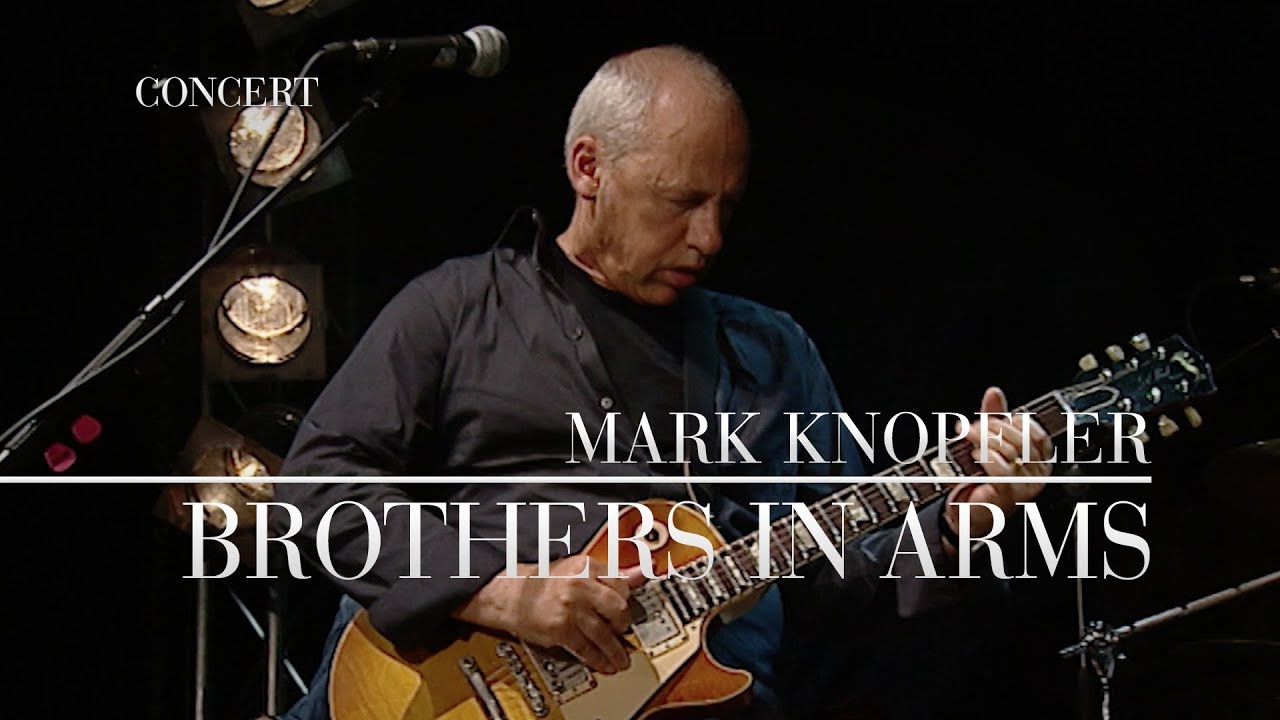
Mark Knopfler stood before a Berlin arena in 2007 and opened with a confession: the mist-covered mountains he was singing from were not really home, and they never would be. That tension, between where a person stands and where they belong, is the quiet engine of ‘Brothers in Arms’, and in a city that spent decades literally divided between different worlds, the song landed with unusual weight. Written as an elegy for soldiers who fight and die alongside one another regardless of the flags they carry, it has outlasted the specific conflict that inspired it and become something closer to a shared human reckoning. On this particular night, the performance gave the audience a chance to sit inside that reckoning without rushing past it.
A song built from exhaustion, not anger
The lyric does not rage. It observes. Fields of destruction, baptisms of fire, the fear and the alarm of battle are named plainly, and then set beside something that refuses to be cancelled by them: the fact that the man next to you did not leave. ‘Though they did hurt me so bad in the fear and alarm, you did not desert me, my brothers in arms.’ Knopfler‘s delivery in Berlin held the same quality the words have on the page, a kind of grief that has already passed through fury and come out the other side into something quieter and more permanent.
The song’s central turn arrives in the third verse, where the frame shifts from the battlefield to the cosmos. ‘There’s so many different worlds, so many different suns, and we have just one world, but we live in different ones.’ It is a precise distinction. One planet, one resource, one shared deadline, and yet the experience of being alive on it is so fractured that war between its inhabitants remains not only possible but routine. Knopfler put it plainly in the closing lines: ‘We’re fools to make war on our brothers in arms.’ Not a protest, not a slogan. A statement of fact, delivered as though it were obvious and inexplicable in equal measure.
What the farewell section actually says
Before that closing line arrives, the song pauses to say goodbye. ‘Now the sun’s gone to hell and the moon’s riding high, let me bid you farewell, every man has to die.’ It is a strange comfort, the kind that only works because it asks nothing back. The farewell is not to an enemy or a stranger but to someone the singer stood beside when standing beside anyone felt impossible. The finality is in the stars and in every line of the palm: not a religious claim, but an observation that the outcome was always going to be the same, and the choice was only ever how to spend the time before it.
The guitar, somewhere near the end of the set
The distinctive guitar tone that has carried this song since its 1985 recording sat unchanged in the Berlin performance, clean and slightly bent at the edges, the kind of sound that does not announce itself.
The arena in Berlin went quiet in the spaces between the chords, and the quiet held.