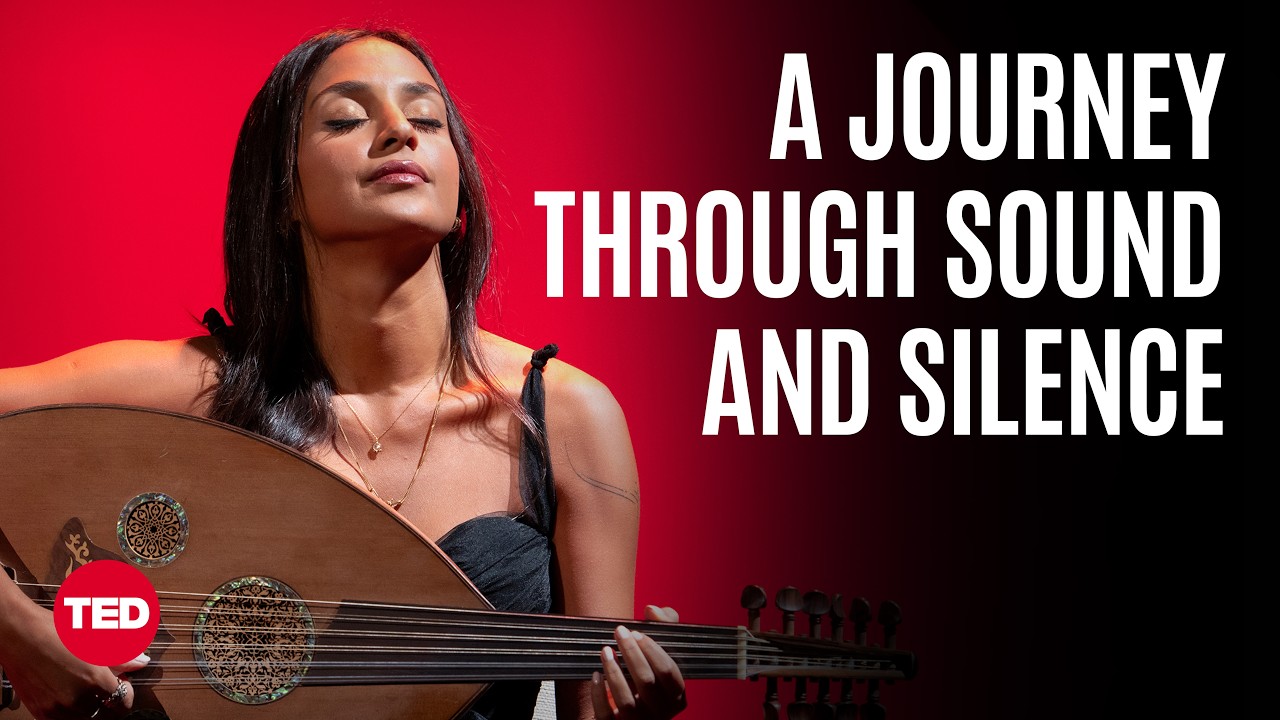
Tina Lajevardian walked onto a TED stage and let the music speak before a single word of introduction could. The performance drew sustained applause from the audience, and for good reason: what she brought was not simply a concert but a living argument that ancient sounds still have something urgent to say. For anyone who has ever felt that classical or traditional music belongs only in concert halls behind velvet ropes, Lajevardian’s set offered a direct counter.
When the instrument does the talking
The transcript of the performance is almost entirely music notation and applause markers, which is itself the point. Lajevardian filled the stage with layered, atmospheric sound that moved through the room in waves, each phrase building on the last. The audience response, captured in the recording’s final moments as a burst of applause, confirmed that the connection landed without translation. TED audiences are accustomed to data, slides, and arguments built from evidence. Lajevardian arrived with none of that infrastructure and held the room anyway.
The performance drew on an ancient sonic tradition, reshaped for a contemporary stage and a global audience encountering it, in many cases, for the first time. The result was neither museum piece nor pop reinvention but something in the middle: familiar enough to feel human, unfamiliar enough to stop you mid-thought.
What a room full of silence and then applause actually means
The sequence of the performance follows a shape that any live musician recognizes. The opening phrases establish a tonal world. The middle passages test how far that world can stretch before it loses the listener. The close returns, altered, to where it began. That structure is old, but Lajevardian’s specific handling of it felt immediate, present-tense, addressed directly to the people sitting in front of her rather than to an abstract idea of an audience.
The applause at the end was not polite. It was the kind that follows a few seconds of collective stillness, the pause that happens when a room has to remember that reacting out loud is allowed.
The person still standing after the last note
Tina Lajevardian, instrument in hand, center stage, the applause still filling the room around her.
Ancient sound. New room. The audience had already given its answer.