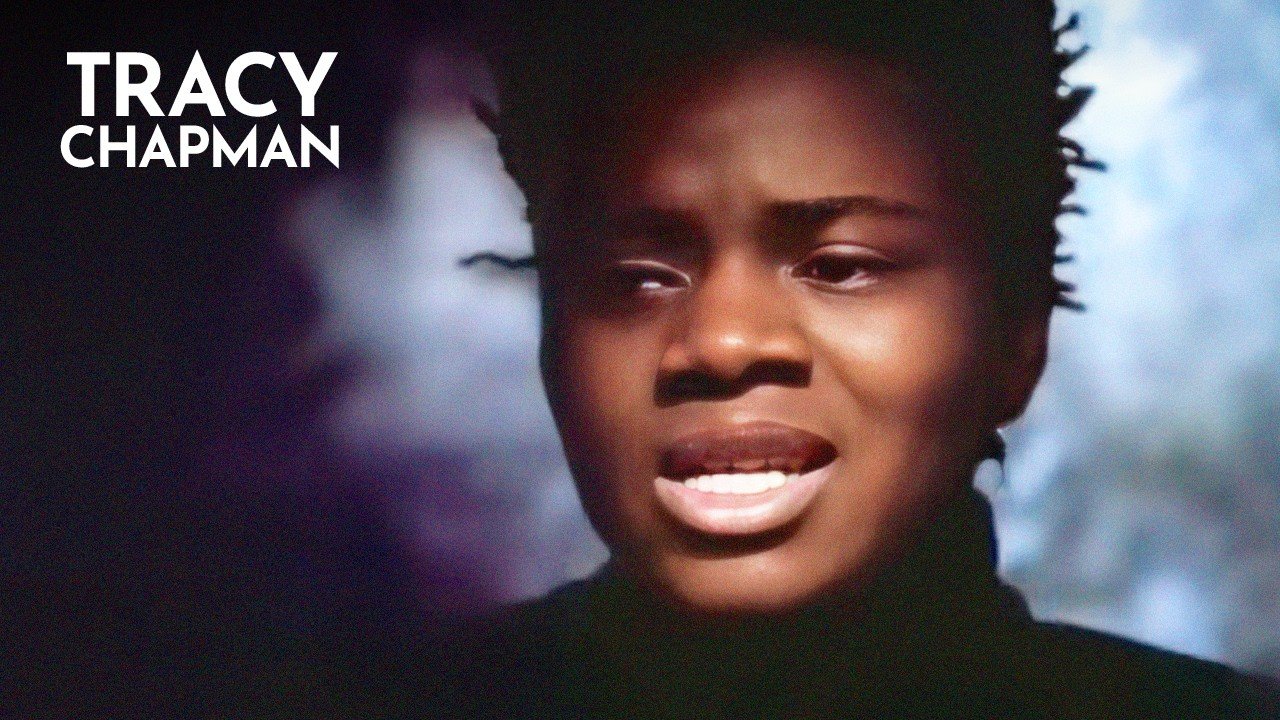
The song opens on a gas station convenience store and a woman who has saved just a little bit of money, and from that single detail an entire life unfolds. ‘Fast Car’ has always worked because it refuses to be sentimental about poverty, about hope, or about the way those two things can quietly cancel each other out. Tracy Chapman wrote the song as a young woman, and every line sounds like it was pulled straight from a real kitchen table conversation at two in the morning.
Where the story actually begins
The narrator is not dreaming of escape in the abstract. She has a specific plan: cross the border and into the city, find jobs, figure out what it means to be living. Her father has a problem with the bottle and a body too old for working. Her mother left years ago, wanting more from life than he could give. So the daughter stayed. She quit school, she took care of him, and she waited. The fast car belongs to someone else entirely, and that asymmetry matters from the first verse.
The city lights do arrive. There is a moment of genuine velocity in the song, the two of them driving, the city blurring past, an arm around her shoulder, and Chapman sings it with the specific ache of someone who has wanted very badly to belong somewhere. ‘I had a feeling I could be someone,’ she sings, and the line lands because she sings it three times, the way a person repeats something they are trying to make themselves believe.
The shelter, the suburbs, the checkout line
The middle of the song does something most love songs refuse to do: it accounts for time passing badly. They are living in a shelter. She is working as a checkout girl. He is not working at all. She is still holding the plan together, still telling herself things will get better, still mapping out a bigger house in the suburbs as though the plan from the convenience store parking lot is still technically in motion.
By the final verse, the shelter has become a house, but the bottle has followed them there. He goes out with his friends. She is raising the kids. Chapman’s voice drops the optimism entirely and what is left is just a plain transaction: take your fast car and keep on driving. Not an explosion. Not a confrontation. A quiet subtraction.
Chapman once described the song as being about a woman who escapes one trap and walks directly into a different version of the same one. The line that does the most work in the entire song is not a chorus. It is a single flat admission buried in the last verse: ‘I always hoped for better.’
The fast car, left idling
Somewhere in the final minutes of the song, the car is still running. She is not in it.
The opening image comes back around, not as triumph and not as defeat, but as a woman standing in a parking lot with a very specific plan and just enough money to try. The city is still out there past the border. The lights are still on.