⚠️ Uncensored excitement: this video contains some strong language from real life experience ⚠️
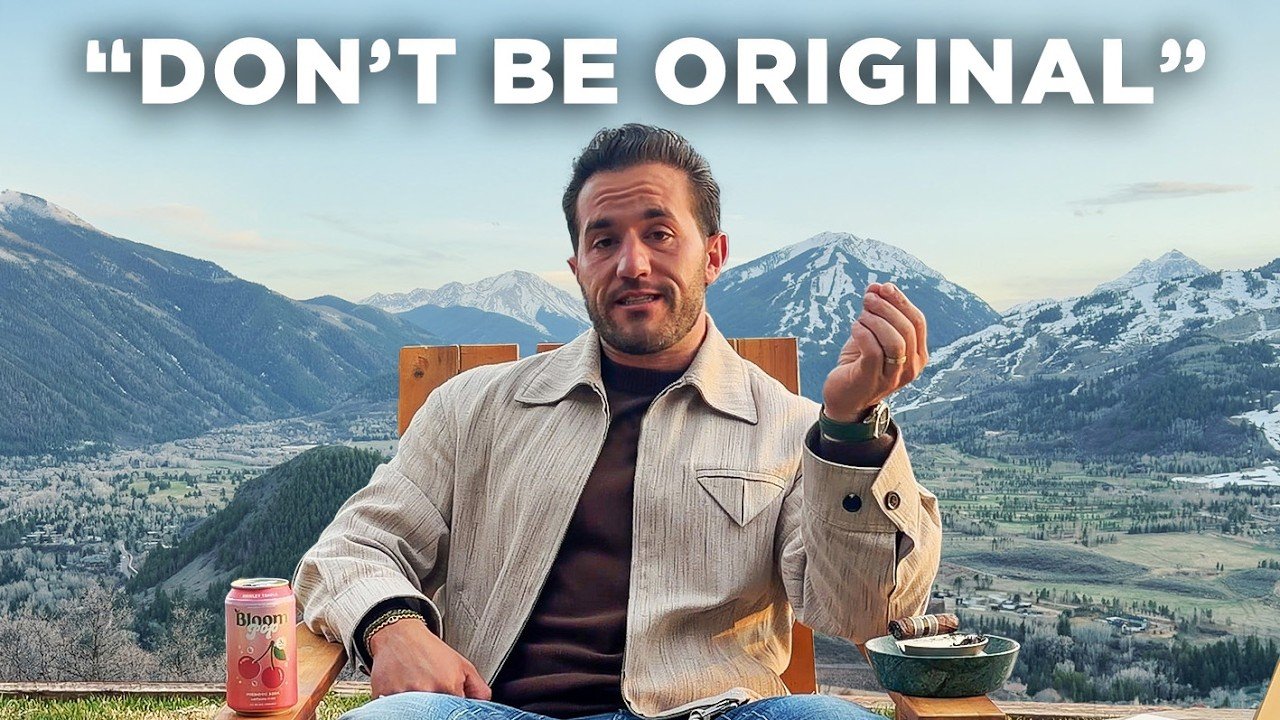
Greg LaVecchia was sitting in the backyard of his vacation home in Aspen, Colorado, cigar in hand, watching the sun go down, when he started talking about booty bands. Not as a punchline. As the foundation of a half-billion-dollar beverage company. The co-founder and CEO of Bloom turned 31 the day before this conversation, and this year Bloom will sell over a quarter billion cans of beverages carrying the Bloom trademark, rounding down quite a bit by his own admission. What he wanted to do with the evening was simpler than the numbers suggest: hand younger entrepreneurs the lessons that cost him gray hairs, a receding hairline, and years of sleepless nights.
Every six months, stop recognizing yourself
LaVecchia and his wife Mari started in their college dorm room selling instant-download PDFs. They scaled that to a couple million dollars a year, then moved into physical products. The first one was the booty band, riding the fitness wave of 2018 and selling roughly a million units at around twenty dollars each. That gave them supply chain knowledge. Their community then asked for supplements, so they launched Bloom with a pre-workout aimed at women lifting weights. When that category showed its ceiling, they moved into recovery powders, then greens. The greens powder they bootstrapped to 180 million dollars. Then came the move that everyone around them considered reckless: launching an energy drink to go directly after Monster, Red Bull, and Celsius.
Bloom energy drinks now move through Dr Pepper trucks into 70,000 doors across the country. Their soda reaches roughly 40,000 doors.
LaVecchia’s framing for this progression is a video game analogy he keeps returning to: once you beat the game, you move to a harder one. The previous game does not collapse overnight. You give it five percent of your time, keep it on autopilot, redirect ninety-five percent toward the next challenge, and once the new thing has traction, you go to one hundred percent. ‘You have to give up the good for the great,’ he said. ‘It will feel weird, and the people around you will probably tell you you’re being crazy.’
The booty band business is gone now. The energy drink does more in a single day than the booty band business did in a week.
Focus, luck, and a very deliberate change of address
LaVecchia’s case against diversification is personal. His best friend Leo, now president of Bloom and the namesake of LaVecchia’s son, used to cold-call high-net-worth individuals on Wall Street selling biotech deals. LaVecchia asked him what the forty-year-old self-made ones had in common. Leo’s answer: ‘They’re all just all in all the time. They do a ton of diligence around one deal and they bet the house.’
For LaVecchia, full commitment is not just capital allocation. It is mind share. Every hour spent thinking about a stock play or a side project is an hour not spent on the thing most likely to compound. Partners at Walmart and distributors at Dr Pepper, he argues, can sense divided attention. ‘When your attention isn’t divided, your decisions get sharper. Your execution gets smoother.’
The third lesson is what he calls staying ready. When COVID arrived, Bloom was young and unattached to brick-and-mortar retail. Competitors with large corporate offices went dark. Bloom doubled down on protein for home bakers and greens for at-home wellness and moved product through Shopify and Amazon while rivals were still setting up Zoom calls. When TikTok emerged as something kids danced on, Bloom jumped in early and built what LaVecchia describes as the largest in-house influencer marketing agency inside any brand’s walls, accumulating 12 billion views across the influencer program by the last count. When GLP-1 medications reshaped consumer appetite and calorie needs, Bloom already had low-calorie, gut-health-forward products and launched a Clear Protein that he says broke a TikTok Shop record. When TikTok Shop itself appeared roughly two years ago, Bloom was already there selling soda in cases while Pepsi, Coke, and Red Bull had not yet shown up. Fourteen thousand cases of Shirley Temple energy drink moved through TikTok Shop before the product even launched in retail.
Location was engineered with the same logic. Mari and LaVecchia moved five times in five years, from Philadelphia to New York to LA to Boulder to Austin, each move timed to wherever the business needed physical proximity. When building an influencer program, LA made sense. When partnering with Dr Pepper and a co-manufacturer based in Texas, they moved to Texas.
The final lesson he offers is the one he calls moonshots only: a 100,000-dollar-a-year business and a 100-million-dollar business demand roughly the same stress, the same gray hairs, the same sleepless nights. Bloom will not pursue an opportunity his team does not believe could reach 100 million dollars, because a 10-million-dollar opportunity costs almost the same effort to chase.
The cigar that went out
Mid-sentence, in the Aspen evening air, LaVecchia’s cigar went out. He noted it as a natural closing marker, then kept going for one more thought before the sun finished setting.
He started those same conversations with no money, a 2.6 GPA, and a PDF fitness guide, in a dorm room with the person who is now his co-founder. The quarter billion cans came later.
 Wake up to Only Happy News!