Bob Proctor once drove around with a battery-operated record player in his car, playing the same long-playing record day after day for roughly two years, while everyone around him thought he was losing his mind. The reason that image matters to anyone who has ever read a self-help book, understood it perfectly, and then done absolutely nothing differently: Proctor argues the problem was never understanding. It was something older and harder to reach, a layer of programming he calls the paradigm.
What the paradigm actually is and how it got there
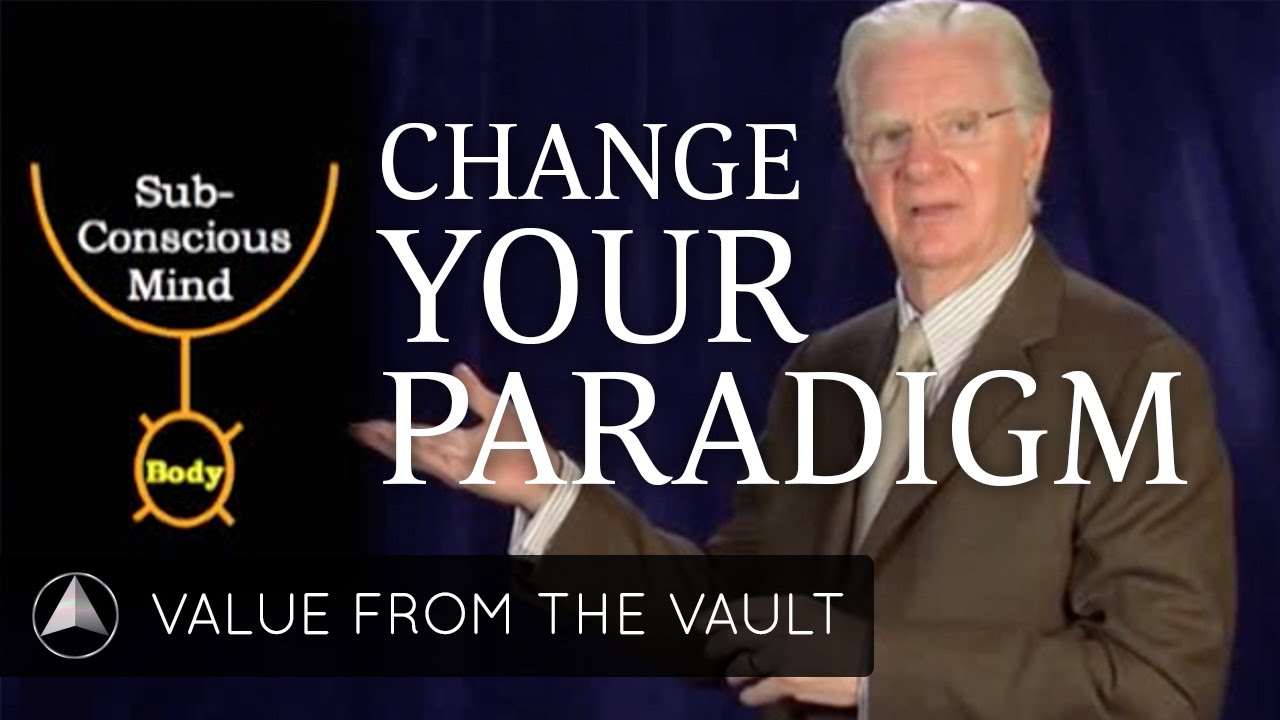
The paradigm, in Proctor’s framework, is not a belief in the conscious sense. It is a multitude of habits fixed in the subconscious mind through repetition, and it was installed before a person had any real say in the matter. Proctor walks through the mechanics using a simple model: the conscious mind can choose thoughts, those thoughts form pictures, and those pictures are handed to the subconscious mind, which then drives behavior. The catch is that the subconscious mind has no ability to reject input, and it cannot tell the difference between what is real and what is imagined.
This is why early childhood does so much of the work. A baby arrives with no conscious faculties developed. Every idea, attitude, and assumption in the surrounding environment flows directly into that open subconscious, repeated all day, every day, for four or five years. Proctor cites psychiatrist Carl Menninger of the Menninger Foundation, who argued that environment is more powerful than heredity. The language a person speaks, the food they prefer, the relationship they develop with money: all of it, Proctor says, is programming. ‘If the people surrounding that baby always lived in hard times, never had any money, always in debt,’ he explains, ‘that is probably how that baby is going to grow up.’
Proctor is candid that he lived that version of the story. Raised during a depression, surrounded by talk of scarcity and the instruction to be satisfied with what you have, he spent years limited by a paradigm he could not name. The idea of building a company that operated around the world was, as he puts it, the furthest thing from his mind.
How repetition breaks what repetition built
The paradigm was built through the repetition of information. Proctor’s central argument is that it can only be changed the same way. Reading about a new belief, agreeing with it, even feeling excited by it, does not plant it in the subconscious. Only sustained, daily repetition does. He offers the affirmation he has used for years as a concrete tool: ‘I am so happy and grateful now that money comes to me in increasing quantities through multiple sources on a continuous basis.’ He is specific about the dose: repeat it perhaps 1,000 times a day, every day, for roughly 90 days.
There is a word he introduces for the gap between understanding and doing: praxis, the integration of belief with behavior. Most people, he says, hold a conscious belief that their subconscious paradigm flatly ignores. The record player in the car, the same copy of ‘Think and Grow Rich‘ read every single day, was his own accidental version of that 90-day protocol. He did not fully understand what he was doing. He just did it.
At the end of a three-day seminar at the Waldorf Astoria in New York, a man approached him with an unusual confession. The man said it was the first time in his life he had understood how he accomplished what he did. His name was Milt Campbell, and what he had accomplished was winning the gold medal in the decathlon at the 1957 Melbourne Olympics. The greatest athlete in the world, by Proctor’s telling, had changed his paradigm without knowing the mechanism. He had simply repeated the right inputs long enough for his subconscious to take over.
Milt Campbell at the Waldorf Astoria
Milt Campbell said he wanted to bring his sons to the next seminar, and he did. He and Proctor became close enough that Campbell had a key to Proctor’s home in Toronto, free to stay whenever he wanted.
The gold medalist who could not explain his own achievement walked into a hotel ballroom in New York and left with a name for what he had always known how to do.