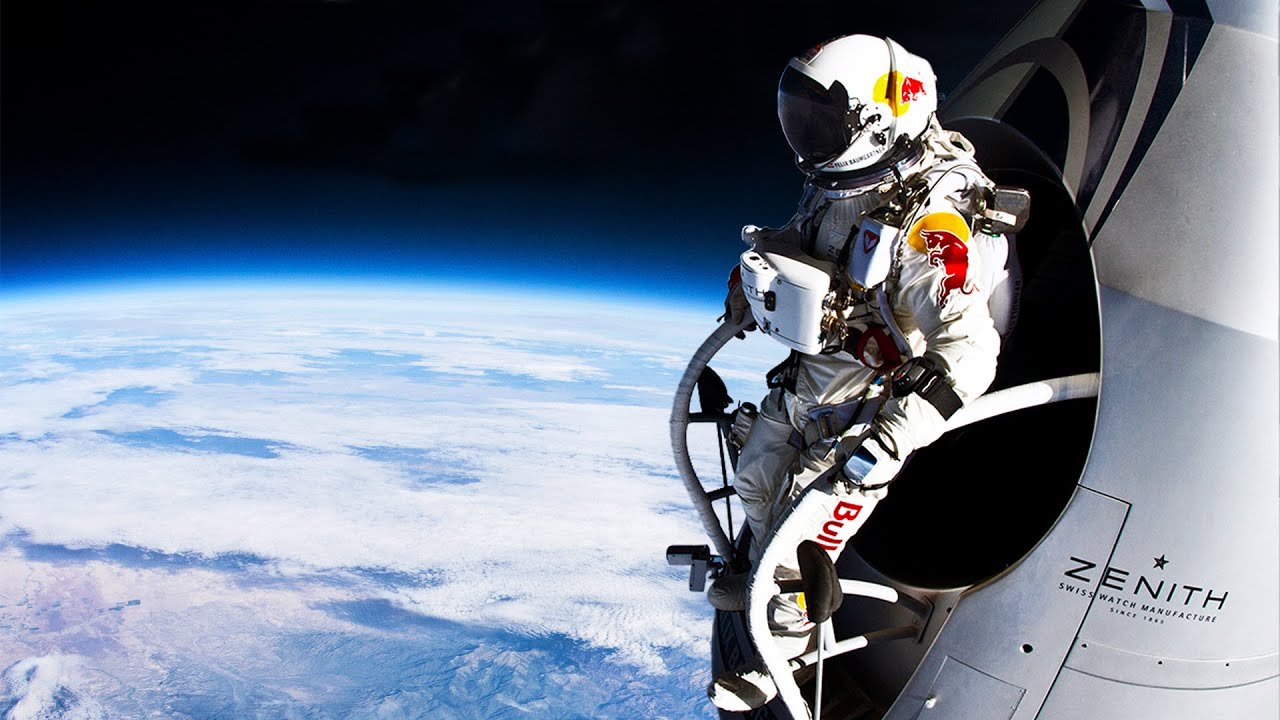
At 600 miles per hour and spinning hard enough to push blood toward his eyes, Felix Baumgartner had one decision left. The altitude record, the history books, the worldwide audience watching in real time: none of it mattered anymore. This was survival. That single, terrifying moment sits at the heart of one of the most audacious feats in human history, a jump from the edge of space that redefined what a person in a pressure suit and sheer nerve can survive.
The exit nobody on Earth had ever coached him through
The ascent alone took hours. By the time Baumgartner stood at the edge of the capsule, he was already carrying nearly twice his normal body weight under the pressure of his suit. He had one technical priority before stepping off: do not over-rotate. At that altitude, there is no air thick enough to arrest a spin. He stepped off anyway.
The first 25 seconds looked clean. Then, at 34 seconds into the fall, he hit the mark he had trained toward for years: he broke the sound barrier, becoming the first human outside of an aircraft to do so. Back in mission control, when the speed data confirmed it, someone asked if that reading meant what they thought it did. It did.
What nobody had a firm answer for before the jump was what breaking the sound barrier would actually do to a falling human body. Half the scientists consulted before the attempt believed he would spin uncontrollably. The other half believed nothing significant would happen. Baumgartner had mentally prepared to spin. He had hoped he would not have to.
Spinning at 600 mph with no protocol and no air to grab
Within seconds of going supersonic, the spin started. Slowly at first, then faster. He moved his arms, searching for any response from the thin atmosphere around him. The spin slowed briefly, then reversed direction and accelerated again. As he put it plainly afterward: ‘At that moment, it’s not about breaking records anymore. At that moment, it’s all about survival.’
A flat spin at that speed carries a specific danger. The centrifugal force is strong enough to drive blood out of the skull through the eyes. It is fatal. Baumgartner had a cutaway device strapped to his hand, a drogue chute trigger designed for exactly this emergency. The mechanism worked by sensing pressure from his grip. He shifted how he held his hand, reducing the pressure, and the device read it as a sign he was regaining control. He used that read to buy himself a window. The spin stopped. He stabilized.
By the time blue sky replaced the black above him, the suit had depressurized visibly, the fabric flapping against his legs. His teammate Luke had dropped flares below to mark the wind direction, giving him a target for the landing. When he finally pulled his helmet off and breathed unfiltered air for the first time after hours sealed inside the suit, the relief was immediate and total. The landing, after all of it, was perfect.
The flares on the desert floor
Those small red flares burning on the ground, placed there by a teammate to guide a man falling from space, remain one of the quieter details of the whole attempt.
Baumgartner had jumped from space, crossed the sound barrier alone in freefall, survived a spin that should have killed him, and landed on his feet in the desert. The flares that showed him where to put them were already burning out by the time he touched down.