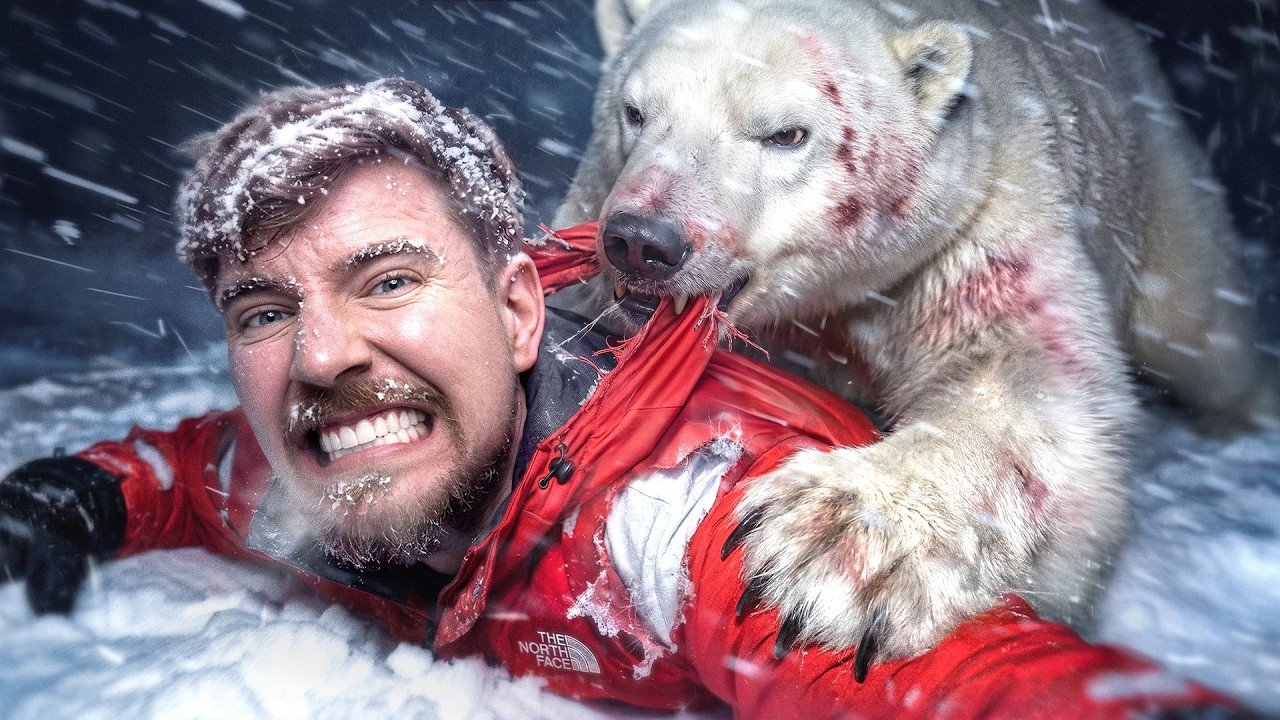
Jimmy landed in the Arctic with five friends, two feet of snow underfoot, no tents, and a single rule: survive seven days using only what they carried on their backs. Within hours of arrival, the temperature threatened to drop below zero and the crew had two tasks – build a shelter and start a fire before dark.
Building a Snow Fort and Surviving the First Nights
Jimmy directed the group to dig directly into a snowpack, carving out a fortified cave intended to block Arctic wind and share body heat. By the time Hase returned to camp with firewood sourced from dead trees, the crew ignited their first fire and melted snow into drinking water. Night one ended with six people packed into a shelter too small to extend their legs, frost coating their sleeping bags by morning. Chandler woke with white, nearly colorless toes – diagnosed on the spot as frostnip – and had to warm his feet in a teammate’s armpit to restore circulation before frostbite set in.
Day Two brought a full blizzard. The evacuation plane’s pilot radioed that conditions were too dangerous to fly, grounding the crew’s only escape option on their worst day yet. The kitchen area vanished under fresh snow, burying most of their food-prep gear. Nolan and Chandler, left at camp, split open a dead tree to harvest dry interior wood and successfully lit a fire using the dry tinder – a critical win that kept hypothermia at bay. Meanwhile, Jimmy and Hase made a multi-hour trek to a frozen lake to attempt ice fishing with an auger. The lake ice measured nearly three feet thick – beyond the tool’s drilling depth – and they returned to camp empty-handed.
On Day Three, Hase stripped spruce limbs from nearby trees and distributed the branches as insulating bedding inside the snow cave. Nolan confirmed the shelter had been expanded enough for all six to sleep side-by-side without contact. Jimmy noted the camp sat literally on top of a frozen lake, which he demonstrated by plunging his arm into a freshly augered hole – the ice depth reaching nearly to his shoulder.
The Fish That Fed the Camp
By Day Five the crew was down to their last meal. Drone footage piloted by cameraman Darius identified a large river roughly a lake-crossing and a dense forest away from camp. Jimmy, Hase, and Darius strapped on cross-country skis for the lake segment – Jimmy and Darius fell repeatedly – then switched to snowshoes for the forest crossing, navigating around fresh moose tracks. At the river junction, where churning water kept ice thinner, they drilled through approximately eight inches of ice and dropped lines with frozen food bait.
After seven hours of fishing across two holes, Jimmy pulled the first fish through the ice – it slipped back in momentarily before Hase grabbed it bare-handed from the water’s edge. A second fish followed. The crew returned to a camp where Chandler and Nolan had already built a fire using dry wood pried from a fallen tree, and had hot water ready. Jimmy roasted both fish over the open flame. Nolan called it the best fish he had ever tasted. A second reserve fish carried the group through Day Six.
On the final morning Jimmy fired a flare that signaled the pre-arranged Day Seven extraction – not a helicopter, but a dog sled team. The crew loaded their gear onto the sleds and rode out of the Arctic, ending 168 hours on the ice.
Context
Arctic survival conditions vary by region, but sustained sub-zero wind chill can cause frostnip – superficial freezing of skin – within minutes of exposure on unprotected extremities. Frostnip is reversible with rewarming; untreated, it progresses to frostbite, which can permanently damage tissue. River ice is typically thinner than lake ice because moving water transfers heat upward, slowing the freezing process from below.