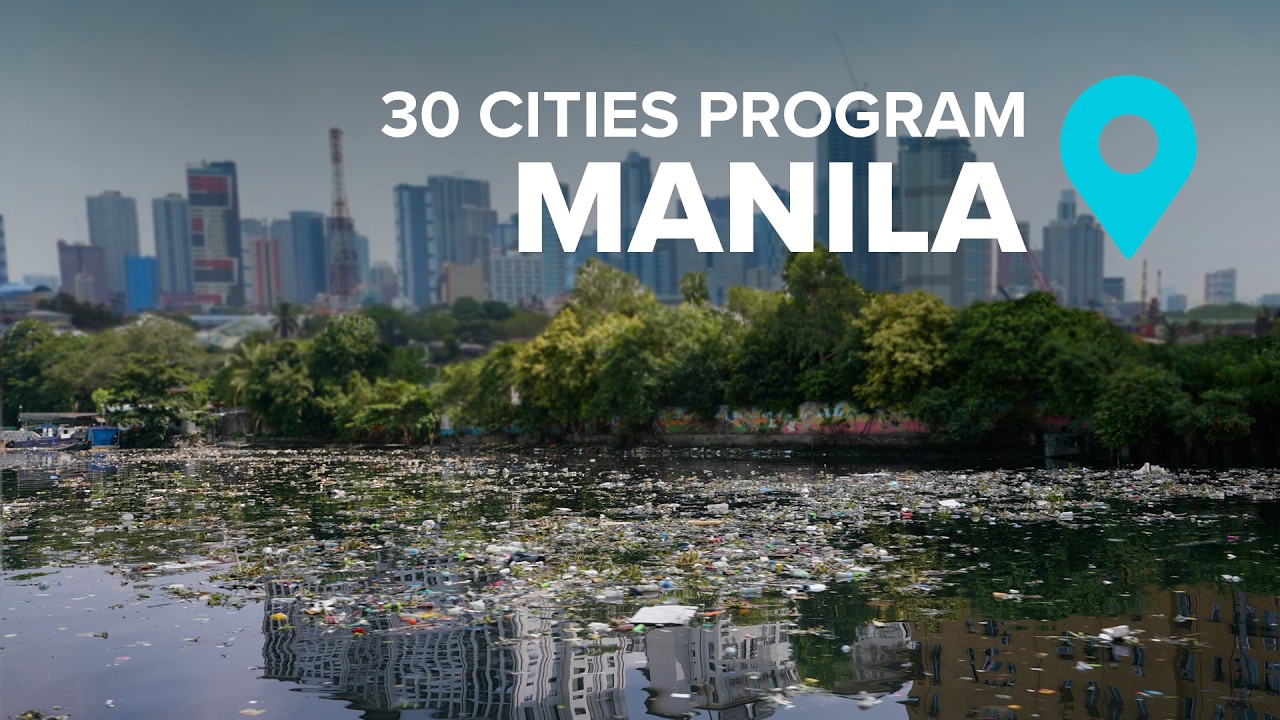
The Maguawan River in Bulacan was carrying roughly four tons of plastic waste into Manila Bay every week before the first interceptor ever deployed in the Philippines broke the surface of its water. That number belongs to a protected coastal wetland just downstream, a site of international importance where volunteers had been showing up since 2017 to dig through trash so thick it buried the beach entirely. The scale of what was washing ashore made the stakes clear: Manila Bay feeds millions of people, anchors fishing communities, draws tourists, and once held far more mangrove and seagrass than it does today. What changed on the Maguawan was not just one river. It was the opening move in one of the largest deployments in The Ocean Cleanup’s 30 cities program.
Four tons a week, and that was just what reached the shore
The wetland at the southern edge of Manila Bay is formally classified as a protected area of international importance. Local groups have run regular cleanups there for years. Even so, every high tide delivers a fresh load of plastic from the bay, and the site coordinator who walks the shoreline regularly did not soften the description: ‘When we began cleaning here, you actually couldn’t see the beach at all. It was literally just covered in a thick layer of various kinds of trash.’ The team’s own records put the average haul at around four tons of waste washed ashore per week.
The problem does not stop at the tideline. A local official recalled his own home flooding in October 2024, with two meters of water rising inside in just twenty minutes. When investigators traced the cause, it was clogged drainage packed with plastic debris. Across the wider Manila Bay region, the same pattern repeats: blocked drains, overwhelmed rivers, and fishing communities whose livelihoods track directly with the health of mangrove ecosystems that plastic pollution is quietly dismantling.
One interceptor in Bulacan, and a signed agreement for the Pasig
The Ocean Cleanup’s entry into the Philippines was built on existing momentum rather than imposed over it. City-level river warriors were already conducting daily cleanups on the San Juan and Pasig rivers, crossing multiple cities and barangays, with local authorities levying fines of 5,000 pesos for illegal dumping. The national government’s Department of Environment and Natural Resources had already launched a rehabilitation program for the Pasig River, the waterway one Ocean Cleanup team member described as ‘the Seine in Paris or the Hudson in New York,’ the river Manila was founded beside and one of the bay’s largest plastic contributors.
The formal partnership with the DENR, signed in Manila, commits both sides to data sharing, science-based solutions, and coordinated river rehabilitation. The first interceptor is now operating on the Maguawan River in Bulacan to the north, with engagement underway with provincial authorities in the south and assessments already completed on the San Juan and Pasig river systems. Additional deployments across all major emitting rivers in the Manila Bay region are planned over the coming years, with the Pasig system among the priority sites.
As the team member who leads the organization’s city program put it: ‘If we don’t have the government authorities on board, funders, operators, people who take care of the waste, what’s really going to happen?’
The volunteer who remembers the floods before the cleanups
One longtime community volunteer on the river said something that stayed with the group after the Maguawan interceptor went live. He remembered the rivers of his childhood: full of rubbish, regularly flooded, and taken for granted. He looked at the same stretch today and pointed to something simple. The flooding had eased. The drains were moving. The difference, he said, was that people now understood they would be the ones affected.
At the end of the day of the first interceptor deployment, the volume of collected waste was large enough to visibly overwhelm the site team. One of the Ocean Cleanup’s on-the-ground staff stood at the collection point and said what everyone present was quietly calculating: every piece in that pile was plastic that would not reach Manila Bay, would not clog a drain, and would not flood someone’s home in twenty minutes.