Malini Angelica pulled over on the side of the road before the road trip had even properly begun. There, above Trapani, a city spread out below against the Mediterranean with vineyards rolling into the hills and mountains rising behind them, she simply stopped to look. That instinct, to ditch the schedule and pull over whenever something earns it, turns out to be the entire point of driving Sicily’s southwestern coastline. The region packs ancient Greek temples, working salt harvests, and handmade ceramics into a single day’s loop that most visitors skip entirely in favor of the island’s better-known cities.
Salt piles the size of small houses, right off the road
The first real stop is Marsala, a town sitting on Sicily’s southwestern edge where the Mediterranean stretches clear enough to spot the islands of Favignana and Levanzo on the horizon. Just outside town, the famous salt pans open up without warning: windmills, shallow pink-tinted pools, and enormous mounds of freshly harvested salt stacked across the flats. Timing matters here. Arrive during the harvest season and the piles are enormous, the kind of scale that takes a moment to register. The olive harvest is running at the same time, and the grapes have just come in for the wine. The whole island is mid-production, and the salt pans feel like the most photogenic edge of that.
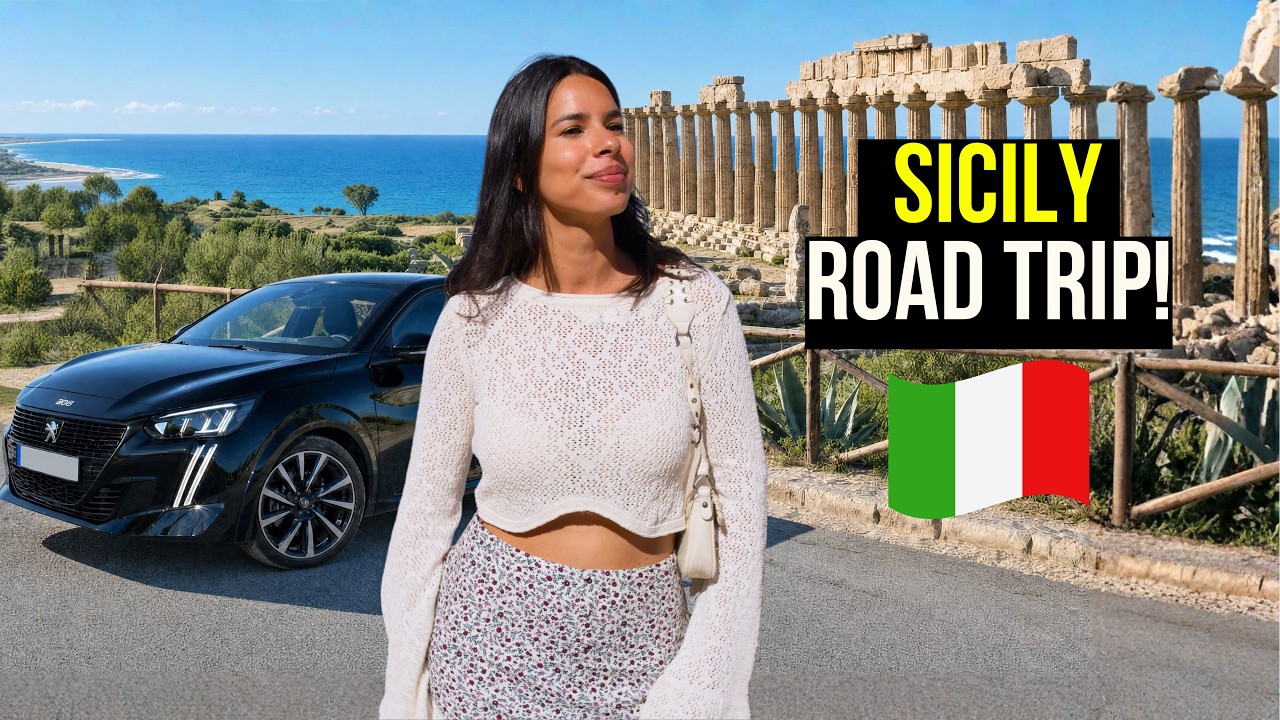
The road south from Marsala leads to Selinunte, where the ruins of one of ancient Greek Sicily’s most powerful cities sit directly above the sea. Columns from the Temple of Hera are still standing, which is the detail that hits hardest: built in the 7th century BC, still upright, still framing a view of the shimmering Mediterranean. The Temple of Apollo sits even closer to the water. The sheer number of temples gives a real sense of how wealthy this city once was, because each one was a serious construction project dedicated to a different god or goddess. It is the kind of place that earns a long wander, though the road east calls quickly enough.
Sciacca and the scratch-card parking system
Sciacca wraps up the day, and it earns its place on the itinerary on its own terms. The town climbs a hill above a working harbor, its historic center built from centuries-old stone and decorated throughout with handmade ceramic tiles. The ceramics are not a museum piece here: shops along the narrow streets sell artisanal pieces, and the decoration is everywhere in the architecture itself. Getting into town means finding parking, which in Sciacca operates on a system Angelica described as ‘funny’: the ticket machine does not work, so drivers walk to a nearby cafe, buy a paper scratch card for one euro per hour, and manually scratch in their arrival time.
A ceramic tile in a doorway on a narrow street
Somewhere in Sciacca’s old center, set into the frame of a doorway, a hand-painted ceramic tile catches the last of the afternoon light. Blue glaze, a geometric pattern, fired somewhere nearby.
The sun was going down over the harbor by the time the day’s driving was done, the whole southwestern coast covered in a single long loop starting above Trapani and ending on a hill above the sea, with a pomegranate farm somewhere in between that was simply too good not to stop for.
 Wake up to Only Happy News!