Codie Sanchez was standing inside one of the largest television production agencies in the world when she made the point that cuts through every piece of advice about building an audience online. The building full of Emmy winners was not the destination. It was the question: where are you going to win your Emmy? For anyone who has ever scattered energy across six platforms and gotten nothing back, the answer matters more than the hustle ever did. A few years ago, Sanchez had zero followers. Today, Forbes has named her a top 10 creator in the world, and the framework she used to get there, six repeatable principles she calls the six C’s, applies to any niche and any business starting in 2026.
One platform, one win, then expand
The first and most common mistake Sanchez describes is what she calls spray and pray: pumping out 25 average pieces a week across six platforms, none of which land. The fix is simple and uncomfortable. Pick one platform, win on it, then expand. Each platform, she explains, is a different version of yourself requiring a different communication style.
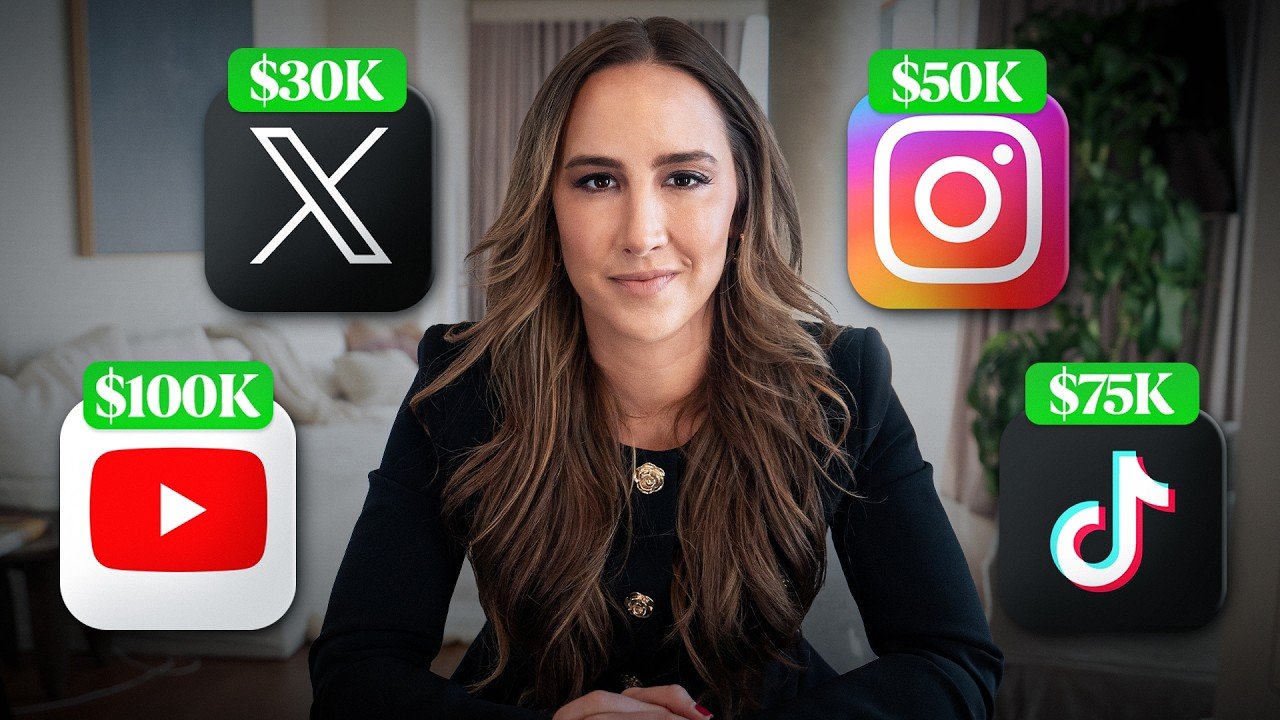
At the bottom of her personal revenue ranking sits X. She describes it as the cerebral, contrarian-friendly platform where content dies in roughly a day and a sponsorship at 100,000 followers might earn a few hundred to a thousand dollars per post. For her last event, just over 1% of ticket sales came through X.
TikTok comes next. It reaches cold audiences more than loyal followers, with a median reach to followers of 38% compared to Instagram’s 68%, according to a study she references. That makes it powerful for awareness and terrible for sales unless the product is highly visual. With over two million followers on the platform, Sanchez sold fewer than a dozen event tickets there.
LinkedIn is what she calls a sleeper. Eighty percent of its users drive business decisions, which means they have purchasing power. Sponsored posts at 100,000 followers run 1,500 to 8,000 dollars, and the lead magnet format, a post that opens with a contrarian take and closes with a free downloadable tool, is what performs best. Still, only 2.4% of her event tickets sold through LinkedIn.
Instagram rewards shareable, behind-the-scenes content over polished lecture style. Carousels are getting more reach now alongside reels, though organic reach has declined roughly 28% year-over-year across studies she cites. The platform sold roughly 100 times the event tickets TikTok did.
YouTube is her favorite, and for good reason. A single sponsorship at 100,000 subscribers runs 5,000 to 15,000 dollars, the highest of any platform she tracks. Story-driven education, case studies, and documentary-style breakdowns are what build lasting trust there because content has a long shelf life. YouTube drove 27% of her last event’s ticket sales, with an additional 11% coming through YouTube community posts alone.
The newsletter sits at the top of the revenue stack even though most people do not think of it as social media. Sponsorship is priced on engagement rather than raw subscriber count, running 1,500 to 5,000 dollars per send to 100,000 subscribers. More importantly, it is the one audience a creator actually owns. Her newsletter drove 30% of ticket sales, the highest of any single channel.
The number that changed how she thinks about content
Sanchez shared the actual split from a recent paid and organic campaign. Paid advertising accounted for 38% of tickets sold. Organic content accounted for 62%, and it cost nothing per conversion after the content was made. ‘Paid ads are just renting your audience,’ she said, ‘and organic lets you own it by building the relationships that actually close a sale.’
The product ladder she builds around that organic funnel runs five rungs: free content that earns trust, a zero to fifty dollar easy yes like a guide or book, a fifty to five hundred dollar course or community, a five hundred to five thousand dollar cohort or membership, and above that, hyper-personalized or big-ticket access. The instruction she repeats is to start with just the first two rungs and only add the next once the one below is full. Ship at 85% ready. The last 15%, she notes, takes weeks and no one notices it.
A retention graph in a Hollywood building
A YouTube retention graph of her Ryan Reynolds business breakdown shows a hook that works twice, first on name recognition, then on a counterintuitive promise, followed by a nearly flat retention line as she explains a framework she invented called ‘fertising.’ Eighty percent of viewers stayed through a summary she now says she did not need.
The same style of video with a looser hook took four extra seconds to reach its main point and did not name a framework until 22 seconds in. It received roughly 1% of the views. ‘In YouTube years,’ she said, ’22 seconds is like four years.’
Back inside that production agency, with actual airplane noise bleeding through the ceiling of what was supposed to be a controlled environment, Sanchez made her clearest point about credibility: the raw, native-looking moment with the planes flying overhead outperformed the polished studio cut by roughly 100 times the views. The building full of awards was a prop for the lesson, not proof that production quality wins.
 Wake up to Only Happy News!