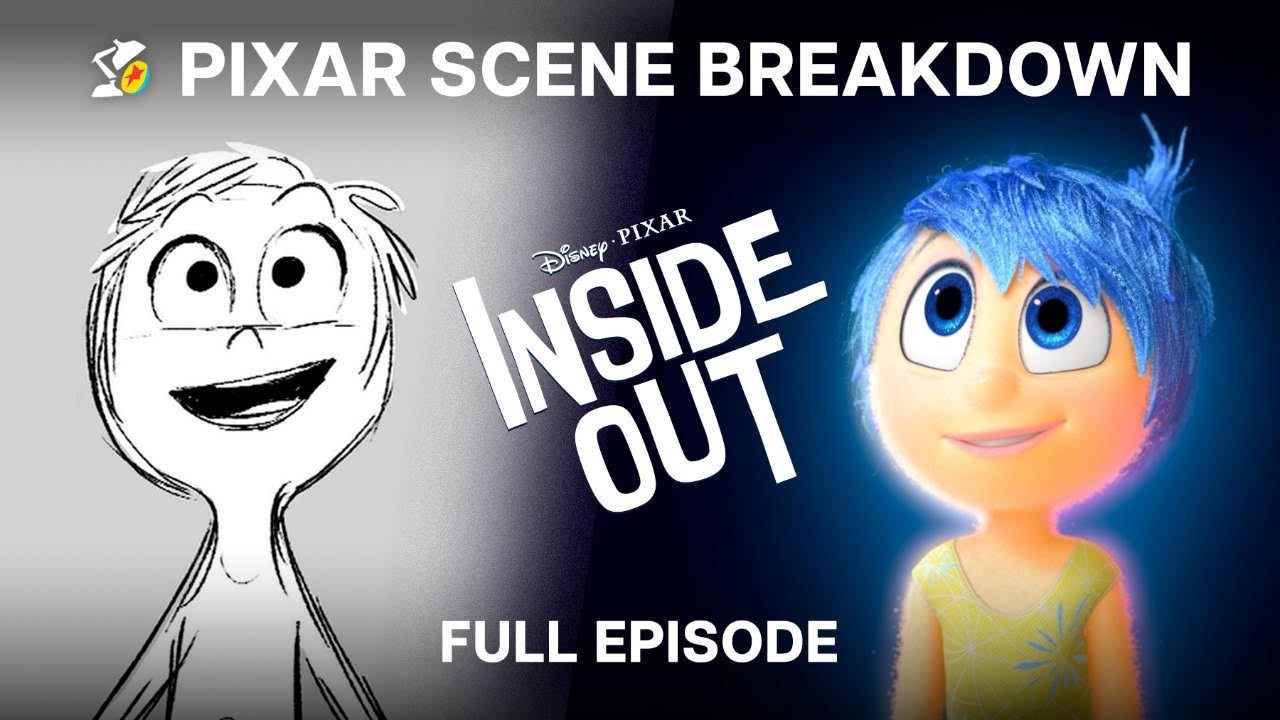
Before a single frame of Inside Out was animated, director Pete Docter stood in front of a room full of colleagues at Pixar and described a story that nobody could quite picture. The premise involved invisible characters living inside a child’s head, memories floating through the air like glowing orbs, and an entire metropolis built from feelings. People listened politely and, as Docter recalled, kind of looked at him and said, ‘Well, good luck.’ That early skepticism is the origin story of one of Pixar‘s most technically and emotionally ambitious films, and the people who built it sat down recently to trace how it all came together, starting from the very first moment Riley opens her eyes as a newborn.
The birth sequence nobody could describe out loud
The creative team had been debating for some time how early to begin Riley’s story. Starting at birth felt risky, almost presumptuous. Then storyboard artist Ronnie del Carmen quietly stepped away from the group conversation and started drawing. Within minutes, he had boarded the entire sequence. Producer Jonas Rivera remembered the moment with clear affection: ‘When you have something in your head, you can board like, I swear, five minutes and you’ve got the whole sequence. It seems unholy somehow.’ Someone took photographs of the boards on the spot, worried they might vanish before anyone could act on them.
What those drawings captured was the founding emotional logic of the whole film. A newborn Riley stares upward into unfocused light, not yet understanding anything she sees. Joy materializes and looks directly back at her. Docter described that exchange as the scene ‘where Joy was becoming aware for the first time of the meaning of her existence, that she wants to guard this little human being forever.’ Rivera put it more simply: ‘That’s when she fell in love.’ The film’s central mother-child dynamic, the one that gives Joy’s eventual crisis its weight, was encoded in that single sustained look between a cartoon emotion and a baby who cannot yet recognize faces.
The emotions were originally given proper names rather than job titles. Anger was called Ira, a nod to the word ‘irate.’ Sadness went by Misty. Test audiences were baffled. The names were eventually scrapped for something more direct, and the characters introduced themselves plainly on screen.
Casting by accident and the composer watching his daughter play
Amy Poehler arrived for her first formal reading session and simply became Joy without preparation. Rivera described watching her across the table and mouthing to the director, ‘Why aren’t we recording this?’ Phyllis Smith, cast as Sadness, pushed the character in a direction the team had not anticipated. They had planned for Sadness to cry constantly, assuming volume would land as comedy. Smith told them quietly that what she actually plays is insecurity, and the team immediately recognized it as the right instinct. From that point forward, Sadness ended nearly every line with a question mark rather than a statement.
Bill Hader, voicing Fear, brought an almost documentary energy to the role. He invited the Pixar team to visit Saturday Night Live, and the workshopping sessions that followed opened up an unexpected dimension of playfulness for the character. Fear became someone who had prepared for every contingency, a creature of agendas and bullet points, which made his panic logical and therefore funny.
Composer Michael Giacchino wrote his initial demo while sitting in his studio watching his daughter play in the yard. The melody he sketched that afternoon, a simple rising-and-falling phrase, became the film’s emotional spine. Docter noted that Giacchino’s daughter was slightly younger than his own, but both girls were passing through the same threshold, growing out of what he called ‘that sort of youthful joy.’ Rivera said the music felt like ‘the heartbreak of the parent,’ which is precisely the emotional register the story was always trying to find.
The storyboard no one photographed quickly enough
Ronnie del Carmen had already moved on to sketching the next sequence by the time people stopped talking about the birth boards.
The production design of Headquarters was eventually described by the team as an Apple Store crossed with It’s a Small World: clinical geometry alongside whimsical color. The musical motif that signals the memory-sorting system was drawn directly from the clock outside the It’s a Small World ride. The team cleared the rights to use it, and if you listen closely during the headquarters scenes, the faint echo of that clock chime is still there, ticking away inside Riley’s head, measuring out the seconds of a childhood that will not last forever.
 Wake up to Only Happy News!