
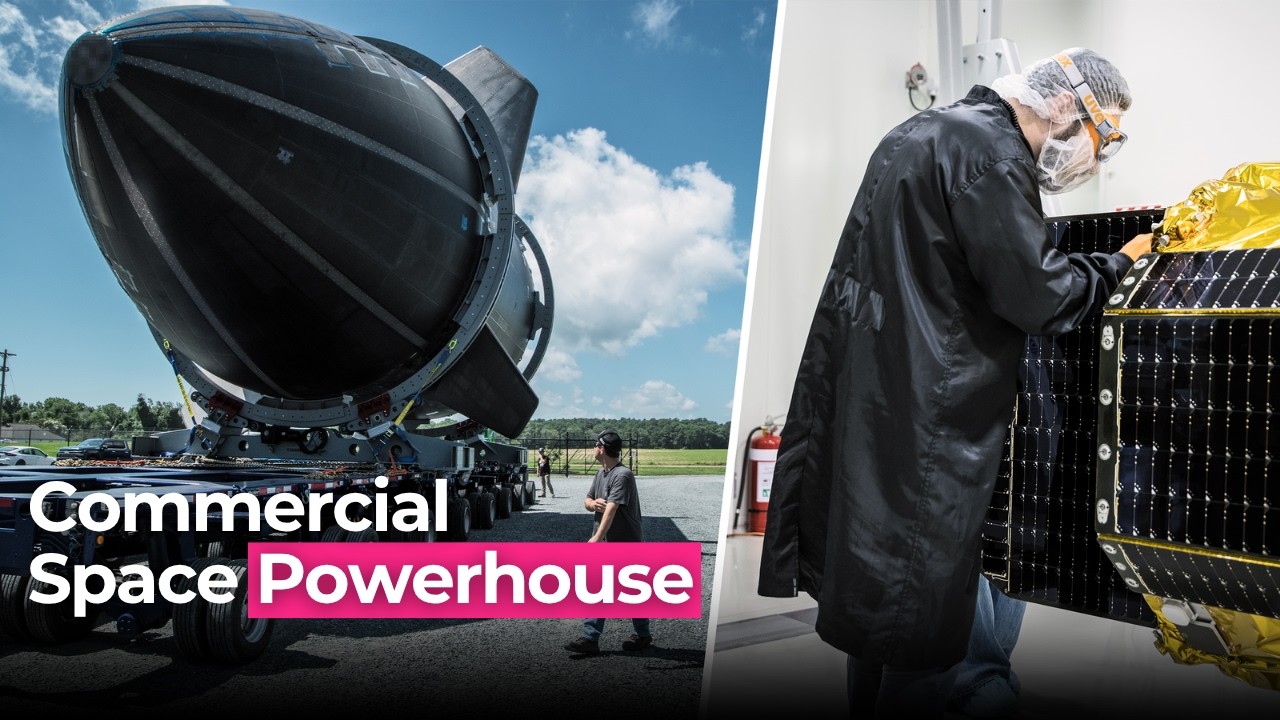
Two spacecraft built by Rocket Lab are currently en route to Mars. That single fact, dropped almost as an aside by Sir Peter Beck during a conversation about backlog numbers and satellite constellations, captures something essential about where his company stands in August 2026: it is doing things that, 20 years ago, only governments attempted, and it is doing them at a pace that makes the word ‘growth’ feel inadequate. For anyone who relies on GPS navigation, satellite communications, or national security infrastructure, what Rocket Lab is building next will quietly shape how those services work. Beck, founder and CEO of Rocket Lab, which trades on Nasdaq under the ticker RKBL, sat down to walk through the company’s expanding role across launch, spacecraft manufacturing, defense systems, and now communications services.
The hungry hippo and what reusability actually means
Most of the conversation about reusable rockets focuses on landing legs and controlled burns. Beck’s team is working on something more structurally ambitious with the Neutron vehicle. The fairing at the rocket’s nose, the protective shell that encases a payload during launch, is being engineered to open, eject the payload and upper stage, and then close again before the rocket descends and lands. The team has taken to calling it the ‘hungry hippo.’ The point is not just clever engineering. A rocket that lands looking exactly like the rocket that took off is a rocket that is genuinely ready to fly again without extensive rebuilding. Beck was clear that the design target is not parity with existing vehicles but something better. Around half of Neutron’s planned flight rate is expected to serve Rocket Lab’s own internal needs, which means the company has a direct financial incentive to make reusability work at a practical, repeatable level.
The broader context for Neutron is a launch market that Beck described as more constrained than it has ever been, even as more vehicles come online. The company’s backlog stood at roughly 2.36 billion dollars, a figure Beck treated less as a celebration than as a logistical reality to manage. ‘I don’t remember a time where it’s not drinking from the fire hose,’ he said. ‘It’s always been like this.’
Merchant supplier, Iridium, and the 320-billion-dollar prize
The differentiator Beck returned to repeatedly was the merchant-supplier model. Rocket Lab will design a full spacecraft, fill it with its own components, launch it, and operate it on a customer’s behalf. Or a customer can purchase a single reaction wheel and integrate it themselves. The result is that about 30% of everything launched last year carried a Rocket Lab component somewhere inside it, even when Rocket Lab neither built nor launched the satellite itself.
The pending acquisition of Iridium, which operates a 66-satellite low Earth orbit network with more than 2.5 million subscribers, is meant to push the company into the largest slice of the space economy. Beck laid out the market arithmetic plainly: launch represents roughly 10 to 20 billion dollars of the total addressable market, spacecraft manufacturing another 20 to 30 billion, and services from space approximately 320 billion. A company that can deploy its own satellites on its own rockets to deliver its own services collapses the cost and procurement complexity that competitors face. The Iridium customer base, built over years, gives Rocket Lab a head start on the hardest part of that equation.
Defense work represents around 50% of Rocket Lab’s customer base, and Beck noted that much of the remaining commercial revenue traces back to government end customers as well. The shift he described in that market is away from cost-plus contracting toward firm fixed-price delivery, a change that he said fits Rocket Lab’s existing operational model precisely.
A reaction wheel somewhere in the supply chain
A single reaction wheel, one component inside a satellite that Rocket Lab neither designed nor launched, sitting inside a spacecraft built by someone else.
At the rate the company is acquiring businesses, building constellations, and sending hardware toward Mars, that quiet little component in someone else’s satellite may be the most honest picture of how Rocket Lab’s influence actually spreads through the industry, one part at a time, before anyone notices the logo.
 Wake up to Only Happy News!